You know those moments when you’re trying to share a story, and the punchline just lands flat? It’s like you’ve got all this cool info, but it doesn’t seem to hit the mark. That’s kinda how central tendency works in science!
Think of it this way: imagine you’re at a party, and everyone’s talking about their wildest adventure. You get a bunch of crazy stories, but then there’s one friend who brings it all together with just a simple “on average, we all had the same amount of fun.” Boom! That’s central tendency for you—helping make sense of the chaos.
In research and outreach, finding that middle ground can turn numbers into stories. It helps you understand what’s typical or average in a sea of data. So let’s dive into some great examples, ‘cause honestly, it’s just super useful stuff!
Understanding Central Tendency in Scientific Research: Key Examples and Applications
Central tendency is like the heartbeat of data in scientific research. It’s the point that tells you where most of your data clusters. Think of it this way: if you throw a bunch of balls on the ground, the spot where most of them land is your central tendency.
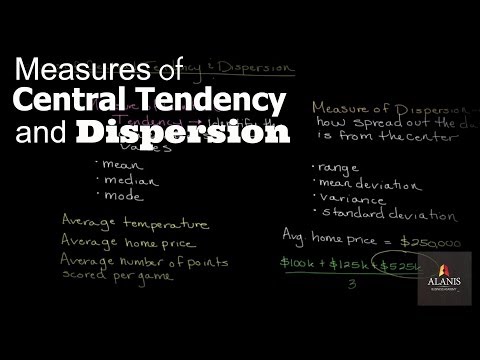
So, what does it actually mean? Well, researchers often use three main measures to describe central tendency: mean, median, and mode. Each one gives us a different perspective on our data, which can be super helpful for drawing conclusions.
Mean is basically what we usually think of as the average. You just add up all your numbers and divide by how many numbers there are. Imagine you have test scores from five students: 80, 85, 90, 95, and 100. The mean score would be (80 + 85 + 90 + 95 + 100) / 5 = 90. It’s clean and simple but can get skewed by extreme values—like if one student scored a zero!
Then there’s median. This one is all about finding the middle value when your data is ordered from smallest to largest. If we take our previous test scores and list them again: arranged they would be: 80, 85, 90, 95, and 100; well since we have an odd number of values (5), the median here is also 90. However, if there were an even number—for example with scores like: 80, 85, and then two students scored a hundred—the median would be (90 +100)/2 =95! Basically it gives you a better picture when things get lopsided.
Lastly comes mode. This one’s super easy—it’s just the number that appears most frequently in your set. So let’s say those test scores were: 80, 85, another student got an 85 as well; now the mode would be . So in cases of statistics where you have repeating numbers or lots of ties like survey responses on favorite pizza toppings or ice cream flavors—mode really shines!
In scientific research and outreach, understanding these measures helps make sense of large sets of data. Let’s say you’re studying how many hours people sleep at night across different age groups:
- If you use mean: You might report that on average adults sleep about seven hours.
- If you focus on median: You could realize that half sleep less than this; maybe lots are getting only five or six hours because they stay up late watching Netflix!
- If you pay attention to mode: You might find most people sleep eight hours; maybe it’s a popular recommendation from doctors.
When scientists present their findings or conduct outreach programs based on research results, they harness these measures to share accurate insights with audiences while making things relatable.
Take public health campaigns for example—they’ll often highlight average smoking rates through mean calculations but might use median values to talk about age groups effectively so everyone gets what’s happening clearly.
So yeah! In every corner of scientific research—from psychology studies to environmental impacts—you’ll see central tendency popping up everywhere because it helps simplify complex info into nugget-sized pieces that everyone can chew on!
Exploring the Role of Central Tendency in Scientific Research and Real-World Applications
Alright, let’s jump right into it! When we talk about central tendency, we’re diving into a way of summarizing data. It’s like trying to find the ‘average’ or the ‘typical’ value in a bunch of numbers. You know how when everyone in a group says their age, you might want to figure out what age most people are? That’s basically what central tendency does.
There are three main measures that we often use: the mean, the median, and the mode. Each of them gives us a different perspective on the same set of data.
- Mean: This is what most folks think of as ‘average’. You add up all your numbers and then divide by how many numbers you have. So if your friends’ ages are 20, 22, and 24, you’d add those up (66) and divide by 3. The mean age is 22.
- Median: This one is all about finding the middle value. If you line up all your ages from smallest to largest, the median is right in the center. If there’s an even number of ages, you take the two middle ones and average them out.
- Mode: This one’s super simple! The mode is just the number that shows up most often in your data set. So if three people are aged 22 and two are aged 20, then 22 is your mode.
You might be wondering why this matters in scientific research, right? Well, take a look at medical studies. Researchers often measure things like blood pressure or cholesterol levels across hundreds of patients. By calculating central tendency measures for these values, they can quickly summarize complex data into something meaningful.
For example, if they find that the mean cholesterol level for participants is higher than recommended levels, doctors can step in to provide advice or treatment options for those individuals who fall above that line.
The real-world applications don’t stop there though! Think about how businesses use central tendency too. If a company wants to understand its sales over time, it could find out which months typically bring in higher revenue using these averages.
A personal story might help paint this picture better: I once joined a fitness group where we tracked our running times every week. At first glance, it was chaos—everyone was at different paces! But when we calculated our median running time each week, I noticed my own speed creeping closer to it over time! It felt good knowing I was improving relative to my peers. Numbers can really tell stories!
Centrally analyzing data like this transforms raw statistics into insights we can act on—be it in health care decisions or even casual sports leagues! You see how important understanding central tendency really is? It’s not just about finding averages; it’s about making sense of life around us!
In summary: central tendency helps researchers make sense of heaps of data and provides meaningful insights that apply to everything from health trends to business strategies—and hey—it gives us average runners hope too!
Understanding Central Tendency in Qualitative Research: Key Concepts and Applications in Scientific Inquiry
Understanding central tendency in qualitative research can feel a bit like trying to find your way through a maze. It’s not always straightforward, but getting a grip on these key concepts can really help clarify what you’re looking at when you analyze data.
So, let’s start with what **central tendency** actually is. Basically, it’s all about finding a middle ground or the “average” in a set of data. In qualitative research, which often deals with non-numerical data like interviews or open-ended survey responses, central tendency isn’t about numbers in the traditional sense. Instead, it focuses on identifying common themes or patterns within that data.
When we talk about assessing central tendency in qualitative research, we often refer to several key strategies:
- Thematic Analysis: This involves reading through your data and breaking it down into categories based on recurring themes or ideas. Think of it like sifting through grains of sand to find the shiny pebbles.
- Content Analysis: Similar to thematic analysis but more structured. You count and analyze specific words or phrases to see which ones pop up most frequently.
- Narrative Analysis: Here, you focus on the stories that people tell and how those narratives reflect broader patterns of thought or behavior.
Let me throw an example at you from experience: imagine you’re conducting interviews for a study on people’s experiences during a pandemic. When you analyze their responses using thematic analysis, you might find common themes like “isolation,” “anxiety,” and “community support.” These themes become your indicators of central tendency because they represent the overall sentiments shared by many participants.
Another thing to keep in mind is that qualitative data doesn’t fit perfectly into neat little boxes; it’s nuanced and full of layers. So while numbers provide some clarity in quantitative research—like averages—you have must dig deeper into qualitative findings.
Here’s where applications come into play. Understanding central tendency helps researchers make sense of individual experiences within larger societal trends. For instance, if many people highlight feelings of anxiety during interviews, it tells us something significant about collective mental health during crises.
In essence, whether you’re looking at focus groups for marketing insights or analyzing discussions from community forums after an event, grasping these concepts helps draw out not just one perspective but the rich tapestry of human experiences.
So there you have it! While central tendency might sound super mathematical at first glance, its real power lies in understanding collective human thought and feeling—turning chaotic narratives into meaningful insights that resonate with us all.
So, let’s chat about central tendency. It’s this fancy term in statistics that basically refers to how we find the “middle” or “average” of a set of data. You know, it’s like trying to figure out what’s normal in a sea of numbers. When you think of central tendency, you usually think mean, median, and mode—all tools we use to make sense of the world.
Picture this: you’re at a party with friends, and you start comparing your heights. If most people are around 5’6” and there’s one friend who’s 7’ tall, that tall buddy kinda skews the average height if you just take the mean. So instead, you might look at the median—the middle value when everyone stands in line by height—which gives a better sense of what most people actually look like in that room.
In scientific research, central tendency is super important! You might come across it often when scientists analyze data from experiments or surveys. Let’s say researchers are studying how long people spend on their phones daily. If they only focus on the average time spent but ignore other factors—like some people using their phones for work versus others just scrolling through TikTok—it can give a very skewed picture.
Now think about outreach efforts too! Scientists need to communicate their findings effectively to the public. Using central tendency helps them summarize complex data into relatable figures. For example, saying “most people spend about two hours on their phones daily” is way more straightforward than throwing out all sorts of technical jargon.
It reminds me of when I was volunteering at a local science fair last year. There was this project on climate change effects on local wildlife. The students presented statistics showing how many birds migrated differently over several years due to changing temperatures—like they had the mean number but also pointed out some years were way off with extreme changes! That grabbed everyone’s attention since it made clear what was going on without drowning us in numbers.
So yeah, central tendency isn’t just for classroom math problems; it’s crucial for making research accessible and understandable in our everyday lives! When scientists present data clearly using these concepts, they help bridge gaps between complex ideas and people’s understanding—and that’s what makes science so beautiful and impactful!