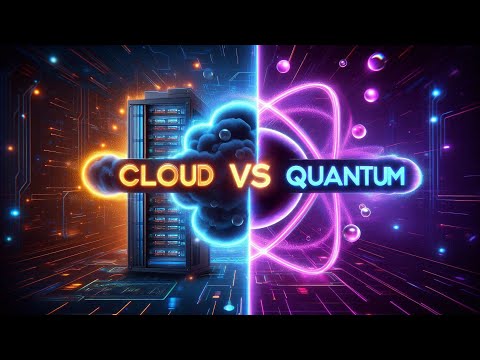
So, I was chatting with this friend the other day, and they told me they’re still trying to figure out how to turn on their new smart fridge. You know, the one that connects to the internet? It made me chuckle. I mean, if only they knew about quantum technology!
Picture this: you’re at home, and instead of your fridge just keeping your food cold, it’s solving mind-boggling problems in seconds. That’s kind of what cloud-based quantum computing is about.
It sounds like something out of a sci-fi movie, right? But it’s real, folks! Imagine harnessing the crazy power of tiny particles—like qubits—to revolutionize everything from medicine to finance. The future is peeking around the corner!
Revolutionizing Computing: Exploring Cloud-Based Quantum Technology in Scientific Research
So, let’s chat about cloud-based quantum technology and how it’s shaking things up in scientific research. It’s a big deal, like, seriously! Imagine computers that can solve problems way faster than your regular laptop—like, light years ahead.
First off, you might be wondering what quantum technology is all about. Well, at its core, it’s using the weirdness of quantum mechanics to process information. Instead of bits—those little guys that are either 0 or 1—quantum computing uses qubits. These bad boys can be both 0 and 1 at the same time thanks to something called **superposition**. It sounds a bit trippy, but that means they can do multiple calculations at once!
Now, let’s talk about why putting this tech in the cloud is so cool. Basically, cloud-based quantum computing makes this super advanced tech accessible to everyone without needing a billion-dollar lab. Researchers from all over can tap into powerful quantum processors through the internet. That means you don’t need to have your own fancy quantum computer; just a good Wi-Fi connection will do.
When scientists want to tackle complex problems—like simulating chemical reactions or optimizing large systems—they usually run into serious speed bumps with classical computers. But now they can access quantum resources remotely and cut down on processing times significantly. It’s like having a cheat code for research!
Some real-world applications are pretty amazing too:
- Drug Discovery: By simulating molecular interactions more accurately, researchers can find new drugs faster.
- Material Science: Scientists are using quantum models to design new materials with special properties.
- Climate Modeling: More accurate climate models could help predict extreme weather events better.
Just think about it—you’re sitting there in front of your computer and suddenly have access to the most mind-blowing technology out there! It’s empowering scientists by breaking down barriers they used to face.
But don’t get me wrong; we’re still in the early days of this tech. There are challenges we need to overcome before it becomes truly mainstream—things like error rates in calculations and how we manage these qubits effectively.
The excitement lies not just in what we can do now but what we will eventually achieve as this field develops further! You know that feeling when something groundbreaking is happening right before your eyes? That’s where we are with cloud-based quantum technology today.
So yeah, buckle up! The journey through this revolutionized landscape of computing is going to be one wild ride—and science is going along for the fun!
Exploring the Distinctions Between Cloud Computing and Quantum Computing in Modern Science
Well, let’s chat about cloud computing and quantum computing, two super cool tech concepts that are changing the way we think about computing in modern science. You might be wondering how they’re different and what they each bring to the table. So, let’s break it down!
First off, cloud computing is all about using the internet to store, manage, and process data instead of relying on your personal computer or local servers. Imagine you have a bunch of heavy files or tasks that your laptop just can’t handle. Instead of maxing it out, you can send those tasks to powerful servers in data centers located who-knows-where. These servers work together so you can access your stuff from anywhere. It’s like having a massive tech buddy that helps you handle all those demanding jobs without hogging your device’s resources.
Now, on the flip side, we have quantum computing. This is like stepping into an entirely different universe of technology! In basic terms, quantum computers use quantum bits or qubits. Unlike regular bits that are either 0s or 1s (think light switches being either off or on), qubits can be both at the same time thanks to a neat trick called superposition. This allows them to process information way more efficiently than traditional computers when solving specific problems.
So why does this matter? Well, let’s say you’re trying to crack some complex encryption or simulate molecules for drug discovery—stuff that requires tons of calculations at once. A quantum computer could potentially do this much faster than its classical counterparts because it can explore many possibilities simultaneously.
Now, if we blend these worlds together with something like cloud-based quantum technology, we get a seriously interesting mix! Imagine accessing quantum computing power through the cloud. You wouldn’t need expensive hardware sitting in your living room—that would be such a hassle! Instead, scientists could harness quantum capabilities from anywhere just like they do with cloud services now.
Here are a few points to sum up some key differences and intersections:
- Cloud Computing: Great for everyday data storage and processing.
- Quantum Computing: Supercharged problem-solving with qubits.
- Combined Potential: Accessing quantum computers via cloud services makes advanced calculations available without needing physical machines.
It feels pretty wild thinking about how these technologies could evolve together in science and research! Just picture researchers working together globally on breakthroughs without worrying about who has the most advanced gear—kind of like leveling the playing field!
In short, while cloud computing gives us convenience and flexibility for our day-to-day tasks, quantum computing introduces us to new realms where computations happen at lightning speed using principles from quantum physics. And their combination? Truly revolutionary for modern science!
Quantum Cloud Computing: Comprehensive Review, Key Challenges, and Future Perspectives in Scientific Research
Okay, so let’s get into the world of quantum cloud computing, which is like the intersection of quantum mechanics and cloud technology. Sounds fancy, right? Well, it’s a bit like having a super-powered computer that you can access over the internet. Imagine being able to harness the power of quantum physics without needing a huge lab filled with complicated machines. That’s what cloud-based quantum computing aims to do!
Now, to break it down a bit, in traditional computing, we use bits—those little ones and zeros you hear about. But in quantum computing, we use qubits. These qubits can be both 0 and 1 at the same time thanks to something called superposition. So they’re like magical coins that can land on both sides at once until you look at them. This allows quantum computers to process vast amounts of information much faster than classical computers.
Okay, but there are some hitches along the way. Here are some key challenges:
- Scalability: Right now, making enough stable qubits that work together is tough. The more qubits you have, the more complicated things get.
- Error rates: Quantum systems are super sensitive! Just a tiny amount of interference can mess things up, leading to errors that classical computers don’t deal with as easily.
- Access and cost: Not everyone has access to this tech yet, and setting it up isn’t exactly cheap or straightforward.
You might be thinking about where this is headed in scientific research. Well, imagine you’re trying to find new drugs or solve complex problems like climate modeling—quantum computers could speed up those simulations dramatically! They could crunch numbers at lightning speed and analyze patterns that classical computers would struggle with compared to slugs trying to run a marathon.
A few companies are even laying down some groundwork for this future. IBM has been working on cloud-accessible quantum systems for researchers around the world! That means scientists can run experiments on real quantum machines without needing one in their basement (which is a big relief!).
The future looks exciting but not without its hurdles. There needs to be more research into making these systems more reliable and accessible for everyone—not just big companies with tons of cash lying around.
The thing is, we’re still figuring out how best to utilize this cutting-edge tech for real-world applications. There’s potential out there; it’s just about cracking those challenges one by one!
If you love science fiction or just appreciate cool tech trends, keep an eye on this field because it’s set to change how we think about computing—and maybe even our entire approach toward solving complex problems!
You know, when I think about the intersection of quantum technology and cloud computing, it feels like we’re stepping into this wild new world. I remember a few years back, chatting with a friend who was all hyped about quantum computers. He was waving his hands around, trying to explain how they could solve problems that would take classical computers centuries, if not more. It sounded straight out of a sci-fi movie!
Fast forward to now, and we’re starting to see how cloud-based quantum technology is changing the game. Imagine tapping into the power of a quantum computer without having one sitting on your desk, right? That’s what cloud computing is doing for quantum tech. You can access these super-advanced machines remotely via the internet. It’s kind of like getting an espresso at your favorite coffee shop instead of roasting your own beans at home—way more convenient!
The cool part is that this tech isn’t just for big corporations or research institutions anymore. People are working on making it available for everyone—students, startups—you name it. And with quantum computing’s unique ability to handle complex calculations in real-time, think about how industries like healthcare or finance could be revolutionized! You could model proteins for drug development or optimize financial portfolios faster than ever before.
But it’s not just about speed; there’s also this element of unpredictability that comes with quantum bits (or qubits). They can exist in multiple states at once, which opens up a whole new realm of possibilities for solving problems we haven’t even thought about yet! It makes you wonder what kind of innovations are brewing just around the corner.
Of course, like any emerging tech, there are still hurdles to overcome: security concerns and understanding how best to harness this power in everyday applications. But isn’t that part of the journey? The excitement lies in exploring what can happen next as we unlock these capabilities.
I mean, just thinking back to those wild conversations reflects how far we’ve come as tech enthusiasts and dreamers. Cloud-based quantum technology may sound futuristic now but remember how quickly things shifted from bulky computers to smartphones? Who knows where we’ll be in a decade! So buckle up; it looks like we’re in for quite an adventure ahead!