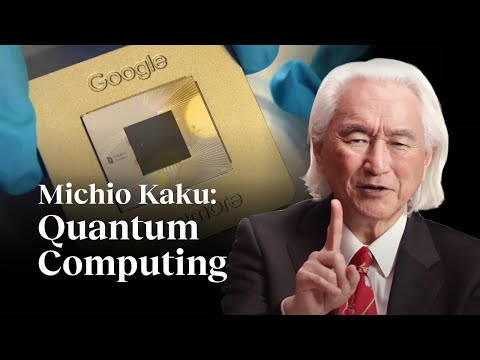
So, picture this. You’re binge-watching your favorite show, right? Suddenly, your Wi-Fi starts lagging like it’s trying to run through molasses. Frustrating, huh? Now imagine a world where your computer doesn’t just freeze up or take forever to process stuff.
That’s where quantum computers come in. They’re like the superheroes of tech. Seriously, they could change everything about how we compute and do research!
It sounds crazy, but these bad boys use the weirdness of quantum mechanics to process information at mind-blowing speeds. Just think about it! What if we could solve problems that are impossible for regular computers? That’s some next-level stuff!
Let’s chat about what’s happening in the world of quantum PCs and how they’re shaking things up in computing and science. Buckle up!
Exploring Quantum PCs: Revolutionizing Computing and Advancing Scientific Research
So, let’s chat about quantum PCs. You may have heard of them buzzing around in science discussions lately. The thing is, they’re not just another gadget; they’re a whole new approach to computing that could flip everything we know on its head.
First off, you might be wondering what makes quantum PCs so special. Well, traditional computers use bits, which are like tiny switches that can either be off (0) or on (1). But quantum computers use **qubits**. And here’s where it gets wild: qubits can be in multiple states at once thanks to a quirky principle called **superposition**. This is like flipping a coin and having it both heads and tails until you look at it!
Another fascinating aspect of quantum computing is **entanglement**. It’s this crazy phenomenon where qubits become linked together no matter how far apart they are. When you change one qubit, the others instantly reflect that change! Think of it as a super-secret handshake among qubits, letting them share info faster than anything we have now.
So why should you care? Well, these abilities mean quantum PCs can tackle complex problems much quicker than traditional computers ever could. For instance, in scientific research—like drug discovery or climate modeling—these machines could crunch enormous amounts of data and find solutions that would take classical computers years!
Imagine trying to solve the structure of a new protein that could lead to groundbreaking medicine. A quantum computer could analyze all the possibilities much faster than any regular computer ever could. That’s pretty mind-blowing!
But hey, don’t think we’re quite there yet. Quantum PCs are still in the early stages of development and face some real challenges—like maintaining qubit stability without interference from their environment (which is kind of tricky). You see, they need to be kept super cold so they don’t fall apart when they interact with anything outside their little bubble.
There are already companies working on improving this tech though and making it more accessible for researchers everywhere! So over time, as these quirks get ironed out and the machines get better, we’ll probably start seeing some amazing breakthroughs.
And just for good measure, let’s not forget about how this whole field sparks curiosity and innovation! The more people tinker with quantum theories and technologies, the more ideas sprout up around them—whether it’s tech startups popping up or students diving into physics fields because they want to work with these mind-bending concepts.
In summary:
- Qubits allow for multiple states simultaneously.
- Entanglement enables instant data sharing across distances.
- This tech has big implications for scientific research, speeding up problem solving.
- We’re still figuring out stability issues to make them practical.
- Quantum computing fuels innovation across various fields.
So yeah, while there’s still a long way to go before quantum PCs become commonplace in our daily lives or labs—they’re definitely paving the way for exciting changes ahead!
Understanding Quantum Computing: An Overview with Real-World Examples in Science
Alright, let’s chat about quantum computing. It’s one of those things that sounds super complicated, but when you break it down, it kinda clicks. Imagine a computer that can solve problems way faster than any regular computer. Pretty cool, right?
So, what exactly is quantum computing? Well, traditional computers use bits as the smallest unit of data. These bits are either a 0 or a 1. Quantum computers, though, use something called qubits. A qubit can be a 0, a 1, or both at the same time! This nifty little trick is called superposition. It’s like flipping a coin and having it land on both heads and tails until you look at it.
You know how in movies they show superhero teams working together? Well, qubits can link up in a process called entanglement. When qubits become entangled, changes to one qubit instantly affect its partner no matter how far apart they are. This means quantum computers can process tons of information simultaneously. Imagine trying to crack a password; while a classic computer would take forever trying different combinations one at a time, quantum computers could tackle many at once!
The real-life implications of this tech are enormous! Here are some areas where quantum computing is making waves:
- Chemistry: Researchers can simulate molecular interactions much faster. This helps in designing new materials or drugs that could take traditional methods ages to find.
- Astronomy: With more powerful computations, scientists can analyze cosmic phenomena like black holes or galaxy formations with better accuracy.
- A.I. Development: Quantum computing could boost machine learning algorithms by processing vast datasets more efficiently.
- Crytography: It might change the way we secure our online information since they can break current encryption methods rapidly.
I remember reading about how quantum computers were used to optimize traffic flow in cities. They looked at every possible route cars could take and found the best flow patterns—basically helping reduce congestion in real time! Can you imagine driving in your city without all that annoying traffic?
The challenge here is that building and maintaining these machines isn’t easy. They need specific conditions to work well—like being super cold and isolated from outside interference because even the slightest disturbance can mess with their calculations.
This leads us to think about what this all means for the future of technology and science. With quantum computing developing rapidly, we’re just starting to glimpse what might be possible. It’s like opening up a new chapter in problem-solving that we didn’t know existed before!
If you want to wrap your head around it more deeply, just remember: while quantum computers won’t replace your laptop anytime soon for everyday tasks (like watching cat videos!), they’ll tackle complex problems we can’t even fathom solving today.
The journey into quantum computing has just begun but buckle up; it’s gonna be quite an adventure!
Exploring Quantum Computing: Revolutionizing Science and Technology
So, let’s talk about quantum computing. It sounds all fancy and complex, right? But, like, at its core, it’s really a new way of processing information that could totally change the tech game as we know it. Imagine your regular computer. It uses bits as the smallest unit of data, which are like little switches that can be either off (0) or on (1). Easy enough.
Now, quantum computers? They use qubits. These guys are a whole different story. A qubit can be both 0 and 1 at the same time, thanks to something called superposition. This means quantum computers can process way more information simultaneously compared to traditional ones. Think of it as trying to read multiple books at once instead of just one. Kind of mind-blowing, huh?
But wait—there’s more! Qubits also have this cool property called entanglement. When qubits become entangled, changing the state of one affects the other instantly, no matter how far apart they are. Imagine having a magical pair of shoes where if you step on one shoe in New York, it lights up the other shoe in Tokyo! That’s how entangled qubits work—they communicate without any delay.
Okay, but you might be wondering why this matters. Well, quantum computing can tackle problems that would take traditional computers thousands of years to solve! For example:
- Drug discovery: Quantum computers can simulate molecular interactions in drugs much faster than current methods.
- Optimization problems: They excel at finding optimal solutions for complex scenarios—like routing delivery vehicles across a city efficiently.
- Crytography: They could crack codes that keep our data safe today—but they also enable new ways to secure information better.
While all this sounds super promising and futuristic—it’s still early days. Building stable quantum computers is tough because qubits are delicate and can easily lose their quantum state due to noise from their environment. It’s like trying to keep your ice cream cone intact on a hot day while riding a rollercoaster!
There are already some companies and researchers working hard on this tech! They’re making strides in creating reliable quantum systems. Big names like Google and IBM have publicly showcased their progress too.
And here’s something personal: I remember watching a documentary about scientists who were trying to harness these tiny particles for computing purposes. Their passion was so contagious! You could see the excitement in their eyes when they made even the smallest breakthrough. It made me realize just how important these technologies could be for our future.
So yeah, quantum computing is still pretty much an adventure we’re all on together—a blend of science fiction and near-future reality that might reshape how we solve big problems in science and technology!
So, if you’ve been hearing a lot about quantum computers lately, you’re not alone. It’s like they’re popping up everywhere, making all kinds of waves in the tech world. I mean, just the other day I was chatting with my buddy who’s a physicist, and he was all fired up about how these machines might just change everything we know about computing and even scientific research.
Now, you might be asking yourself what’s so special about quantum PCs. Well, let me break it down for you. Traditional computers use bits to process information—every bit is either a 0 or a 1, like flipping switches on or off. But quantum computers? They use something called qubits. And here’s where it gets wild: qubits can be both 0 and 1 at the same time because of this cool phenomenon called superposition. It’s almost like they’re juggling possibilities, which sounds way more fun than just flipping switches!
I remember when I first stumbled upon this concept while binging on documentaries one weekend. There was this moment where they explained how a quantum computer could solve problems in minutes that would take classical computers thousands of years. My jaw dropped! Just imagine all the complex issues in science—from drug discovery to climate modeling—that could potentially be cracked open by these futuristic machines.
But wait, there’s more! It isn’t just about speed; it’s also about tackling problems that are outright impossible for classic computers to handle right now. Like simulating molecules accurately to find new medicines or materials—quantum computing could really lead to breakthroughs that seem out of reach today.
Of course, we’re still in the early days of this technology. Scientists are hustling hard to perfect quantum systems because they’re tricky beasts—it’s like trying to keep a thousand spinning plates in the air at once! But when I think about where we could go with this… well, it honestly gets me giddy.
Imagine collaborating across disciplines—physicists chatting with biologists thanks to insights from quantum computing—they might come up with solutions nobody else would even dream of! That kind of potential is what makes this whole revolution feel so tangible and exciting.
So yeah, while we might still be figuring things out right now, it feels clear that quantum PCs are set to shake up not just how we do science but the very fabric of technology itself as well. And hey, if my physicist friend is any indication, we’ll likely see some amazing stuff coming our way soon!