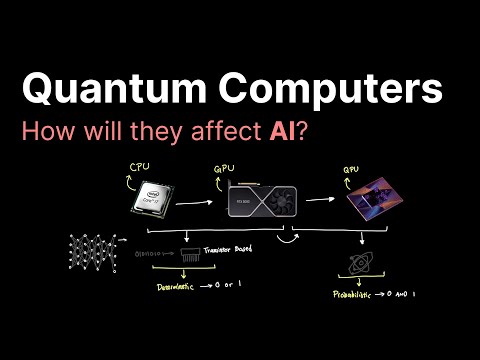
So, picture this: you’re at a party, chatting about the future, and someone drops the phrase “quantum computing.” The room goes silent. You know that look—the “what even is that?” face. I mean, it sounds like something straight outta a sci-fi flick, right?
But here’s the kicker: quantum computing is real. And it could change everything we know about science and research. Seriously! Think of it as a super-fast brain that can tackle problems way beyond what regular computers can handle.
Intel’s been stepping up its game in this whole quantum scene. They’re pushing some boundaries and diving deep into how this tech can really help scientific research. It’s like they found an ace up their sleeve! So let’s break down what’s happening in this mind-boggling world together, yeah?
Exploring Intel’s Advances in Quantum Computing Research: A Closer Look at Scientific Innovations
Quantum computing is like this super exciting frontier in technology. So, Intel, a huge name in the computer world, is pushing some serious boundaries when it comes to quantum research. They’re not just dabbling; they’re investing time and resources to figure out how quantum mechanics can revolutionize computing as we know it.
Let’s start with the basics. Quantum computers operate on the principles of quantum mechanics, which are, you know, a bit trippy. Instead of using bits like conventional computers do—ones and zeros—quantum computers use *qubits*. These little guys can be both 0 and 1 at the same time due to something called **superposition**. This feature allows quantum computers to process massive amounts of data simultaneously!
Intel’s approach focuses on creating scalable qubit systems. That means they’re working on building a whole bunch of qubits that can work together efficiently. One of their major advancements is the development of **silicon-based qubits**. Since silicon is already widely used in regular computer chips, this could potentially make the transition to quantum tech smoother and more cost-effective.
Another cool aspect is their work with **quantum error correction**. In classical computing, errors can pop up from time to time due to various factors like electrical interference. But in quantum computing, errors can be way more complicated because qubits are delicate and easily disturbed. Intel’s researchers are figuring out ways to detect and correct these errors automatically so that the computations stay accurate.
And guess what? They’re also diving into “**quantum entanglement**.” It’s this wild phenomenon where particles become interconnected no matter how far apart they are—sorta like magic! Intel aims to harness this for better communication between qubits, making computations faster and more efficient.
If you think about it, this research isn’t just about making faster computers; it has real-world implications too! Just imagine how much easier things like drug discovery or optimizing logistics could become when a powerful quantum computer is involved.
Now here’s a personal touch for ya: I remember reading about how researchers managed to simulate complex molecules using early-stage quantum computers. It was mind-blowing! They were solving problems that would have taken traditional supercomputers ages or might not even be possible at all. That kind of innovation feels like stepping into a sci-fi movie!
So yeah, Intel isn’t just waiting around; they’re actively exploring how quantum computing can change our world for the better—a total game-changer if you ask me!
- Qubits: The building blocks of quantum computation.
- Superposition: Enabling qubits to be in multiple states simultaneously.
- Silicon-based systems: An approach for scalable qubit production.
- Error correction: Vital for maintaining accurate computations.
- Quantum entanglement: Key for enhancing communication between qubits.
So yeah, all these advances tell us that we’re only scratching the surface when it comes to what quantum computing can really do! The future looks bright—and maybe a little bit weird—but definitely exciting!
Leading Innovators in Quantum Computing Research: A Look at the Pioneers Shaping the Future of Science
So, quantum computing, huh? It’s one of those topics that sounds super complicated but is actually pretty cool when you break it down. Basically, quantum computers use the principles of quantum mechanics to process information in a totally different way than our regular computers do. These little marvels can perform calculations at speeds we can only dream of right now.
Now, let’s talk about some of the leading innovators in this field. You have big names like Intel, which is diving into quantum tech with both feet. They’re not just sitting on their laurels; they’re actively researching how to make quantum chips more efficient and accessible.
- Intel’s Quantum Roadmap: Intel aims to build scalable quantum systems by designing qubits—the basic units of information in a quantum computer. Their research has shown promise in developing new materials that could help work towards practical applications.
- Collaboration with Universities: They are also teaming up with academic institutions to push the boundaries of what we know about quantum mechanics and computing. By pooling resources, new techniques and theories can flourish.
- The Role of Qubits: Unlike classical bits that are either 0 or 1, qubits can be both at once, thanks to something called superposition. This means they can handle much more complex problems at once!
You know what’s really exciting? The potential for real-world applications! I remember sitting in a physics class listening to my professor talk about how quantum computing could revolutionize fields like cryptography or drug discovery. Imagine being able to simulate molecules quickly enough to find new medicines or crack encryptions that keep our data secure!
And it’s not just Intel making waves here. Other companies and universities worldwide are taking huge leaps forward as well. Names like D-Wave Systems and researchers from places like MIT are also contributing significantly to this growing field.
The fascinating thing about all this innovation is how it feels like we’re standing on the edge of something tremendous—like explorers setting out for uncharted waters. These pioneers are shaping not just technology but a whole new understanding of what’s possible in science!
In summary, while we’ve got innovators like Intel leading the charge with their advanced research, it’s a collective effort across many organizations that will truly shape the future of quantum computing.
Exploring the Future: Will Quantum Computing Outpace AI in Scientific Innovation?
The future of technology is buzzing with excitement, especially when you think about quantum computing and artificial intelligence (AI). Both are like those cool gadgets in sci-fi movies, only they’re becoming real! So, will quantum computing outpace AI in driving scientific innovation? Let’s break it down.
Quantum computing is a different beast compared to traditional computing. Instead of bits that are either 0 or 1, quantum computers use qubits. These little guys can be both at the same time, thanks to a phenomenon called superposition. This allows quantum computers to perform certain calculations way faster than classical computers. Imagine trying to find your way through a maze. A classic computer looks at one path at a time, while a quantum computer explores multiple paths simultaneously. Pretty mind-blowing, huh?
Now, AI has its own strengths. It thrives on big data and learns from patterns—kinda like when you remember the last time you navigated that maze and how you got stuck! AI can analyze massive datasets quickly, making predictions and completing tasks humans might find tedious or difficult.
But if we compare their potential in scientific innovation… that’s where things get interesting!
- Speed of Discovery: Quantum computers have the potential to solve complex problems much faster than AI can. This means scientists might crack tough riddles in chemistry or physics quicker than ever!
- Complex Simulations: Quantum computing shines in simulating molecules and chemical reactions accurately. For chemists wanting to discover new drugs or materials, this could be revolutionary.
- A New Kind of Intelligence: Interestingly enough, combining both could be the sweet spot! Imagine an AI that uses quantum computing to analyze data. It’s like having a super-smart friend who also has the fastest GPS!
Now here’s something personal: I remember attending a lecture where an excited researcher talked about using quantum computers for real-time climate modeling. The implications were huge! If we could predict weather patterns with more accuracy using these machines, it would change disaster preparedness completely. That’s how close we are to potentially life-saving advances.
However, there are hurdles too. Quantum technology is still in its infancy! We’re not ready yet for widespread use; it’s kind of like trying to buy a ticket for a roller coaster that hasn’t been built yet.
Then there’s AI—it’s already integrated into our lives from spam filters in email to self-driving cars! Its growth is more immediate because we already have the infrastructure set up.
So will quantum computing outpace AI? It’s tough to say definitively right now. They each have unique strengths and weaknesses that complement each other rather than directly competing.
Ultimately, the future may lie in their collaboration rather than one overshadowing the other. With both advancing rapidly—we could be on the brink of breakthroughs we never even thought possible!
You know, it’s pretty cool to think about how quantum computing is shaping the future of scientific research. I mean, we’re talking about a whole new way of processing information that’s just mind-blowing. One moment stands out to me, like a scene from a sci-fi movie. A friend of mine had this wild idea about simulating chemical reactions using quantum computers. At first, it sounded like something out of a comic book, but then I started reading about real advances by companies like Intel.
So, what’s the big deal with quantum computing? Well, instead of using bits (the tiny units that make all the magic happen in regular computers), quantum computers use qubits. These are like bits on steroids—literally spinning in multiple directions at once thanks to something called superposition. That means they can handle massive amounts of data and perform complex calculations way faster than traditional computers can even dream of.
Intel has been pushing the envelope with their qubit technology, aiming to make them more stable and reliable. You see, there’s this thing called decoherence where qubits lose their special powers due to interference from their environment. It’s kind of like trying to balance on one foot while someone shouts at you—distracting and hard to maintain! So when Intel announced progress in reducing decoherence times, it was like a ray of hope for researchers everywhere.
What does this mean for scientific research? Basically, we could redefine how we tackle problems in fields ranging from drug discovery to materials science. Imagine running complex simulations that help scientists understand diseases or create new materials without needing years of trial and error in laboratories! There are people out there dreaming up new solutions for clean energy or even better batteries—all thanks to this tech.
But here’s my favorite part: it feels like we’re standing on the brink of a huge leap forward for humanity. Like when electricity was first harnessed or when we unlocked the secrets of DNA—it feels empowering yet humbling, seeing how far we’ve come and imagining what’s next.
So yeah, as Intel continues its journey into quantum computing and presents breakthroughs along the way, it’s fascinating to think about what could lie ahead for scientific research and beyond. Who knows? Maybe someday you’ll be chatting with your own personal AI assistant powered by crazy-fast quantum machines! Wouldn’t that be something?