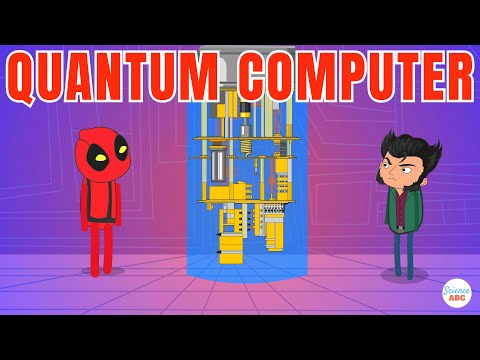
So, picture this: you’re sitting in a café, sipping your favorite coffee, when your friend tells you about these tiny particles that can be in two places at once. I mean, what? It sounds like something out of a sci-fi movie!
But that’s the quirky world of quantum physics for you. And if you think that’s wild, wait till you hear about quantum circuits. They’re basically the little superheroes of modern computing, taking everything we know and flipping it upside down.
You might be asking yourself, “What even is a quantum circuit?” Well, don’t worry. You’re not alone! The idea of using the weirdness of quantum mechanics to boost our tech is mind-boggling but super exciting… and it’s way cooler than trying to explain it in a boring textbook way.
So let’s break it down together, shall we?
Exploring Quantum Circuits: Their Integral Role in Advancing Modern Computing
Exploring quantum circuits is like opening a door to a wild new world in computing. You see, traditional computers use bits as the smallest unit of data, which are just simple ones and zeros. But in quantum computing, we take it up a notch with **qubits**. What’s cool about qubits is that they can exist in multiple states at once thanks to something called **superposition**. This means a qubit can be both 0 and 1 simultaneously! How mind-blowing is that?
Now, let’s get into those quantum circuits. Imagine designing roads for cars, but instead of traffic flowing smoothly, you have particles zipping around and creating all sorts of crazy interactions. Quantum circuits are these intricate arrangements that manipulate qubits to perform calculations far beyond the limits of our regular computers.
To help you visualize this, consider an example from our everyday lives: cooking. In a regular kitchen (your classical computer), you might need to follow each step in a recipe one at a time. But in a quantum kitchen (the quantum circuit), you can chop veggies, boil water, and stir sauces all at once! This parallel processing is what makes quantum circuits so powerful.
Key points about quantum circuits:
Think about this: even with all their power, building reliable quantum circuits is still super tricky! Scientists are pouring loads of effort into different types of qbit implementations like superconducting materials or trapped ions.
I remember once watching a documentary where they showcased some scientists trying to stabilize qubits for longer periods; it felt like they were taming wild beasts! The look on their faces when they succeeded was priceless—pure joy mixed with relief.
Getting back to why these circuits matter for modern computing: as we face increasingly complex problems—from climate change models to drug discoveries—quantum circuits promise solutions much faster than classical ones could ever hope for.
So next time someone mentions the fancy world of quantum computing or talks about the future tech that’s just around the corner, think about those remarkable little circuits working tirelessly behind the scenes! They might seem abstract right now but play an integral part in shaping tomorrow’s breakthroughs.
Exploring Quantum Circuit Examples: Key Applications and Innovations in Quantum Computing
Quantum computing is seriously like the cool kid on the block in the tech world. You might be thinking, “What’s the big deal?” Well, let me break it down for you. At its core, quantum computing harnesses the weirdness of quantum mechanics, which basically means it can do some mind-blowing stuff that traditional computers can’t.
One of the **key players** in this realm is something called a **quantum circuit**. Think of a quantum circuit as a complex dance routine where qubits—quantum bits—perform their moves. These qubits can be both 0s and 1s at the same time, thanks to a phenomenon called superposition. This ability lets them solve problems way faster than regular bits.
Take for example Shor’s Algorithm. This is a fancy name for a quantum algorithm that can factor large numbers much quicker than current methods. If you’ve ever heard about how your online banking relies on encryption to keep things safe, then you should know that this algorithm could potentially crack those codes! Scary, right? But that’s why researchers are working hard to advance quantum computing—it’s like building new locks for our digital doors.
Now let’s get into some real-world applications and innovations:
- Drug Discovery: Imagine you’re trying to find a cure for diseases like cancer or Alzheimer’s. Quantum computers can simulate molecules and their interactions far more efficiently than classical computers, speeding up the process of discovering new drugs.
- Optimization Problems: Ever tried optimizing your route through traffic or picking the best investments? Quantum circuits excel at solving complex optimization problems, making them super useful for logistics companies and financial analysts.
- Machine Learning: In the world of AI, machine learning models could benefit from quantum circuits by processing data at lightning speed, helping computers learn from vast amounts of information more effectively.
So what about actual innovations happening right now? Companies and researchers are actively developing different types of quantum circuits. For instance:
- Cryogenic Quantum Circuits: These circuits operate at super low temperatures to help stabilize qubits longer so they don’t lose their ‘quantum-ness’ too quickly.
- Ionic Quantum Circuits: Using ions trapped in electromagnetic fields as qubits has opened up exciting pathways for building scalable quantum systems.
Here’s an anecdote: When I first learned about these concepts, I felt like someone had handed me keys to a science fiction universe! It was incredible—and honestly puzzling—how these tiny particles could hold so much potential power!
In short, quantum circuits are revolutionizing technology. With advancements happening rapidly in various fields—from medicine to finance—it’s pretty clear that we’re just scratching the surface here. And while we may be years away from fully realizing their potential, every small step forward holds promise for innovation we can’t even imagine yet!
Understanding Quantum Circuits: A Comprehensive Guide to Quantum Computing Fundamentals
Quantum circuits are one of those cool concepts in quantum computing that can seem all over the place at first. So, let’s try to break it down a bit and get into what they really are, you know?
What is a Quantum Circuit?
In simple terms, a quantum circuit is like a recipe, but instead of cooking food, it manipulates quantum bits or qubits. Think of qubits as the tiniest units of information in quantum computing. Unlike regular bits that can be either 0 or 1, qubits can exist in multiple states at once. This weirdness is thanks to something called superposition. Imagine flipping a coin; while it’s in the air, it can be both heads and tails. That’s kind of what happens with qubits.
Building Blocks
A quantum circuit consists of gates that perform operations on these qubits. These gates are like little switches or levers that change the state of qubits based on specific rules. Here are some main points about them:
- Single-Qubit Gates: These take one qubit and change its state. The most famous one is probably the Hadamard gate which puts a qubit into superposition.
- Two-Qubit Gates: They manipulate pairs of qubits to create entanglement—a super cool phenomenon where qubits become linked so the state of one affects the other.
- Measurement: This step determines the final state of the qubit when you want an answer from your computations. It’s kind of like popping the coin back down to see if it landed on heads or tails.
The Role in Computing
Now why does this matter? Well, quantum circuits allow us to solve problems way faster than regular computers for certain tasks! For example, they could revolutionize fields like cryptography by cracking codes way quicker than classical machines.
When I was young, my uncle was super into magic tricks and he would always say there’s more than meets the eye with illusions. I feel like quantum circuits do just that—they show us there’s way more happening in computing than just flipping bits around.
The Future Looks Bright
As research continues, we’re starting to see real-world applications for these circuits sprouting up everywhere—from drug discovery to optimizing complex systems like traffic flow in cities or supply chains! The potential here is massive.
So look, while quantum circuits might seem complicated right now, they’re basically paving the way for a new age in technology—the kind we’ve only seen hinted at in science fiction movies!
And remember: every time you hear about new advancements in tech—like artificial intelligence or machine learning—think about how quantum computing might just become part of that story too; it’s still unfolding!
Alright, let’s chat about quantum circuits and how they fit into the whole computing scene today. I mean, when you think about it, our world has changed so much thanks to computers. Remember the first time you played around with a computer? For me, it was in my friend’s basement, trying to figure out this clunky old machine—so many buttons! Fast forward to now, and we have these incredibly powerful devices that can do things we once thought were pure sci-fi.
So, quantum circuits. They sound pretty complex, right? But let’s break it down together. You know how regular computers use bits—the basic unit of data that can be either a 0 or a 1? Well, quantum circuits work with qubits. And here’s the twist: qubits can be both 0 and 1 at the same time because of something called superposition. It’s like flipping a coin; while it’s in the air, it could be heads or tails until you catch it!
Now combine that with another concept called entanglement, where qubits become linked so that the state of one instantly affects the other no matter how far apart they are. It feels kind of magical! Imagine having a couple of magic dice; when you roll one die across town and it lands on six, your friend’s die reacts immediately—no delay!
These funky characteristics allow quantum circuits to perform calculations way faster than traditional ones for certain tasks like factoring large numbers or simulating molecular structures. Just picture the potential for breakthroughs in medicine or cryptography! I recently learned about researchers using quantum circuits for drug discovery—how cool is that?
But hey, don’t get too excited just yet. We’re still in this experimental phase. Building stable qubits is like trying to keep a house of cards from toppling over—you blow on them too hard, and boom! But people are working on it. Seriously dedicated folks who stay up late drinking copious amounts of coffee while tweaking these tiny circuits.
So yeah, while we’re not quite at the “quantum future” yet where everyone has their own personal quantum computer (which sounds like something from a movie), tech giants are heavily investing in research and development to push this frontier forward.
In essence, quantum circuits represent this wild intersection between physics and practical application. It’s exciting stuff that could revolutionize various fields down the line! And who knows? Maybe one day you’ll tell your own kids about how you watched quantum computing bloom right before your eyes—kind of like watching those first clunky computers transform into smartphones overnight!