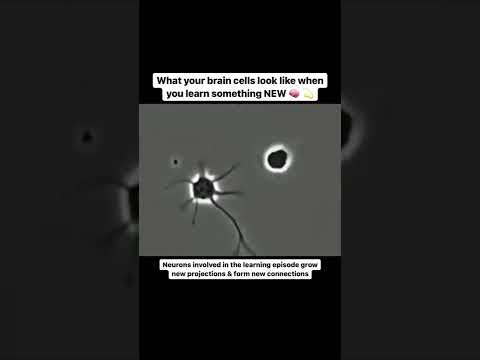
You know that moment when you forget where you parked your car? Seriously, it can feel like a mini crisis! You’re walking around the lot, retracing your steps, and suddenly you’re pondering all life’s big questions. Like, why is your brain acting like a total scatterbrain?
Cognitive processes are at work in those moments. They guide our thoughts, actions, and even how we pull off everyday tasks. But they’re not just about avoiding embarrassing parking situations. They shape how we learn, decide, and connect with others.
Imagine trying to learn a new recipe. Your brain sorts through memories of past cooking attempts while juggling measurements and timings. It’s quite the mental gymnastics routine!
In this little journey through cognitive processes in action, let’s explore some real-world examples that show just how fascinating—and sometimes quirky—our minds can be. Grab a comfy seat; you might find yourself nodding along or even chuckling at the absurdity of it all!
Exploring Cognitive Learning: Real-World Applications in the Science Field
So, cognitive learning is all about how we process information and use it to make sense of the world. It’s like having a mental toolbox that helps you figure things out. You know, when you’re trying to solve a tricky math problem, and you suddenly remember that one time in class when the teacher explained it with marbles? That’s your brain connecting dots!
Cognitive processes include attention, memory, perception, and reasoning, which all work together to help you learn. For instance, let’s take attention. When you’re in a crowded room trying to hear your friend talk over the noise, you focus on their voice while tuning out everything else. This selective focus is crucial for effective learning.
Now, memory plays a big role too. Have you ever crammed for a test and then forgot everything right after? Yeah, that’s probably not how you want your memory to work! There are different types of memory: short-term, where you hold information temporarily (like a phone number), and long-term, where information sticks around longer (like your best friend’s birthday). Scientists constantly study these processes to find better ways for people to learn.
- Real-world applications: In science, understanding cognitive learning can change how we teach everything from physics to biology!
- Anecdote: I remember my college days when lab partners would paint certain concepts with broad strokes using metaphors. Like explaining cellular respiration as “the cell’s own energy factory.” It helped me understand better since our brains love those relatable images!
- Cognitive strategies: Techniques like visualization really help in grasping complex information – think about drawing diagrams or flowcharts to represent processes. It makes learning more engaging.
- Interdisciplinary connections: Cognitive learning isn’t just limited to classrooms; it can be applied in research labs too! For example, scientists apply these principles when they’re developing new methods for data analysis or interpreting results creatively.
The real kicker? As we develop new technologies like virtual reality (VR) or augmented reality (AR), we get opportunities to explore these cognitive principles even further. Picture students entering a virtual lab where they experiment with chemical reactions without any dangerous mess! They’re applying what they learn in real-time.
You might wonder how this translates into actual practice. For instance, biomedical educators might incorporate case-based learning – using real patient scenarios that challenge students’ critical thinking skills while reinforcing their knowledge base.
If you’re passionate about science education or anything related to cognitive learning strategies, remember: it’s all about connecting theories with real-life examples! When teaching complex topics, try anchoring them in something familiar – your brain will thank you later for making those connections!
The bottom line is that exploring cognitive learning does not just stay confined within textbooks—it breathes life into our daily experiences and scientific practices alike!
Exploring Real-Life Examples of Cognitive Development in Scientific Research
Exploring how cognitive development works in real life is pretty exciting, don’t you think? Basically, it’s all about how our thinking evolves and changes as we grow up. You might notice this in kids or even adults, and scientists are really into studying it. They’ve got some neat examples to share.
First off, let’s talk about children. When kids are little, they learn through play. Have you seen a toddler trying to stack blocks? They might not always get it right at first, but figuring out which block fits on top of another teaches them about balance and spatial relationships. This isn’t just play; it’s a major part of cognitive development!
Another interesting example comes from those classic science experiments. Remember the marshmallow test? In this study, young kids were given a choice: eat one marshmallow now or wait and get two later. It’s fascinating because it highlights impulse control—basically, the ability to delay gratification leads to better decision-making later on in life.
- Language Development: Kids also pick up language skills through interaction. When parents talk to their babies, those little interactions help shape how kids learn to speak and understand words.
- Problem-Solving Skills: Doing puzzles is another great example of cognitive growth. As children work through challenges with puzzles, they develop critical thinking skills that are essential for learning!
Now let’s switch gears a bit. Have you thought about how adults develop cognitively too? Take researchers who study complex problems at work. They often have to figure out solutions amidst lots of information—like sorting through data or managing teams. This shows how real-world experiences help refine our problem-solving abilities over time.
You see this in fields like medicine or engineering where professionals continuously learn new techniques and approaches. They adapt their thinking based on what they’ve learned from everyday experiences—always growing!
And don’t forget emotions! Emotional intelligence plays a big role in our cognitive development as well. Imagine someone dealing with conflict at work: understanding others’ feelings can lead them to make better choices in stressful situations.
Cognitive development is an ongoing journey, influenced by both childhood experiences and adult challenges. It’s shaped by everything around us—whether that’s how we interact with friends or tackle problems at the office. Each little moment contributes to who we are today!
So yeah, whether you’re stacking blocks as a kid or solving complex equations as an adult, cognitive processes are at work all the time! Understanding these examples helps us appreciate the incredible ways our minds adapt and grow throughout life. Isn’t that something?
Real-World Applications of Cognitive Psychology in Modern Science
Cognitive psychology is like the backstage pass to understanding how our minds work. It looks at everything from how we think and learn to how we remember things. Now, when it comes to real-world applications, this field is super interesting and useful in everyday life.
Education is one of the biggest areas where cognitive psychology shines. Educators use insights from cognitive processes to improve teaching methods. For instance, they incorporate techniques like spaced repetition, which basically means reviewing information at intervals over time instead of cramming it all at once. This method helps students retain what they learn way better. Imagine sitting in class, feeling overwhelmed with facts—spacing it out can really ease that stress!
In marketing, businesses tap into cognitive psychology too. They study how consumers think and feel about products to craft ads that hit just the right notes. You’ve probably seen catchy slogans or memorable jingles; those are designed using principles of cognitive load and memory retention. When an ad sticks in your mind, that’s somebody applying cognitive psychology principles with a sprinkle of creativity.
Then there’s mental health. Cognitive-behavioral therapy (CBT) is a prime example of this application doing wonders for people’s lives. CBT helps folks identify negative thought patterns and replace them with more positive ones. It’s amazing how simply changing your thinking can change your feelings! Picture someone struggling with anxiety—this therapy gives them tools to reshape their thoughts, leading to healthier coping strategies.
Another area is user experience (UX). Websites and apps are designed based on how users cognitively process information online. Designers consider factors such as memory load and attention span when creating layouts that guide you effortlessly through content or features. Ever get frustrated with a confusing website? That could be a UX fail based on overlooking cognitive principles.
Cognitive Psychology even plays a role in the criminal justice system. Understanding eyewitness testimony has been huge here since witnesses often have faulty memories due to stress or suggestive questioning techniques. By applying insights from cognitive psychology, law enforcement can better interpret what really happened during an incident.
These real-world applications illustrate just how integral cognitive psychology has become in many fields today—shaping everything from the classroom and therapy sessions to ads on your smartphone screen! When we understand our thought processes better, we can optimize systems around us for improved learning, mental well-being, user satisfaction, and more.
It’s pretty clear this field opens doors everywhere you look! And who knows? Next time you’re studying for an exam or scrolling through social media, think about all those minds working behind the scenes to make things easier and clearer for you!
You know, when you think about cognitive processes, it’s like peeking behind the curtain of what makes us human. It’s pretty wild how our brains work, isn’t? I remember this time when I was in a coffee shop, just sipping my drink and people-watching. There was this little kid trying to tie his shoelaces for the first time. His face was all scrunched up with concentration—like he was wrestling with some giant puzzle.
That moment made me realize how much goes into our everyday actions. Seriously, cognitive processes are at play every second! When that kid was figuring out his laces, he was using attention and memory. He had to focus on his hands while recalling what he’d seen someone else do before. And just think about it: when we make decisions—like choosing what to order or deciding which route to take home—we rely on perception and reasoning.
But here’s where it gets even cooler: those processes aren’t just isolated brain functions; they interact in ways that shape our experiences. For instance, when we learn something new, like riding a bike or cooking a recipe, we engage various cognitive skills: planning steps ahead, adjusting based on feedback (“Whoa! That didn’t taste good”), and sometimes even problem-solving when things don’t go as expected.
You know what really blows my mind? The fact that these processes can be influenced by emotions too. Ever notice how you might struggle to concentrate if you’re anxious or stressed? Or conversely, imagine being super excited about a project—your brain is firing on all cylinders! Emotions play such a huge role in how we process information and react to the world around us.
Anyway, it’s just kinda magical how everything is interconnected. From something as simple as tying shoelaces to navigating complex social interactions—you can see cognitive processes in action everywhere! Life is one big classroom filled with lessons waiting to be learned through our everyday actions—if you stop and take a moment to look around.