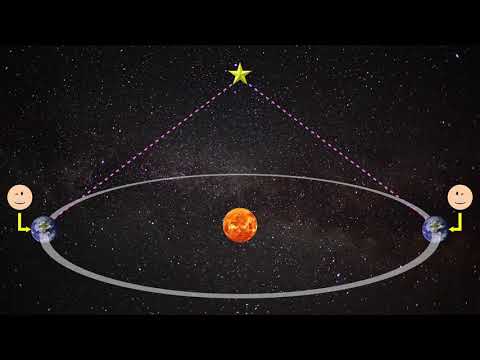
You ever hear about that time Copernicus got people talking? Seriously, this dude flipped the script on astronomy just by saying that the Earth revolves around the Sun instead of the other way around. Mind-blowing, right?
Fast forward a few centuries, and his ideas have sparked a whole system that’s buzzing with scientific potential—the Copernicus System. It’s not just about planets anymore; it’s like a treasure chest of data for understanding our planet.
Imagine being able to peek into our atmosphere, oceans, and even land surfaces without leaving your couch. Cool stuff! So let’s dive into how this system is actually transforming science today. Grab your favorite snack—this is gonna be fun!
Exploring Copernicus’ Transformative Influence on Modern Science and Astronomy
So, let’s take a little trip back to the 16th century. Imagine you’re in a world where everyone believes Earth is the center of the universe. Then along comes a guy named Nicolaus Copernicus. He’s like, “Wait a minute, no way! The Sun is at the center, and we’re all just spinning around it.” This idea was called the heliocentric model. It really shook things up!
Now, you might wonder why this was such a big deal. Well, for starters, it completely flipped how people understood their place in the cosmos. Before Copernicus, folks thought everything revolved around Earth. With his theory, we started to see that we’re just one tiny planet among many. Kind of humbling, right?
With his book *De revolutionibus orbium coelestium*, published in 1543 at the end of his life, he laid down the groundwork for modern astronomy. Think about that—the book didn’t just change science; it changed philosophy and religion too! Imagine sitting in your local café and overhearing people argue over whether Earth is special or not. Serious business!
But here’s where it gets really cool. After Copernicus dropped his heliocentric bombshell, other astronomers grabbed onto his ideas and expanded on them.
This was huge! Instead of perfect circles—like everyone thought—it turned out planets have oval-shaped paths.
Then there was
He saw moons orbiting Jupiter and phases of Venus that simply wouldn’t work if Earth were at the center. It was as if he had found proof for Copernicus’s theory sitting right there in the night sky!
The ripple effects reached beyond astronomy too. The scientific method began to blossom as more people started questioning established beliefs based on empirical evidence rather than authority or tradition. Thanks to Copernicus, scientists could finally say “Let’s test this!” instead of “Well, Aristotle said so.”
So fast forward a few centuries later… and here we are today with advanced telescopes and space missions exploring our solar system in ways that Copernicus couldn’t even dream of! Can you imagine what he would feel if he could see how accurate his ideas were?
In short? Nicolaus Copernicus didn’t just influence astronomy; he sparked a whole new way of thinking about science itself—a shift from dogma to inquiry. You know how they say every journey starts with a single step? Well, Copernicus took one giant leap for mankind that set us on an adventurous path through space!
Understanding the Copernicus System: A Comprehensive Overview of Its Role in Earth Observation and Environmental Science
You know, the Copernicus System is pretty interesting. It’s like a giant eye in the sky, watching over our planet and helping us understand our environment better. This amazing system is a part of the European Union’s Earth observation program. It gathers data that scientists and researchers can use to monitor changes in the Earth’s climate, natural resources, and even urban areas.
Basically, the Copernicus System operates through a series of satellites known as the **Sentinels**. So when we talk about them, we’re referring to specific missions that focus on different aspects of our planet. For instance:
- Sentinel-1 uses radar technology to observe soil movements and monitor floods.
- Sentinel-2 captures stunning images of land use and vegetation with its high-resolution optical instruments.
- Sentinel-3 focuses on monitoring ocean conditions and land surface temperature.
These satellites make it possible to collect information about our world in near real-time! Imagine being able to check how much deforestation is happening or how quickly glaciers are melting—it’s just mind-blowing!
One time I heard this story about a small island community that relied heavily on fishing. They were facing drastic changes in fish populations due to climate change. The data from Sentinel satellites helped them identify shifts in ocean temperature and currents. This was crucial for adapting their fishing practices, ensuring they could still support their families. That’s the kind of impact this tech can have—real people making real changes!
Also, it’s great how Copernicus data is freely available for everyone! Researchers, environmentalists, or anyone interested can tap into this treasure trove of information without needing special permissions or budgets.
But why does all this matter? Well, understanding climate patterns helps countries prepare for natural disasters like floods or droughts. It can also aid in sustainable agricultural practices by providing insights into crop health and soil conditions.
Still curious? The accuracy of this system is impressive too! Thanks to advanced sensors onboard those satellites, we’re talking about resolution levels capable of detecting changes as small as a few meters on Earth’s surface.
As we face global challenges like climate change or habitat loss, having access to reliable data becomes essential. The Copernicus System isn’t just collecting numbers; it’s playing a pivotal role in shaping policies that protect our environment and ultimately improve life on Earth.
So there you have it—the Copernicus System does way more than you might think! It stands out as a vital resource for monitoring and understanding our planet while helping people adapt to changes before they become catastrophic.
Exploring the Scientific Impact of Copernicus: Revolutionizing Our Understanding of the Universe
When you think about the universe, it’s hard not to feel a bit of awe, right? Like, just imagine staring up at a starry sky and realizing those little dots are massive balls of gas light-years away. Well, this profound sense of wonder didn’t just appear out of thin air. A lot of it is thanks to Nicolas Copernicus, the guy who flipped our understanding of the cosmos on its head.
Before Copernicus came along in the 16th century, we were pretty much stuck in a geocentric view of the universe. In other words, people thought Earth was the center and everything revolved around it. Kind of like how kids might think they’re the center of their parents’ universe, you know? But Copernicus stepped in and suggested that, actually, the Sun is at the center—a revolutionary thought for his time.
This whole heliocentric model didn’t just change how we saw our place in space—it reshaped science itself! By proposing that planets orbit around the Sun rather than Earth, Copernicus laid down some serious groundwork for future astronomers like Galileo Galilei and Johannes Kepler.
- Shift in Perspective: The idea that we aren’t at the center had implications beyond just astronomy; it sparked a broader scientific revolution. The questioning spirit kicked off by Copernicus encouraged scientists to challenge other long-held beliefs.
- Mathematical Advances: Kepler took Copernicus’s work further by introducing elliptical orbits instead of perfect circles. This was huge! It made astronomical predictions much more accurate.
- Telescope Innovations: Galileo’s use of telescopes provided direct evidence supporting Copernican theory. His observations like Jupiter’s moons showed that not everything orbited around Earth.
- Cultural Impact: This wasn’t just science; it hit philosophy and religion too! The Church wasn’t thrilled with having their traditional view challenged and faced backlash because of this new cosmic perspective.
You know what’s wild? Just thinking about how one person’s ideas can create such a ripple effect through time! It reminds me when I first gazed through a telescope—I felt so small yet incredibly connected to something so vast. That’s pretty much what Copernicus did for humanity: he opened our eyes to something way bigger than ourselves!
The legacy continues today with systems named after him—like the Copernicus Program, which focuses on Earth observation through satellites. They gather valuable data related to climate change, urban development, and so much more. It’s kind of like he set us on this path ages ago that keeps paying dividends even now!
No matter how you look at it, Copernicus was like this giant leap for mankind’s understanding of their place in the cosmos. So next time you catch yourself looking up at those stars or learning about our solar system, take a moment to appreciate how far we’ve come—from believing we’re at the middle to knowing we’re just one tiny planet spinning around an average star in a galaxy full of wonders.
You know, when I think about the Copernicus System, it just blows my mind how far we’ve come in our understanding of Earth and space. I mean, back in the day, we didn’t even know what we were looking at half the time. But now? We’ve got this incredible system that collects data like a pro.
Picture a giant satellite up there in space, zooming around our planet. It’s like having your own personal eye in the sky! This is what Copernicus does—you’ve got sensors that can measure everything from air quality to ocean temperatures, and even land use changes. It’s not just science fiction; this stuff is real and happening right now.
I remember my first time looking at satellite images during a class in college. The professor showed us before-and-after pictures of areas affected by natural disasters. It was gut-wrenching but also so powerful to see how quickly these images could provide critical information to rescue teams and scientists alike. That’s when it hit me—data isn’t just numbers; it’s people’s lives we’re talking about.
The beauty of the Copernicus System is its ability to help us tackle some pretty big global challenges—climate change being a massive one. By monitoring greenhouse gas emissions or tracking deforestation, we get insights that can drive policy decisions and conservation efforts. Pretty cool if you ask me!
But it’s not just for scientists or environmentalists; anyone can tap into this wealth of info if they’re curious enough! You might be a farmer looking to optimize crop yields or an urban planner figuring out where best to build parks. The potential applications are endless.
And here’s the kicker: harnessing this power is like opening up a treasure chest that belongs to all of us. We’re all part of this Earth community, so why not share what we learn? The more we collaborate across borders and disciplines, the more impact we can have on making our planet healthier.
So yeah, the Copernicus System isn’t just about satellites spinning around; it’s about uniting people through knowledge and helping us make smarter choices for our world and future generations. That’s some powerful stuff right there!