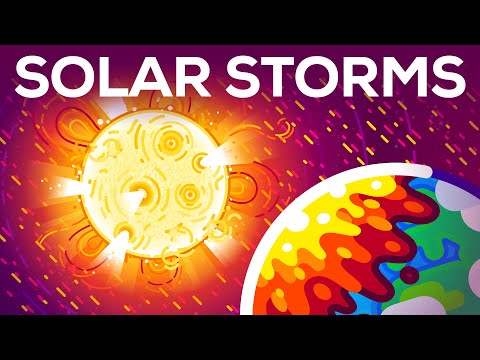
You know, I once read about a guy who turned off his phone just to enjoy a peaceful day outside. But then, bam! A coronal mass ejection hit, and he ended up with a sunburnt face and an internet out for days. Talk about bad timing!
So, coronal mass ejections—let’s call them CMEs for short—are like those surprise fireworks from the sun that can really shake things up here on Earth. Imagine the sun just spitting out a bunch of charged particles, and if they hit us right, it can mess with everything from satellites to power grids.
Yeah, it sounds intense, but forecasting these space weather events is super important. It keeps us in the loop about what’s coming our way. You wouldn’t want to be caught unaware when the solar storm hits, right? That’s where this whole forecasting thing comes into play!
Understanding Today’s Coronal Mass Ejection: Impacts on Space Weather and Earth
Coronal Mass Ejections, or CMEs for short, are these massive bursts of solar wind and magnetic fields rising above the solar corona or being released into space. They’re like giant bubbles of plasma leaving the sun and racing through space. When they hit Earth, they can cause some serious effects on our space weather.
So, you might be wondering, what kind of impacts do these CMEs have on Earth? Well, here’s the thing: they can mess with our satellites, disrupt GPS signals, and even cause power outages. Imagine a tech-filled world suddenly grappling with blackouts because of a disturbance in the Earth’s magnetic field. Wild, right?
Now, let’s break down a few key points about CMEs:
- Speed: CMEs can travel at speeds ranging from 250 kilometers per second to over 3,000 kilometers per second. That’s really fast! Think about it; something moving that quick could give us very little time to react.
- Size: Some CMEs can be huge, ejecting millions of tons of solar material into space. For instance, one CME observed was larger than the Earth itself! Isn’t that mind-boggling?
- Effects on Technology: When these bursts hit Earth’s magnetic field, they create geomagnetic storms. These storms can induce currents in power lines and transformers which might lead to blackouts.
- Auroras: On a positive note—if you’re lucky enough to live in northern regions—CMEs can create stunning auroras or Northern Lights when charged particles collide with oxygen and nitrogen in Earth’s atmosphere.
Forecasting these events is super important because it helps us prepare for their effects. Scientists use satellites like the Solar and Heliospheric Observatory (SOHO) to monitor the sun’s activity closely. They observe sunspots—the areas where CMEs usually originate—to predict if a big eruption is coming our way.
It’s like storm watching but for space weather! Forecasting not only helps protect technology but also keeps astronauts safe when they’re out there floating about in space.
One memorable moment in recent history was during the Carrington Event back in 1859. A massive CME struck Earth unexpectedly and caused telegraph systems to fail across North America and Europe. Some operators even reported electrical shocks! The auroras appeared as far south as Hawaii; talk about a cosmic light show!
In short, understanding today’s coronal mass ejection isn’t just fascinating—it’s essential for keeping our tech running smoothly while giving us an amazing glimpse into how interconnected we are with our sun’s wild side. So next time you hear about one of these solar events—know there’s real impact down here on Earth!
Advancements in Coronal Mass Ejection Forecasting: Enhancing Space Weather Awareness in 2022
Coronal Mass Ejections (CMEs) are, in simple terms, large bursts of solar wind and magnetic fields rising above the solar corona or being released into space. They can be pretty intense, you know? Imagine firing a giant solar cannon towards Earth—it’s kind of like that! CMEs can mess with our satellites, power grids, and even astronauts hanging out in space. That’s why forecasting them is super important.
In 2022, scientists made some serious strides in forecasting CMEs. The main goal was to improve our understanding of when these massive eruptions would occur and how they might impact Earth. This means better predictions could minimize disruption to technology we rely on everyday.
One major advancement included the use of machine learning. You might think this is all about robots taking over, but really it’s a way for computers to learn from past data and make better predictions about future events. By analyzing past CMEs and their characteristics—like speed and direction—these systems can help scientists figure out what to expect next.
Also, new instruments were launched into space to detect CMEs more accurately than ever before. For instance, the Solar Orbiter provides a closer look at the Sun than any previous mission. It sends back detailed images and data that researchers use to understand how CMEs form.
You know what else is cool? Scientists improved communication channels for public awareness regarding space weather events. They started sharing real-time updates with various sectors—like airlines or energy companies—so they can prepare for potential disruptions sooner.
Another aspect was collaboration between different countries and organizations working together on forecasting models. Basically, when experts share information and resources globally, it boosts our collective knowledge and response time. That’s like pooling your knowledge with friends for a school project!
Still wondering about those earthbound effects? Well, strong CMEs can trigger beautiful auroras—those colorful lights dancing in the night sky—but they also pose risks to satellites orbiting Earth or power systems down below.
So you see? Advancements in CME forecasting aren’t just techy science jargon; they’re vital for keeping our planet’s tech safe while letting us enjoy Mother Nature’s spectacular light shows! It really puts things into perspective when you think about how much effort goes into watching the sun just so we’re prepared for whatever it throws our way!
Exploring the Impact of Coronal Mass Ejections on Earth’s Climate and Technology
Sure thing! Let’s talk about coronal mass ejections (CMEs) and how they shake things up on Earth. You know, I’ve always found this topic a bit mind-boggling! I remember staring at the night sky one evening, mesmerized by the stars, when it hit me just how connected we are to everything up there. It’s wild!
So, what is a CME? Well, basically, it’s like a huge burst of solar wind and magnetic fields rising above the solar corona or being released into space. These giant clouds of charged particles travel outwards from the sun and can sometimes head straight for Earth.
Now, when these particles reach our planet, they can interact with our atmosphere and magnetic field. This interaction can create some really stunning visual effects like auroras—those beautiful lights you see in polar regions. But it’s not all pretty lights; CMEs can have serious consequences too!
Impact on Technology:
CMEs can cause disruptions to technology that we all rely on every day. Here are a few ways they do that:
- Satellite Damage: Satellites in orbit can be affected by increased radiation levels from CMEs, which might mess with their electronics or even fry their circuits.
- GPS Systems: The charged particles can interfere with GPS signals. So if you’re relying on your phone’s navigation to find a cool hangout spot, it might lead you astray!
- Power Grids: There’s the possibility of power outages too. In 1989, a massive CME caused a blackout in Quebec for several hours because it induced electric currents in power lines.
That incident is pretty scary when you think about it. Imagine flipping the switch for your favorite podcast or movie and…nothing happens!
Climate Effects:
You might be asking yourself: do these solar events really affect our climate? Well, it’s complicated. CMEs don’t directly change weather patterns but contribute to something known as space weather.
- Ozone Layer: CME interactions can affect the ozone layer’s stability. This layer protects us from harmful UV rays.
- Temperature Variations: Rapid changes in electromagnetic radiation might cause short-term fluctuations in temperature at the Earth’s surface.
When everything’s said and done, scientists are still getting to grips with this whole relationship between CMEs and climate change—even though they know that without the sun’s energy influencing our atmosphere and oceans, life as we know it wouldn’t exist.
Now you see why forecasting CMEs is crucial! Scientists work hard to keep track of solar activity so that we can prepare for these potentially disruptive events. By using satellites like the Solar and Heliospheric Observatory (SOHO), they get insights on when these powerful explosions happen.
So yeah! Next time you gaze up at those starry skies or feel your phone glitching out while navigating through town, remember that there’s a whole cosmic dance going on above us impacting life down here! Isn’t science just amazing?
You know, when we think about the sun, it’s easy to picture that big ball of fire just hanging there, shining down on us. But there’s a lot more going on up there than meets the eye. One of those things is coronal mass ejections, or CMEs for short. These are massive bursts of solar wind and magnetic fields rising out of the sun’s corona. They can send billions of tons of charged particles racing through space. When one of these bad boys heads our way, it can mess with our technology on Earth—think GPS disruptions or even power outages.
I remember once reading about an incident in 1989 when a strong CME knocked out electricity across parts of Quebec for hours! Just like that, people were plunged into darkness. It’s wild to think something so far away could have such immediate effects on our lives.
So, how do we keep track of these cosmic fireworks? That’s where forecasting comes in! Scientists use a mix of ground-based observatories and satellites hovering in space to monitor the sun’s activity. They look for signs that a CME might be on its way and try to predict when and where it’ll happen. It’s kind of like weather forecasting but with a solar twist.
But here’s the thing: predicting CMEs isn’t exactly straightforward. The sun is super complex; its magnetic field is always shifting and changing. Sometimes it feels like trying to predict the mood swings of a teenager! You might have some solid hints based on past behavior, but there are always surprises lurking around the corner.
Still, scientists are getting better at this game. By combining data from different sources and using fancy computer models, they’re improving their predictions all the time. This helps not only tech companies but also people—like astronauts up in space who need to avoid dangerous radiation during these events.
So yeah, forecasting CMEs may sound like something only nerds care about, but it plays a crucial role in keeping our tech-savvy world running smoothly while ensuring those brave folks exploring beyond Earth stay safe too! It’s just another reminder that everything is interconnected—even what happens millions of miles away can ripple through our daily lives here on Earth.