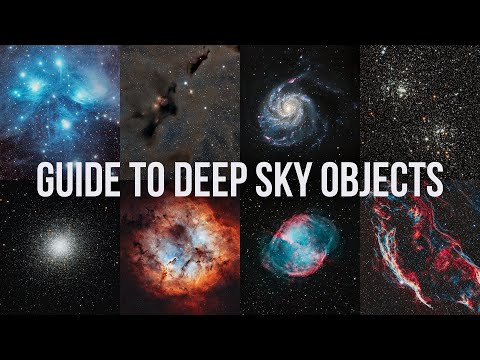
You know that moment when you step outside on a clear night? Like, you look up and it feels like you can almost touch the stars. Seriously, it’s magical! But have you ever tried capturing that wonder with a camera?
Let me tell you about my buddy Jake. He’s obsessed with astrophotography. One night, he set up his gear, all excited about snapping a picture of the Andromeda Galaxy. Instead, he accidentally took like 200 photos of…his neighbor’s porch light! Oops!
But hey, that’s part of the adventure! Deep sky astrophotography is all about patience and creativity. You get to chase cosmic wonders while battling clouds and bugs. And believe me, the rewards are out of this world—literally!
So let’s wander into this universe together and explore how to capture its beauty. Sound good?
Understanding the 400 Rule in Astrophotography: A Guide for Capturing Stunning Night Sky Images
Alright, so you’re getting into astrophotography? That’s awesome! There’s something truly magical about capturing the night sky. Now let’s chat about this handy little trick called the **400 Rule.** You see, it’s a basic guideline that helps you take better photos of stars and other celestial goodies without making them look all streaky.
The 400 Rule is really simple: it helps you figure out the longest exposure time you can use without star trails. Essentially, it tells you how long to keep your camera’s shutter open while still keeping those beautiful pinpoints of light.
Now, here’s the deal: The rule goes like this:
Exposure Time (in seconds) = 400 / Focal Length (in mm).
So if you’re using a 50mm lens for example, you’d do a little math: 400 divided by 50. And that gives you… drumroll please… an exposure time of 8 seconds! Pretty cool, huh?
But why does this matter? Well, if you let your camera capture light for too long, those stars start to look like little streaks instead of points. This happens because the Earth is constantly spinning. It might sound odd at first, but think about it—when you’re standing still and watching the stars move across the sky, they seem to travel pretty fast. If your camera captures them for too long, they’ll blur.
But there’s a couple of things to keep in mind with this rule:
- Crop Factor: If you’re using a cropped sensor camera (like an APS-C), you’ll need to adjust your focal length. Just multiply your focal length by about 1.5x. So that same 50mm lens would effectively be more like a 75mm lens with that multiplier.
- Stability: Use a sturdy tripod! This keeps everything steady and helps avoid any extra motion blur from wind or accidental bumps.
- ISO Settings: You might want to bump up your ISO to get enough light in those shorter exposures. But too much ISO can lead to grainy images—so find that sweet spot!
- Aperture Matters: Keep your aperture as wide open as possible (like f/2.8 or f/4) if you’re after bright and clear images of deep space objects.
Here’s a personal memory for you: I remember my first night trying this out! I set up my gear and was so focused on getting it right… only to realize I forgot my remote shutter release! So I had to use the timer instead. But guess what? Even with my clumsiness, I still ended up capturing some decent shots of Orion’s Belt! That moment hooked me into astrophotography.
So when you’re out there under the stars—just remember that **the beauty lies in the details** and every shot gets better with practice! Learning how to balance exposure time with good technique will really help crank those photos up a notch.
And don’t forget—you can play around with settings and see what works best for you individually! The night sky is just begging for your artistic touch. Happy shooting!
Optimal ISO Settings for Deep Sky Astrophotography: A Scientific Guide
Well, if you’re getting into deep sky astrophotography, one of the big things you’ll mess with is ISO settings. It can feel sort of overwhelming at first, but once you get a hang of it, you’ll start capturing those stunning images of galaxies and nebulae. Let’s break it down!
First off, what does ISO even mean? Basically, it’s a measure of your camera’s sensitivity to light. The higher the number, the more sensitive your camera becomes. So when you’re shooting in dark conditions—as you typically are with astrophotography—you want that sensitivity to really shine.
Now, here’s where the balance comes in. You want to find that sweet spot between **sensitivity** and **noise**. High ISOs can yield brighter images but can also introduce more noise—those annoying grainy spots that mess with your shot’s clarity. Think about trying to read a book in dim light; if the light is too low (like a low ISO), you can’t see well at all, but if it’s too bright (high ISO), everything just gets washed out.
So, what are some optimal settings? Here are a few key points to keep in mind:
- Start Low: A common starting point for deep sky imaging is around 800 ISO.
- Medium Sensitivity: Depending on your target and conditions, bumping it up to 1600 may be beneficial.
- Watch for Noise: If you go much higher than 3200 ISO, noise levels can become quite noticeable.
Also, remember that different cameras handle noise differently! Some high-end DSLRs can perform well even at 6400 or above without turning your images into complete mush.
You might wonder how you figure out the best settings for your specific setup—great question! The answer lies in practice and experimentation. Try adjusting your ISO during different nights or with various targets in mind. Shooting some test frames lets you see how each setting plays out without committing to long exposures right away.
And let’s not forget about exposure time! This plays a huge role too; longer exposures (like 30 seconds or even minutes) will generally need lower ISOs because they gather more light over time. If you’re using tracking mounts (which follow stars as they move), this is where it gets really fun because you can push those limits.
Oh! And here’s a little anecdote: I remember my first attempt at photographing the Andromeda Galaxy—a total mess! I cranked up my ISO high thinking I’d get as much light as possible and ended up with images that looked like abstract art covered in noise—yikes! Lesson learned: patience and tweaking settings make all the difference.
So yeah, achieving stunning deep sky photos is all about finding that balance between ISO sensitivity and noise control while playing around with exposure times. The universe is vast and beautiful; don’t rush it—enjoy every moment under those stars while experimenting with your camera!
So, picture this: it’s a clear night, and you’re lying on your back in the grass, gazing up at the twinkling stars. Each point of light is like a tiny window into the vastness of space. It’s mesmerizing, right? Now, imagine being able to take a photo that captures not just those stars but entire galaxies and nebulae. That’s where deep sky astrophotography comes in.
You know what’s wild? Since forever, humans have looked to the skies for inspiration and curiosity. I remember being a kid—my dad would point out constellations, and I’d be amazed by the stories behind them. But now? Now we have cameras that can capture these cosmic wonders in stunning detail! It’s like painting with light but on a galactic scale.
Deep sky astrophotography lets you see what your eyes can’t. Ever tried spotting the Andromeda Galaxy with just your eyes? Yeah, good luck with that! But through a camera lens with some fancy gear, it pops out as this beautiful swirl of light—like an artist splashing color across the canvas of darkness.
The technique isn’t just about snapping away; it’s kind of an art form mixed with science. You’ve got to know how to set up your shots perfectly and adjust for things like exposure time and tracking movements of the stars since they’re always moving. Seriously! If you leave that camera sitting still for too long, all you end up with are blurry lights instead of crisp details—talk about frustrating!
And let’s not forget about patience—oh boy! You might spend hours waiting for just one perfect shot. The first time I tried stargazing and photographing the heavens myself, I ended up freezing my butt off because I was so focused on getting that “epic” Milky Way shot. When I finally saw what I had captured—wow—I felt like I’d unlocked a secret doorway into another dimension.
You meet other people who share this passion too. It’s kind of awesome how astrophotographers come together over their love for this cosmic art form; sharing tips or just marveling at each other’s work gives you this sense of community.
But here’s something cool: these photographs don’t just look great—they help scientists too! They reveal data about our universe: distances between galaxies or even how stars are born and die. It’s so much more than pretty pictures; it’s actually contributing to our understanding of space!
In essence, capturing deep sky images makes us reflect on our place in the cosmos while showcasing nature’s sheer beauty—and let me tell ya’, it feels good to be part of something bigger than ourselves! So next time you find yourself under those starry skies, maybe think about picking up a camera or just taking a moment to soak it all in—it might just change how you see everything around you!