You know that feeling when you’re lying outside on a clear night, staring up at the stars? It’s kind of magical, right? Well, imagine doing that a few hundred years ago with no fancy telescopes or smartphones to guide you. Just you and the cosmos.
Some people took that magic seriously. Like, really seriously. They donned robes instead of lab coats and set out to uncover the mysteries of the universe using nothing but their eyes—and maybe a quill and parchment.
Picture this: ancient astronomers squinting at the sky for hours, mapping out constellations with nothing but their intuition and a whole lot of curiosity. They were like the original stargazers, trying to decode a cosmic puzzle without an instruction manual.
This journey through the night sky is all about those trailblazers who dared to dream big and look beyond our little blue planet. So grab a comfy seat, because we’re about to meet some of the coolest pioneers in astronomy!
Leading Astronomers of Today: Pioneers Shaping the Future of Space Science
Astronomy has come a long way since the days when people squinted through rudimentary telescopes. Nowadays, there are some seriously amazing brains out there doing incredible stuff. Look, you’ve got to be real about it: these leading astronomers not only build on the work of those pioneering early stargazers but also help shape how we see the universe today.
Let’s take a deeper look at a few of them.
- Neil deGrasse Tyson: You probably know him for his engaging way of explaining complex science. He hosts “Cosmos,” which brings astronomy into living rooms around the world. Tyson isn’t just about cool TV shows; he’s also the director of the Hayden Planetarium in New York and has made big strides in public outreach.
- Katie Bouman: She’s that super smart woman who helped capture the first-ever image of a black hole. I mean, can you even imagine? That picture was like finally seeing something scientists had only theorized about! Bouman’s work with algorithms to process complex data was groundbreaking and opened doors for further research into these mysterious cosmic giants.
- Andrea Ghez: This lady is an absolute trailblazer. She won a Nobel Prize for her research on the supermassive black hole at the center of our galaxy, which is named Sagittarius A*. Ghez’s observations have transformed how we understand black holes and their impact on galaxies.
- Brian Cox: A physicist and promoter of science, he makes physics accessible through his TV appearances and books. Cox explains concepts that might seem alien (pun intended!) to most folks, bringing them back down to Earth with relatable analogies and clear explanations.
What’s fascinating about these astronomers is how they all bring something different to the table. For instance, while Tyson focuses on education, Bouman is all about practical applications in tech that push science forward.
Now think back to those early astronomers—like Galileo or Copernicus—who sparked curiosity about our place in space with raw observation skills and passion for discovery. They had no fancy instruments compared to what we’ve got today! But even now, we owe them a debt because their questions laid the foundation for today’s scientific explorations.
In essence, this new generation stands on their shoulders but takes it much further by combining technology with imagination. They tackle questions like “Are we alone?” or “What does dark matter really do?” These aren’t just philosophical musings; they directly affect how we explore space.
Astronomy has this kind of cool ripple effect too. You may not realize it, but advances made in this field often lead to new technologies that find their way into everyday life—think GPS or satellite communications!
So yeah, when you consider leading astronomers today, it’s not just about stargazing anymore; it’s a full-on adventure into understanding who we are as humans in this vast universe! Each discovery prompts new questions and pushes boundaries further than they’ve ever been before.
In short: these modern pioneers are charting paths unknown while respecting those who came before them by keeping curiosity alive.
Exploring the Contributions of Ancient Astronomers to Modern Science: A Historical Perspective
Astronomy, like science itself, is a journey that’s been happening for centuries. You know, when you look up at the night sky and see those twinkling stars, it all started with ancient folks peering into the abyss. They were the first astronomers, and their insights shaped how we understand the universe today.
Babylonians were some of the earliest stargazers. Back around 2000 BCE, they were tracking celestial movements with impressive accuracy. They created the zodiac and even predicted eclipses. Imagine standing in ancient Babylon and witnessing an eclipse just as they said it would happen! That must have been mind-blowing.
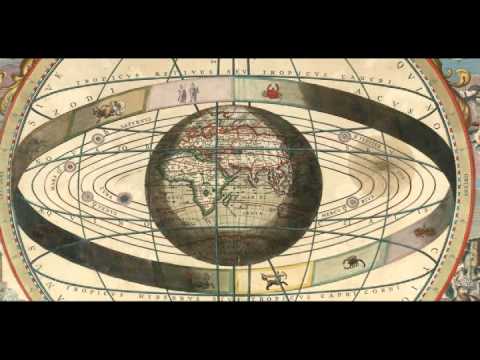
Then there’s Ancient Greece, where thinkers like Ptolemy popped up around 100 CE. He presented a model called the geocentric system, which put Earth at the center of everything. While we know that’s not quite right (thanks to later discoveries), his work laid down a framework for star charts that was used for centuries.
Fast forward to the Middle Ages when Islamic scholars took this knowledge and ran with it. People like Al-Khwarizmi, yeah he sounds cool right?, not only preserved Greek texts but also added to them! His work on algebra helped mathematicians everywhere navigate astronomy better because math is key for understanding distances and orbits.
The Renaissance was another massive leap forward. Copernicus came along with his heliocentric model around 1543, saying, “Hey guys, what if the Sun is at the center?” Dropping that bombshell changed everything! It wasn’t just about who was in charge of the solar system anymore; it shifted our whole perspective on Earth’s place within it.
Then there was Tycho Brahe and Johannes Kepler in their pockets of time during the 16th to 17th centuries—talk about rock stars of astronomy! Tycho collected tons of precise observational data without a telescope (which wasn’t invented yet). Kepler took this info and deduced laws of planetary motion that showed how planets actually moved in elliptical orbits instead of perfect circles!
- The contributions from these ancient astronomers set crucial foundations.
- Their approaches offered methodologies that are still relevant today.
- The mix of mathematics with observations enabled modern astronomy to take off.
- A quite fascinating road led to telescopes and further discoveries by scientists like Galileo!
You see how all this connects? It’s like a relay race where each astronomer passed on knowledge to build on what came before them. Even if some ideas weren’t spot-on (like geocentrism), they still opened doors for fresh thinking. And isn’t that just so human? Mistakes leading us down new paths?
So next time you’re stargazing or scrolling through space news online, remember these early pioneers who literally looked up and wondered about their place in space. They may not have had smartphones or fancy labs, but their passion paved paths for everyone who followed—a true testament to curiosity driving progress!
Exploring the Contributions of Famous 21st Century Astronomers to Modern Science
Sure! Let’s talk about some amazing astronomers from the 21st century who’ve really shaken things up in modern science. There have been so many contributions that I’m just going to highlight a few of the rockstars here.
First off, we can’t skip over Neil deGrasse Tyson. Yeah, he’s a bit of a celebrity in the science world, but it’s not just his charm that makes him stand out. Tyson has worked hard to popularize astrophysics and bring science to the mainstream. He’s known for his engaging talks and books. He also played a big role in reviving the famed series “Cosmos.” Thanks to him, more people are curious about black holes and the cosmos!
Then there’s Brian Greene. This guy is like a wizard when it comes to theoretical physics. His work on string theory is pretty mind-blowing! String theory suggests that what we think of as particles are actually tiny vibrating strings. Crazy, right? Greene has made this super complex stuff accessible through his books and public talks, helping us ordinary folks get a taste of the universe’s deepest secrets.
Next up is Kip Thorne, who won a Nobel Prize for his work on gravitational waves—yeah, those ripples in spacetime created by massive cosmic events like merging black holes! Thorne played a key part in LIGO (Laser Interferometer Gravitational-Wave Observatory), which was one of those next-level projects that proved Einstein right all over again. Can you imagine detecting something you can’t even see? That’s some next-gen astronomy!
We can’t forget Sara Seager, an absolute trailblazer in exoplanet research. She has done so much work searching for planets outside our solar system that could potentially harbor life. Just think about how incredible it would be if we found another Earth somewhere out there! Seager’s research focuses on characterizing these distant worlds by studying their atmospheres for signs of habitability.
Last but not least, meet Sheperd DoEleman. He was instrumental in the Event Horizon Telescope project, which delivered images of black holes—yes, actual photos! The first image of a black hole’s event horizon was unveiled in 2019 and sent shivers down our spines. It changed how we visualize fundamental aspects of cosmic phenomena.
So yeah, these astronomers have basically revolutionized our understanding of space and our place within it. Each one brings something unique to the table—whether it’s making complex ideas understandable or reaching out into deep space for answers.
In conclusion (yeah, I know I said no conclusions!), their work reminds us how tiny we are yet how much we’ve achieved through curiosity and resilience. Just remarkable stuff happening under those stars!
Imagine standing under a sky full of stars, like, a thousand years ago. No city lights to drown out the twinkling heavens. Just you and the vastness of the universe. It’s pretty mind-blowing to think about how early astronomers peered up at that same sky and started figuring stuff out, right?
Take ancient civilizations, for example. The Babylonians were some of the first folks to really pay attention to what was going on up there. They tracked celestial bodies and developed one of the earliest forms of astrology. Can you believe they calculated eclipses way back then? It’s like they had their own cosmic calendar!
Then you’ve got folks like Ptolemy in ancient Greece who tried to map out everything in a geocentric model – that means they thought Earth was at the center of the universe! Crazy, huh? His work was so influential that it shaped our understanding for over a thousand years! And yet, despite all that effort, they were working with such limited tools and knowledge.
Fast forward a bit to Copernicus, who shook things up by suggesting that it wasn’t Earth at the center after all but rather the Sun. That must’ve been bold; imagine challenging centuries of belief! And then there’s Galileo—oh man, what a character! He invented this telescope and turned it towards Jupiter. Finding moons orbiting another planet? Mind blown!
I remember sitting outside one summer night with my dad as he pointed out different constellations: Orion, Cassiopeia… all those old myths tied to those star patterns felt like magic. It’s wild when you think about how those stories come from people trying to make sense of their world through starlight.
You know what’s neat? All those early astronomers were kind of like artists too—crafting maps not just on paper but in our minds—connecting humanity with something so much larger. They asked questions we still ponder today: What are we made of? Are we alone?
So here we are now, with fancy telescopes and spacecraft exploring distant worlds. But let’s not forget where it all began—with people looking up in wonder just like us. Their curiosity lit the spark that continues to inspire generations exploring this magnificent night sky today. It’s kinda poetic when you think about it, right?