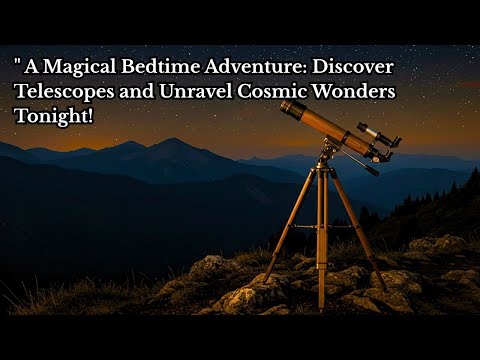
You know that feeling when you look up at the night sky and just get lost in all those stars? It’s like a cosmic wonderland, right? I remember the first time I used a telescope. It was my buddy’s birthday, and we thought we’d set it up in his backyard. It was hilarious! We ended up spending half the night trying to figure out how to point it at the right spot.
But once we got it working, oh man! The craters on the moon looked like golf balls up close. Seriously, it’s mind-blowing what you can see when you look through a telescope.
Stargazing isn’t just staring aimlessly at twinkling dots. It’s like peeking into another world. There are stories, mysteries, and even some wild stuff happening out there. So grab your blanket and get comfy; let’s chat about stargazing wonders and how a simple telescope can transform your night!
Choosing the Best Telescope for Stargazing: A Comprehensive Guide for Astronomy Enthusiasts
So, you’ve decided to get into stargazing, huh? That’s awesome! Stargazing is like an endless treasure hunt in the night sky. But before you grab the first telescope you see and rush outside, let’s chat about how to pick the best one for your needs.
First off, understanding the types of telescopes is key. There are mainly three kinds: refractors, reflectors, and compound telescopes.
- Refractors: These are great for beginners. They use lenses and usually provide sharp images of planets and stars. They’re fairly low maintenance too.
- Reflectors: These use mirrors instead of lenses. They can gather more light, which means you get to see fainter objects in the sky. However, they might need more upkeep since mirrors can get dust on them.
- Compound telescopes: These combine both lenses and mirrors. They’re versatile and compact but can be pricier.
Now, think about what you wanna see! If you’re excited about planets like Saturn or the craters on the Moon, a good refractor might do it for you. On the flip side, if your heart races at the thought of distant galaxies or star clusters, then a reflector could be your best friend.
Next up is aperture size. This just means how big the opening of your telescope is; it really does make a difference! A larger aperture lets in more light allowing you to see dimmer objects better. For most beginners, something around 4 inches (100mm) is nice to start with.
Oh! And what about portability? If you’re planning on lugging your telescope around town or maybe even up a mountain for that perfect view? Then consider its weight and how easy it is to set up. Sometimes simpler is better when you’re racing against those clouds rolling in!
Let’s not forget about mount type. You’ll come across two common mounts – altazimuth and equatorial. An altazimuth mount moves up-and-down and left-to-right like a camera tripod—super easy for newbies! An equatorial mount tracks celestial objects as they move across the sky but has a steeper learning curve.
You know what’s also important? Your budget! Decide how much you’re willing to spend before getting carried away scrolling online or wandering into stores staring at those shiny telescopes. There are decent options out there without breaking the bank – even under $200!
And lastly—oh boy—don’t forget about accessories. Things like eyepieces can enhance your experience by letting you zoom in further or widen your view depending on what you’re after that night.
Picture this: I remember my first time using a telescope with my friends during a camping trip as kids; we pointed it at what we thought was just another star—and bam! It turned out to be Jupiter with its moons all lined up right beside it! That moment was unforgettable and totally sparked my love for stargazing.
In short: pick wisely based on what you want to see, how much you’re willing to carry around, and don’t forget that bigger apertures usually mean better views! Get ready—those stars are waiting for you!
Exploring Lunar Visibility: Can Telescopes Capture the US Flag on the Moon?
So, let’s talk about the Moon and those little trips we made there. You probably know about the Apollo missions, right? They were a huge deal. One of the coolest things ever done was planting the US flag on the Moon. But now, with all the tech we’ve got, you might be wondering: can telescopes actually capture that flag?
Well, here’s the scoop: the short answer is no, at least not with your average backyard telescope. Why’s that? It’s all about size and distance. When Apollo astronauts left the flag back in 1969, they also left some other stuff like lunar rovers and experiments. That stuff is small compared to how far away the Moon is—about 238,855 miles from us.
Think of it this way: if you tried to see an object as tiny as a flag from that distance, it’s like trying to spot a penny from a mile away! You’d need some serious power in your telescope to make that happen.
Now let’s break it down a bit more:
- Resolution limits: Telescopes have a limit to how much detail they can resolve based on their aperture size (that’s just fancy talk for how big the lens or mirror is). Most telescopes you might have at home just aren’t big enough.
- Atmospheric interference: The Earth’s atmosphere plays tricks on us too. Stars twinkle and distant objects can get blurry because of air currents and pollution. This makes it even trickier to see something far away and small.
- Lunar reconnaissance orbiter: If you’re keen on seeing images of that flag, NASA’s Lunar Reconnaissance Orbiter has taken some pretty amazing shots from its orbit around the Moon. These images show not just the flag but also footprints left by astronauts! It’s like having an ultra-high-definition view.
- No human touch: Even with powerful telescopes or space probes looking down at our lonely lunar buddy, they can’t see us waving back at them from Earth—literally! We’re too far for our ordinary eyes.
So yeah, while astronomers with giant observatories could theoretically capture images of moon landings with super-expensive gear, your run-of-the-mill telescope won’t cut it.
It really makes you think about what humans have achieved. I mean, just imagining someone standing there on that dusty surface during those iconic missions gives me goosebumps! The fact that we put our little fabric flag up there ages ago still blows my mind.
Just remember: stargazing through telescopes is awesome for discovering planets and craters but not quite enough for waving at our flags on celestial bodies—at least not yet!
Exploring the Night Sky: Viewing Planets with a 70mm Telescope
Looking up at the night sky can be one of the most magical experiences, and doing it with a telescope can seriously amp up that magic. So, if you have a 70mm telescope, you’re actually in for quite the treat. This size is super popular for beginners and casual stargazers. Let’s break down what to expect when you’re out there aiming at those twinkling dots.
First off, it’s important to know what a 70mm telescope can do. The “70mm” refers to the diameter of the lens—or aperture—at the front of the telescope. A larger aperture means more light can enter, which is key because it allows you to see fainter objects in space. Think of it like trying to see something in a dark room; if there’s more light coming in, you’re going to spot things way easier!
Now, let’s talk about what planets you might be able to see with your 70mm scope:
- Mars: Often visible as a bright red dot, especially during opposition when it’s closest to Earth.
- Jupiter: This giant planet is spectacular! You might spot its bands and even its four largest moons—like little stars dancing around it.
- Saturn: Its rings are just stunning! Even through a smaller scope, you’ll see why it’s called the jewel of the solar system.
- Venus: Look for its phases—sometimes it looks like a crescent moon!
I remember one night setting up my small telescope just outside my house. I was eager as I focused on Jupiter—it looked like a little marble with some coloring! When I noticed those tiny moons flickering around it, I felt like an explorer discovering something new! Seriously—a cool moment!
To get started on your stargazing adventure:
- Choose a dark location: Light pollution from street lamps or buildings can seriously mess with your view. A park or open field away from city lights works great!
- Pace yourself: Give your eyes time to adjust; it takes about 20 minutes for them to adapt fully in the dark.
- Use apps or star charts: They can help guide you on where exactly to look for planets or constellations.
- If possible, observe during clear nights: Clouds and humidity will make your experience less enjoyable; they really do get in the way!
The best part? You don’t need fancy gear! Just your 70mm telescope and maybe some hot cocoa if it’s chilly out there. Remember also that patience is key: waiting for those moments when everything aligns just right is half the fun.
If you’re feeling adventurous about how you’ll set things up: using an adjustable tripod will really help stabilize your view and allows for smoother movements while tracking planets across the sky. Plus, don’t hesitate to experiment with different magnifications—you might find that sometimes less is more!
You know what? Stargazing isn’t just about looking; it’s about connecting with something bigger than ourselves—like witnessing thousands of years of history written across the stars. So grab your gear, look into that vast universe above—and who knows? You might just find yourself falling in love with astronomy.
Stargazing is, like, one of those magical experiences, you know? I remember one night at my buddy’s place—we set up a telescope in his backyard. The sky was clear, and honestly, the stars felt like they were just hanging out, waiting for us to notice them. And when we finally looked through that lens? Wow!
You start with the moon—it’s incredible how detailed it is! The craters and shadows look so alive. You’d think it’s just this flat rock in the sky, but if you really look? It’s got its own stories to tell. I mean, every time I see it up close, I get this rush of wonder. It’s the same feeling as finding an old photo album full of memories that you thought were forgotten.
And then there are the planets! We spotted Jupiter that night too. Its stripes and moons looked so vivid! Did you know it has over 70 moons orbiting around it? Just imagining all those rocks and ice floating around in space freaks me out a bit—like a cosmic dance party no one can see!
But here’s the thing: it’s not only about what you see through the telescope. It’s also about what you feel. There’s something humbling about gazing at all those stars and realizing how tiny we are in this vast universe.
Sure, there’s science behind everything—the light years, orbits, cosmic phenomena—but sometimes it feels even more special just to sit back and soak it all in. When you’re out there under the stars with friends—or even solo—there’s this sense of peace that washes over you. Like, all your worries fade away for a moment as you get lost in space.
So next time you’re outside on a clear night with nothing but darkness above you, take a peek through a telescope if you can. It’ll change your perspective on so many levels—not just about astronomy but about life too. You might find yourself dreaming bigger than ever before!