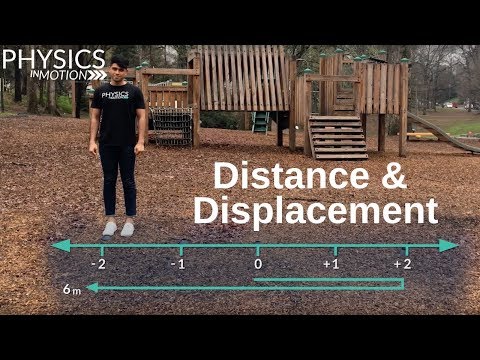
You know, the other day I was chatting with a friend about how far away the stars are. Seriously, like millions of light-years! Can you even imagine?
We got stuck on this thought: distance is a total game changer in physics. It’s not just about how far apart things are; it shapes everything, like gravity and light.
Think about it. Ever tried to throw a rock across a pond? The further you throw, the more things come into play—like wind and water ripples. That’s how physics works too!
So, let’s explore this whole distance thing together. You might just find it’s more interesting than you think!
Understanding the Law of Distance in Physics: Key Concepts and Applications in Science
When we talk about the *law of distance* in physics, we’re diving into how distance affects various physical phenomena. You might not realize it, but distance plays a key role in everything from gravity to light. So let’s break it down.
1. Gravitational Force: One of the most well-known laws related to distance is Newton’s law of universal gravitation. It tells us that the force between two masses decreases as they get farther apart. Imagine, like, if you were trying to pull a friend towards you with a rope. The further away they are, the less effective your tug becomes. This force diminishes with the square of the distance, which means that if you double the distance, the gravitational pull is only one-fourth as strong!
2. Electromagnetic Forces: Similar to gravity, electric forces also depend on distance. Coulomb’s law states that the strength of the electric force between two charged objects decreases as they move farther apart. If you’ve ever tried to feel static electricity from a distance—like when you rub a balloon on your hair—you’ll notice that getting closer makes it more intense!
3. Light and Sound: Distance impacts how we perceive sound and light too! With sound, as you move away from its source—like a concert—you’ll notice it gets quieter because the sound waves spread out over greater areas. That’s why being in front row feels so much different than being way back in the audience! Similarly for light, it also spreads out as it travels further from its source; think about how dim stars look compared to those up close.
4. Applications in Technology: Understanding how distance affects physical laws enables us to develop technologies like GPS and satellite communications. For GPS systems, knowing distances accurately can pinpoint where you are on Earth based on signals from satellites up high.
5. Everyday Life Examples: On a more relatable note, consider throwing a ball; if you throw it harder (like increasing gravitational force) or at an angle (which relates to electromagnetic concepts), its path changes dramatically based on where it’s headed and how far it’s supposed to go.
In short, if there’s one takeaway here about understanding the law of distance in physics, it’s that this concept isn’t just theoretical—it’s all around us! From playdates at the park to navigating through towns using GPS; distances matter every single day! Kind of makes you see things differently next time you’re out and about, huh?
Understanding Distance in Physics: Its Significance and Applications in Science
Understanding distance in physics is a big deal. Seriously! It’s like the backbone of so many laws and theories that help us make sense of how the universe works. When we think about distance, we’re often talking about how far two points are from each other. But it goes way deeper than that!
Distance affects many fundamental forces. For instance, gravity depends on how far two objects are from one another. Ever heard of Newton’s law of universal gravitation? It basically says that the gravitational force gets weaker as you move farther apart. So, if you’re hugging your buddy and then both step back, you’ll feel less of that pulling sensation. It’s like the universe’s way of saying, “Hey, give each other some space!”
Now, let’s touch on light and sound. The speed at which sound and light travel is constant in a vacuum for light and less so for sound because it travels through air or water. Imagine watching a fireworks show with your friends; you see the bright bang before you hear the awesome boom. That’s because light zips faster than sound! The distance plays a role here too; the farther away those fireworks are, the longer it takes to hear them after seeing them.
In physics formulas, distance is commonly represented by “d.” You will find it in equations like velocity = distance/time. Basically, if you want to know how fast something moves, knowing how far it went is key! If you’re running at a sprint pace, figuring out how long it took you to cover 100 meters gives you insight into your speed.
Applications of distance stretch beyond just simple calculations too. For example: in astronomy, understanding distances between stars helps astronomers determine their brightness and size. The method they use is called parallax; it’s kind of like when you hold your finger up with one eye closed and then switch eyes – your finger seems to move against the background! Astronomers use this trick on a much grander scale with stars.
Furthermore, distance influences technology. Think about GPS – it gives us directions based on distances between locations. If you’ve ever used map apps on your phone for driving or walking somewhere new (which we all have!), those apps calculate distances in real-time to guide us efficiently.
So really, exploring distance isn’t just about numbers on paper—it’s fundamental to our day-to-day experiences and helps scientists unravel more mysteries of our reality. Whether it’s navigating through traffic or understanding everything from gravity’s pull to light years across space—distance is like this invisible thread linking all these concepts together!
In summary:
- Distance plays a critical role in forces like gravity.
- It affects how we perceive sounds and lights.
- The relationship between speed and distance is key.
- Astronomy heavily relies on measuring distances between celestial bodies.
- Technology like GPS uses distances for navigation.
Pretty cool stuff, right? Distance may seem simple at first glance but its significance goes way beyond what meets the eye!
Exploring the Impact of Distance on Gravitational Force: A Scientific Perspective
Alright, so let’s chat about gravity! It’s one of those things we take for granted, like oxygen or pizza. But what a lot of people don’t realize is that the **distance** between objects plays a huge role in how gravitational force works. So, here’s the lowdown on this whole distance thing.
When we think about gravity, most of us picture that apple falling from a tree or maybe how the Earth pulls us down to keep our feet on the ground. But really, gravity is all about attraction between mass. The more massive an object is, the stronger its gravitational pull. But wait—there’s more! **Distance comes into play big time**!
The formula for gravitational force looks like this:
F = G * (m1 * m2) / r²
That might seem like a mouthful, but here’s what it means:
– **F** is the force of gravity between two objects.
– **G** is a constant (which you can think of as just a number that ties everything together).
– **m1 and m2** are the masses of those two objects.
– **r** is the distance between their centers.
To break it down simply: as you move things further apart (increase that r), the gravitational force weakens dramatically because it’s divided by r squared! So if you double the distance? The gravitational pull gets four times weaker! How nuts is that?
Let’s throw in an example to make it pop. Think about Earth and the moon. They’re about 238,855 miles apart on average—that’s around 384,400 kilometers for my metric friends! The moon isn’t falling into Earth because it has enough speed to balance out Earth’s pull while also being far away enough to escape that “splat” we all fear.
Now consider something closer—like you and your friend standing just a few feet apart. Your combined mass creates a slight gravitational attraction between you two too! It won’t pull you together like magnets (unless you’re super close!), but it’s there!
Here are some little tidbits about how distance affects gravity:
- The closer two masses are, the stronger their attraction. Think about satellites orbiting Earth—they’re held up by Earth’s gravity but have enough speed to stay in motion.
- If you travel far enough from Earth into space, you’ll notice gravity decreases. At high distances from significant mass concentrations like planets or stars, you’d feel lighter.
- This distance effect also explains why astronauts feel weightless when they’re in orbit; even though they’re still under Earth’s influence, they’re constantly falling toward it while moving sideways.
So next time you’re standing outside under the stars or jumping around with friends, remember there’s a whole lot more going on than meets the eye with gravity and distance. Those invisible forces shape our universe in ways we’re just starting to grasp fully—pretty cool stuff if you ask me!
Distance, huh? It’s one of those things we often take for granted, but it really plays a massive role in how the universe works. Seriously, it’s like the unsung hero of physics! Think about it: whether we’re talking about gravity pulling us down to Earth or light travelling from the sun to warm our skin, distance is basically the middleman in these cosmic relationships.
I was once staring up at the night sky with a friend. You know how sometimes you get lost in those moments? We were gazing at stars, and she got all philosophical, asking why some stars twinkled more than others. That got me thinking about distance and how it affects not just what we see, but also what we feel. The closer something is to us—like that bright star—seems so much clearer and more vibrant compared to those distant little dots.
And this isn’t just poetic fluff! In physics, there’s this concept called the inverse square law. It basically says that as you move away from a source of energy (like light or gravity), the effect decreases rapidly. So if you get twice as far from a light bulb, it doesn’t just get dimmer; it gets way dimmer—like you can barely see it anymore! Pretty wild stuff.
There’s also the whole idea of time dilation in relativity where distance affects time itself! Imagine you’re hanging out on Earth while your buddy speeds off into space on a spaceship that travels near the speed of light. When they come back after what feels like a few years for them, decades might have passed for you here on Earth! Distance can warp time like some kind of cosmic magician.
It’s almost humbling when you think about how all our interactions—every bit of communication and each moment shared—is influenced by this fundamental factor. I mean, isn’t it fascinating that something as simple as meters or miles holds such power in describing forces and connections? So next time you stare at the stars or walk your dog down the street, take a moment to appreciate that distance isn’t just an abstract number; it’s woven into the fabric of existence itself. Pretty amazing stuff when you ponder on it!