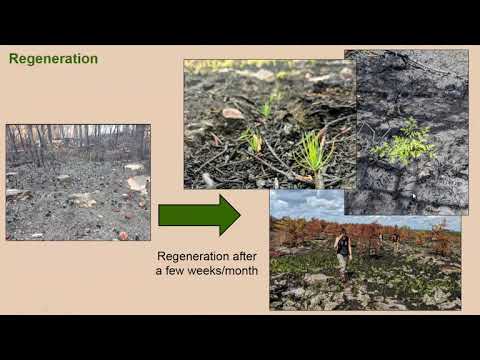
You ever seen a forest after a wildfire? It’s like nature’s crazy way of throwing a party, right? Trees are charred, but then, boom! Green sprouts start popping up everywhere. Kind of wild how things can bounce back like that.
But here’s the thing: resilience and recovery in disturbance ecology is all about understanding that wild comeback vibe. It’s not just trees and plants; it’s ecosystems doing their thing after, well, getting knocked around a bit.
Think about the resilience you show when life throws you a curveball. That’s how nature rolls too. Sometimes you need to get a little messy before you can grow again. So let’s chat about how plants and animals adapt after disturbances. Trust me, it’s more fascinating than you might think!
Exploring Ecosystem Resilience: Understanding Disturbance and Recovery in Ecological Systems
It’s pretty fascinating how ecosystems work, don’t you think? So, let’s dig into ecosystem resilience—basically, it’s all about how ecosystems bounce back after they get knocked around a bit by disturbances. These disturbances can be anything from wildfires to floods or even human activities like deforestation.
When a major disturbance happens, ecosystems can experience a real shake-up. Think of it like this: imagine your favorite coffee shop suddenly closing down. At first, it feels super frustrating! But then, maybe another awesome café opens nearby, and you find yourself loving the new spot just as much. That kind of rebound is what resilience is all about.
Now, here’s where it gets interesting. Not all ecosystems are created equal when it comes to resilience. Some are tough cookies that bounce back quickly while others struggle for a long time after a disturbance. It really depends on their structure and function.
- Species Diversity: The more diverse an ecosystem is—meaning the variety of plants and animals—it can usually recover better after disturbances.
- Soil Health: Healthy soil can help plants grow back quicker after something crazy happens.
- Connectivity: If different parts of an ecosystem are connected well (like rivers flowing into each other), recovery can happen faster.
Let’s talk about disturbances for a sec. They come in two flavors: natural and human-induced. Natural ones are like hurricanes or volcanic eruptions—things that Mother Nature throws at us every now and then. Human-induced disturbances are things we do ourselves: pollution or urbanization, for example.
After disturbances occur, the recovery process kicks in. This is where you really see how resilient an ecosystem can be! Recovery usually involves stages:
- Pioneer Species: These are like the first responders of nature! They’re often fast-growing plants that start to pop up first after a disturbance.
- Secondary Succession: Over time, as those pioneers create shade and improve soil health, other species start moving in—kind of like a neighborhood expanding.
- Mature Community: Eventually, if left undisturbed long enough, ecosystems can return to their original state or develop into something new altogether.
But here’s something to think about: repeated or severe disturbances might change the game entirely. Imagine if your favorite coffee shop closed down and then was replaced by a fast-food chain—it changes the whole vibe! This shift can lead to what we call alternative stable states in ecology.
Understanding resilience and recovery helps us figure out how to preserve our natural environments better—crucial stuff since we’re all living here together on this planet! Managing these systems wisely means we get to enjoy beautiful landscapes today while also thinking ahead for future generations.
The next time you think about nature bouncing back from challenges, remember: it’s not just survival; it’s evolution in action! Ecosystems teach us so much about strength in adversity—and isn’t that something worth celebrating?
Understanding Ecosystem Resilience: The Capacity to Withstand and Recover from Disturbances
Ecosystem resilience is all about how nature handles chaos. Imagine you’re at a party and the music suddenly stops—it might feel awkward for a moment, but the vibe can bounce back. Ecosystems work similarly. They face disturbances like wildfires, floods, or even human activities, and resilience is their ability to recover from these events.
So, what does “resilience” actually mean in this context? It’s not just about bouncing back; it’s also about bouncing forward. Some ecosystems can return to their original state after a disturbance, while others might adapt and change into something new. For example, when a forest burns down, it doesn’t just come back exactly as it was—it can grow back stronger with new species that thrive in the newly cleared space. Crazy, huh?
Now let’s break this down into a few key points:
- Types of Disturbances: Ecosystems face various disturbances. These can be natural—like hurricanes or droughts—or human-driven, such as deforestation or pollution.
- Response Mechanisms: Different ecosystems react differently to disturbances. Some grasslands might bounce right back after grazing, while coral reefs are way more sensitive to water temperature changes and may take years or decades to recover.
- Species Diversity: The more diverse an ecosystem is—the more different plants and animals it has—the better it generally copes with disturbances. Think of diversity as nature’s buffer against change.
- Adaptive Capacity: This refers to how well an ecosystem can adjust its structure and function when faced with new conditions. It’s like upgrading your phone instead of just fixing the old one!
And here’s something interesting: Resilience isn’t static. It can change over time based on environmental conditions or human impacts. Take wetlands as an example; they’ve been drained for agriculture in many places. Once these wetlands lose their capacity for absorption during floods due to this loss, they struggle to cope when heavy rains hit.
What happens if an ecosystem loses its resilience? Well, that can lead to big problems! Imagine if your favorite coffee shop shut down because they couldn’t handle a power outage—not great! In ecosystems, this loss could mean extinction for certain species or complete shifts in habitat types where nothing grows anymore.
So why care about ecosystem resilience? Because recognizing how these systems work helps us make better choices—like preserving natural habitats rather than paving them over. And hey, being aware of our impact on ecological systems means we can all play a part in maintaining that balance.
In short, understanding ecosystem resilience helps us appreciate the delicate dance between disturbance and recovery in nature. If we keep learning about it and advocating for healthy ecosystems, like responsible party guests who look out for each other during the awkward pauses—we’ll all benefit from a vibrant planet!
Ecosystem Resilience and Recovery: Understanding the Impact of Disturbances like Fire on Ecological Balance
Okay, let’s chat about ecosystem resilience and how it deals with disturbances like fire. You know, when we think about ecosystems, we often picture a calm balance of plants and animals living their best lives. But sometimes, nature throws a curveball, and that’s where resilience comes in.
So, here’s the deal: ecosystem resilience is basically how well an ecosystem can bounce back after something disruptive happens. Imagine you’re at a party and the music suddenly stops. You might feel awkward for a second, but then you grab a snack or start chatting with friends again. That’s kind of what happens in nature! When something like fire disrupts the environment, some species can adapt or recover quickly.
The impact of fire on ecological balance is super interesting. Fires can be scary for sure; they can destroy habitats and threaten wildlife. But not all fires are bad. Some ecosystems actually need fire to thrive! For example:
- Fire as a natural reset button: Certain plants have seeds that only sprout after being exposed to high temperatures. It’s like nature’s way of saying, “Hey! Time to start fresh!”
- Encouraging new growth: After a fire clears out old plants, new ones can emerge without competition for sunlight and nutrients.
- Nutrient recycling: Burning vegetation releases nutrients back into the soil, which helps future plant growth.
You know what? I remember watching a documentary about the Australian bushfires. At first, it was heartbreaking to see landscapes turning to ash. But then they showed how quickly life returned! In just a few months, green shoots started poking through the blackened earth. It reminded me that recovery is part of the cycle.
But it’s not just about bouncing back; it’s also about managing this process intelligently. Here are some factors that influence how well an ecosystem recovers:
- The type of disturbance: Intensity and frequency matter! A mild fire might help an ecosystem recover faster than one that scorches everything in its path.
- The diversity of species: More biodiversity usually means better resilience because different species play different roles in recovery.
- The human factor: Human actions—like land development or climate change—can complicate recovery efforts.
You might wonder why we care about this stuff anyway? Well, healthy ecosystems provide us with food, clean air, and even places to play outside! Understanding resilience helps us better manage these areas when things go awry.
In short? Ecosystem resilience is all about recovery—a way for nature to adapt after disturbances like fire disturb its balance. And while these events can seem catastrophic at first glance; they can also be opportunities for renewal!
Next time you hear about wildfires or other disturbances, think of them as part of nature’s complex tapestry—a wild mix of chaos that leads to new beginnings!
You know those times when life throws a huge curveball at you? Like when a storm hits, or maybe something unexpected happens that feels completely overwhelming? Well, ecosystem disturbances work in pretty much the same way. It’s all about resilience and recovery.
Imagine walking through a forest after a wildfire. Charred trees stand like quiet sentinels, but if you look closely, there’s life everywhere. New sprouts push through the ashes, animals scurry about as they return, and nature begins its slow comeback. It’s kind of inspiring, honestly!
Resilience is how ecosystems bounce back after something like a fire or a flood. Think of it as nature’s way of saying, “I can handle this!” Some plants and animals adapt to harsh conditions even better than before. They learn to thrive in the aftermath of chaos. For instance, certain trees have seeds that only open up after being exposed to fire—talk about turning up the heat on growth!
But recovery doesn’t happen overnight. It takes time—sometimes years—for an area to fully regain its health and diversity. And that’s where things get interesting! If an area suffers too many disturbances too quickly—like one storm after another—it might not recover fully because it doesn’t have time to rebuild its community of plants and animals. It’s like trying to fix your car while it keeps breaking down; frustrating and exhausting!
Here’s a personal anecdote: I once took a hike in a canyon that had been hit by floods just months earlier. At first glance, it seemed barren and sad, with mudslides leaving marks everywhere. But as I walked further in, I saw tiny flowers poking up from the rubble and saw birds reclaiming their old nests high in the trees—they were all making do with what they had left behind. It made me feel really hopeful seeing that persistence.
It’s incredible how many different layers there are to resilience and recovery in ecology; they aren’t just about bouncing back, but also about learning from past experiences while adapting for future challenges. Nature teaches us so much there! We could all use a bit of that resilience now and then—much like those sprouting flowers reminding us that new beginnings can come from the toughest situations.
So next time you face some disturbance—be it personal or environmental—think about how ecosystems remind us: with patience, effort, and maybe some help from your friends (or fellow trees!), recovery is totally within reach!