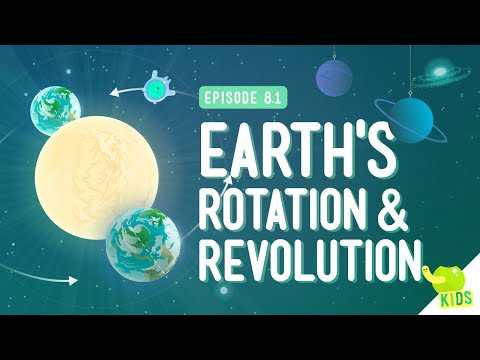
You know that moment when you’re spinning around in circles and everything seems to blur? Suddenly, you stop, and for a split second, the world feels like it’s still spinning around you? Well, that’s kind of what Earth does all the time. Fascinating, right?
So, here’s a little secret: many of us forget how incredible this planet really is. It spins on its axis like a giant top, creating day and night without even breaking a sweat! If you’ve ever thought about how to explain this to kids—or even your curious friend who thinks the earth is flat—this is for you.
Imagine doing some fun activities that illustrate Earth’s rotation. Picture kids laughing while they create mini globes or race to catch shadows. Sounds like fun? Trust me, it totally is! Let’s explore some engaging ideas together that will make science not just informative, but super cool too!
Exploring Effective Materials to Demonstrate Earth’s Rotation in Scientific Education
Exploring Earth’s rotation can be super fun and incredibly enlightening. It’s like a cosmic ballet that we can witness daily, and there are several effective materials and activities to help demonstrate this concept in science education. You know? It’s all about making the invisible visible, so to speak.
One classic method involves using a globe. Picture this: you have a globe and a flashlight. The globe represents Earth, and the flashlight is the Sun. When you shine the light on the globe while slowly rotating it, you can see how different parts of Earth experience day and night. How cool is that? This simple setup shows how our planet spins on its axis, creating those 24-hour cycles we’re all familiar with.
Another great material is a simple pendulum. By hanging a pendulum from a fixed point and letting it swing, something remarkable happens over time. The path of the pendulum appears to change due to Earth’s rotation. This effect ties back to Foucault’s Pendulum, which was devised specifically to demonstrate this phenomenon. It’s like watching magic happen in real time!
You could also use time-lapse videos. Seriously, watching clouds move across the sky or observing stars seeming to rotate around Polaris can help visualize Earth spinning without needing fancy equipment. Just pop in a video showing these celestial movements at high speed, and students get an idea of how vast our universe is.
Then there are shadow sticks or gnomons. If you set up a stick vertically in an open area and mark where its shadow falls throughout the day, you’ll notice that it changes position as time goes on. This activity really connects students with observation—they’re literally seeing evidence of Earth’s rotation through shadows.
Also worth mentioning are
. These little gadgets can be made from household items like marbles or toy tops! You spin them fast enough, and they stabilize in their axis—just like Earth does when it spins!
Putting these hands-on activities together creates an engaging learning environment where students not only grasp but feel Earth’s rotation in their bones. You can mix them up too! Doing multiple activities helps cater to various learning styles—visual, kinesthetic—you name it.
All in all, using effective materials makes exploring such abstract concepts much more tangible! By engaging with these ideas physically or visually, you’re creating lasting memories—and maybe instilling some love for science along the way!
Exploring Orbit Activities: Engaging Science Projects for Students
Sure! Let’s break down the concept of Earth’s rotation and orbit activities for students. It’s a fun topic, and there’s so much you can do with it!
Understanding Earth’s Rotation
Earth rotates on its axis, which is an imaginary line running from the North Pole to the South Pole. This rotation is what gives us day and night! Now, can you imagine how it feels when you spin around in circles? It’s kind of like that, but Earth takes about 24 hours to make one full spin.
Why Engage Students?
Kids are naturally curious, you know? Getting them engaged through hands-on activities really helps solidify these concepts. Plus, science projects can be super fun! You follow me?
Activities to Illustrate Earth’s Rotation
Here are some engaging activities:
- Shadow Stick Experiment: Place a stick upright in the ground and mark the tip of its shadow every hour. Over the day, you’ll notice how the shadow changes direction and length. This shows how the Earth spins!
- DIY Sundial: Using a circular piece of cardboard and a straw as the gnomon (that’s just a fancy word for the part that casts a shadow), create your own sundial. It will give students insight into timekeeping based on Earth’s rotation.
- Earth Spin Model: Use a basketball or any round object as Earth. Spin it while shining a flashlight (representing sunlight) on it to show how different areas experience day at different times.
Exploring Orbit Activities
Now, let’s not forget about Earth orbiting around the Sun! It moves in an elliptical shape—kind of like an oval instead of a perfect circle.
- Pencil Orbit Model: Take a pencil to represent Earth attached to another stick (the Sun). Have students hold one end of the pencil while moving it around in circles—this simulates how Earth orbits around our Sun as it rotates!
- Time Lapse Photography: If they’re feeling tech-savvy, why not have students capture images of celestial bodies? They could use astronomy apps that show star positions over time to connect with how both rotation and orbit work together.
- Create Scale Models: Students can produce models to demonstrate distances between planets in our Solar System while factoring in scale size. This can give them perspective on just how vast things really are!
In these activities, try encouraging group discussions afterward. Ask questions like: “What did you observe?” or “How does this relate to what we’ve learned?”
The Emotional Connection
I remember being in school and doing an activity where we made our own mini Mars rover out of cardboard. My friends and I were over-the-moon excited! What was special was seeing our hard work pay off when we got those little rovers moving around — it made science feel real.
So yeah, teaching about Earth’s rotation and orbit through hands-on projects makes everything so much clearer—and way cooler! When students make connections like these, science transforms from boring facts into something they can actually feel—literally!
This way they don’t just memorize info; they *get* it! And that understanding stays with them longer than any textbook could ever provide.
Creative Classroom Activities to Demonstrate Earth’s Rotation for Science Education
So, you wanna get your students jazzed about Earth’s rotation, huh? That’s awesome! Learning about how our planet spins can be super fun if you’ve got the right activities. Let me throw some ideas your way that’ll help bring this concept to life in the classroom.
1. Spinning Globe Experiment
Grab a globe and a flashlight. Set the globe so it’s facing one direction and then turn on the flashlight to represent the sun. As you slowly spin the globe, have your students watch how different areas light up and then go back to darkness. This shows them how day and night occur due to Earth’s rotation. You could even take it a step further by having them write down which parts are experiencing daylight versus nighttime.
2. DIY Model of Earth’s Rotation
Get creative with craft materials! Use balls of different sizes to represent Earth and smaller balls as moons or other planets. You can use string or skewers to make a simple model where they can physically spin their “Earth” while others observe what happens with day and night cycles. It feels more tangible when they can see and touch it!
3. Shadow Tracking
This one’s like science detective work! Take some sticks or stones outside on a sunny day, stick them into the ground vertically, and have students observe shadows at various times throughout the day. They can measure shadow lengths and directions to see how sunlight changes as Earth rotates. It’s like a live-action demonstration of physics in real-time!
4. Time Zone Challenge
Create a fun game around time zones! Assign different groups of students different cities around the world. As each group “travels” through their city, they must calculate what time it is there based on Earth’s rotation—this gives them an understanding of how we experience different times at once due to Earth’s spinning.
5. Dance Like the Earth!
You know those wild dance parties? Channel that energy into moving like Earth rotates! Have everyone stand in a circle, then pick one student as “the sun.” The others will spin around that student at different speeds representing how quickly each part rotates based on latitude (like equator vs poles). Not only is this hilarious but totally gets them moving while learning!
6. Day & Night Simulation with Apps
If your classroom has tech access, there are several apps that simulate Earth’s rotation in 3D models—some even show seasons! Let kids play around with these simulations so they can visualize rotations from various angles.
The cool thing about these activities is that they’re not just about rote learning; they’re more like hands-on experiences that create memories while solidifying those scientific concepts! So go ahead, bring some creativity into your teaching about Earth’s rotation—it might just spark a lifelong interest in science for someone!
So, let’s talk about Earth’s rotation, shall we? It’s one of those mind-blowing concepts that can be hard to wrap your head around, especially when you think about how massive our planet is and how fast it spins. But here’s the thing – there are some super fun ways to illustrate this idea!
I remember this one time back in school, we did this activity with a big beach ball. Someone drew continents on it, and then we all took turns spinning it while standing in the middle of a circle. It was hilarious! We’d shout things like “It’s nighttime in Australia!” as we watched the “sun” (a lamp) light up the part of the ball facing it. In that moment, with laughter ringing out and everyone trying to figure out why people on the other side of the globe were sleeping while we were wide awake, it clicked for everyone. Earth wasn’t just this big marble floating in space; it had a whole rhythm of its own!
You know what encourages even more curiosity? Like, making a model using just a simple flashlight and a globe—or even just an orange! Hold that light source in one position and watch how shadows shift around like they’re dancing. It’s all about showing that reality is not just what’s happening where you are but also how everything interacts around you.
And hey, what about using apps or online simulations? They’re pretty cool because they provide real-time visuals of day turning into night across the globe. You can see which places are experiencing dawn while others are wrapping their day up. It really makes you think about time zones. Like why do we have them anyway? Why is it noon for me while it’s morning for someone else halfway across the world?
Involving movement also works wonders! Think about those DIY models where kids can act as planets rotating around their sun (just pretend you’re in space). When kids run around—spinning and pretending to be Earth—it gets their bodies moving and brains buzzing with questions like “Why do I feel dizzy?” It turns everything into an experience rather than just facts written down.
Honestly, getting hands-on takes abstract concepts and makes them real. The goal isn’t just to teach but to spark that sense of wonderment. You follow me? So next time you want to illustrate Earth’s rotation, think beyond diagrams or boring lectures—bring in some creativity! Because once you see that light bulb go off—and trust me; you’ll know when it happens—it makes all those spinning efforts totally worthwhile!