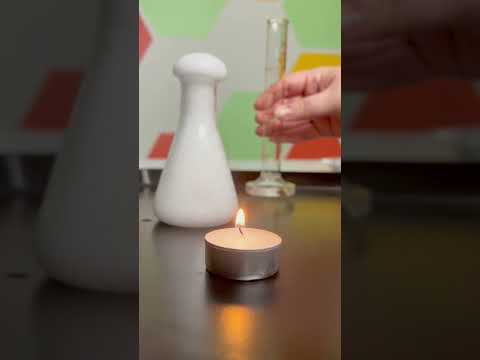
So, you know how sometimes you accidentally turn your kitchen into a science lab? Like, one minute you’re just trying to make a nice dinner, and the next thing you know, you’ve created some sort of mini volcano with baking soda and vinegar? Seriously, it happens!
Well, physics isn’t too different. It’s all about playing around and discovering how things work. You can even have fun with it while learning cool stuff!
Imagine launching a homemade rocket or making a super cool DIY hovercraft. Sounds fun, right?
These projects are not just for the pros; anyone can dive in! Whether you’re a science enthusiast or just looking to impress your friends with some crazy experiments, there’s something here for everyone.
Let’s get those creative juices flowing!
Unveiling the Coolest Physics Experiment: A Journey Through Innovative Scientific Discoveries
Have you ever come across the phrase “physics is fun”? It sounds a bit cheesy, I know, but let me tell you, it really can be! There are some super cool experiments that not only explain fundamental concepts of physics but also make you go, “Wow, that’s amazing!”
Let’s talk about the famous double-slit experiment. This one hits where it hurts—in the brain! Basically, you shine a light through two closely spaced slits, and instead of just two beams coming out, you get this pattern of light and dark bands on a screen. What’s happening here? Well, light acts like a wave—interfering with itself. Like when you drop two stones in a pond; the ripples overlap and create patterns. It’s mind-blowing because it shows light can behave both like particles and waves.
Another fun project is the coke and mentos fountain. If you’ve tried this at home (or maybe even in school?), you’re probably grinning right now. You drop mentos into a bottle of Diet Coke. Boom! A massive fountain erupts! Here’s the deal: those little mentos create lots of tiny bubbles by providing surfaces for carbon dioxide to escape rapidly. This reaction causes all that fizz to shoot up like a rocket—super satisfying to watch!
Then there’s the classic balloon rocket experiment. Grab some balloons, string, and straws for this one. Thread the string through the straw and secure it tight across the room. Inflate your balloon without tying it off; tape it to the straw and release! The air rushing out propels your balloon forward along the string. This demonstrates Newton’s third law: for every action, there’s an equal and opposite reaction. Pretty neat physics in action!
Don’t forget about the egg drop challenge. You’ve probably faced this one in school. The goal? Get an egg from a height without breaking it using materials like straws or paper plates. You’ll have to think about forces—gravity pulling down on that egg—and design something to cushion its fall effectively. It gets competitive but also brilliant for learning about impact resistance.
If you’re feeling adventurous, why not try creating your own homemade lava lamp? It involves water, oil, food coloring, and Alka-Seltzer tablets (or anything fizzy). When you add those tablets into the mix, they create carbon dioxide bubbles which carry colorful blobs of colored water upwards through oil before they sink back down again—a mesmerizing display that illustrates density differences brilliantly.
So there you have it! Physics doesn’t have to be intimidating or boring at all. These projects give hands-on experiences while explaining cool concepts along the way—not to mention they’re just plain fun! It’s all about experimenting with what we see around us daily; science can bring joy in unexpected ways.
Top 10 Engaging Physics Project Ideas for Students: Discover the Best Topics in Science
Alright, let’s chat about some fun physics project ideas that can really spark your interest in science. Seriously, physics is all about understanding the world around you, so getting hands-on is a blast. Here’s a list of projects that you can do, whether you’re at home or in a classroom. They’re engaging, educational, and honestly, pretty awesome!
- Build a Simple Motor: This one’s classic! You’ll need a battery, some wire, and a small magnet. You’ll be amazed to see how electrical energy turns into motion right before your eyes.
- Create a Rube Goldberg Machine: You know those complicated machines that perform simple tasks? Build one! It can be anything from popping a balloon to turning off an alarm clock. Feel free to use household items; the wackier the better!
- Investigate Buoyancy with Fruit: Grab different fruits—like apples and oranges—and see which ones float or sink in water. This is cool because it helps understand density and buoyancy in a super relatable way.
- Make a Solar Oven: Using just a pizza box, aluminum foil, and plastic wrap, you can harness the power of the sun to cook s’mores! It shows how sunlight can be transformed into heat energy.
- Create an Electromagnet: With just some insulated copper wire and a nail, you can make your own electromagnet! This project isn’t only fun but teaches principles of magnetism and electricity.
- Explore Sound Waves with DIY Instruments: Ever thought about making your own musical instruments? Try building different string or wind instruments and explore how sound waves work through vibrations.
- Build a Catapult: Use popsicle sticks or rubber bands to create your own catapult. Measure how far different weights fly when launched. It’s physics in action with projectile motion!
- Rocket Launch Experiment: Make simple rockets using baking soda and vinegar (or use film canisters). This is neat because it demonstrates chemical reactions and Newton’s third law: for every action there is an equal and opposite reaction.
- Aerodynamics through Paper Planes: Create different paper airplane designs to test which flies the farthest or stays aloft longer. It’s all about shape and aerodynamics here!
- The Physics of Sports: Choose any sport—like basketball or soccer—and analyze the physics involved. Look at angles for shooting hoops or projectile motion for kicks; dive deep into how physics affects performance.
The cool thing about these projects is that they’re not only educational but also incredibly engaging. You might find yourself excitedly troubleshooting why your catapult didn’t launch correctly or marveling at the way sound travels through different materials with your DIY instruments.
You create opportunities to ask questions like: “Why does my solar oven cook better on sunny days?” These inquiries will keep you curious as you explore more about our universe through physics!
So go ahead! Pick one of these ideas and get started on your next science adventure—it’s gonna be fun!
Exploring the Most Fascinating Science Fair Projects: Innovations and Discoveries in Scientific Research
Sure thing! Let’s talk about some cool science fair projects, especially in the field of physics. Seriously, there’s so much amazing stuff you can do that sparks curiosity and is super fun!
First off, **physics** is all about understanding how things work. From the tiniest particles to massive galaxies, it helps us make sense of the universe. Making it come alive at a science fair can be really exciting!
One classic physics project you could explore is **catapults**. You might think, “Why a catapult?” Well, it’s not just about flinging stuff—it’s a great way to learn about **potential and kinetic energy**. You could experiment with different materials for your catapult and see which one launches projectiles the farthest. It’s like being a medieval engineer!
Another cool concept to dive into is **magnetism**. You can create your own simple electromagnet and test how many paperclips it can pick up when you change the number of batteries in your circuit. And guess what? It shows you how electricity can create magnetism! Plus, there are endless variations on this experiment with different wires or even coils to see which works best.
Then there’s the classic **Newton’s Cradle**, where it looks like balls are just swinging back and forth but teaches a ton about momentum and energy transfer. You could build your own from scratch with some marbles and string—it’s mesmerizing to watch! When one ball drops and hits the others, you realize how energy travels through objects.
How about looking into **light and optics**? Create a simple spectrometer using a CD, cardboard, and your phone’s camera! Shine light through the CD (like those shiny ones we used to play with) and watch as it splits into colors. It’s all about how light interacts with different materials—pretty rad, right?
And let’s not forget about **sound waves**! You could make a fun project involving sound by exploring how sound travels through different mediums like air, water, or even solids. Try using tuning forks or simple instruments like cups filled with water at varying levels—then observe how they produce different pitches when struck.
For something a bit more adventurous, consider the topic of renewable energy by building small wind turbines or solar panels models. Not only does this touch upon physics concepts related to energy conversion but also gets you thinking seriously about our planet.
These projects aren’t just great for showing off at fairs; they encourage critical thinking too! Experimenting often leads to unexpected results—a little bit frustrating at times but that’s part of the fun of discovering something new!
So yeah, whether you’re launching things into the air or playing around with colors or sounds, physics offers endless opportunities for exploration. Who knows? You might just inspire more people through your experiments than you realize!
You know, one of the coolest things about physics is that it’s not just a bunch of equations and theories trapped in a textbook. It’s like this endless playground where you can get your hands dirty and explore the world around you. Seriously, when you start messing around with some physics projects, it feels like you’re unlocking secrets of the universe right in your living room or backyard.
I remember this one time, my friend and I decided to build a small catapult for a school project. We were so excited about it, but honestly, we were also just looking for an excuse to launch marshmallows across the yard. We spent hours constructing it from popsicle sticks and rubber bands. When we finally took aim and fired our first ‘marshmallow missile,’ the sheer joy of watching it soar—and then flopping to the ground—was unforgettable. It wasn’t perfect, but man, we learned so much about angles, force, and even a bit about aerodynamics in the process.
So if you’re thinking about diving into some physics projects—whether you’re a student or just someone who enjoys tinkering—there are loads of fun ideas out there. You could try building simple circuits or making your own mini rocket using baking soda and vinegar. The anticipation as you wait for that explosion of foam is just priceless!
And don’t even get me started on experimenting with sound waves! Grab some cups and string to make a homemade telephone. It’s such an eye-opener to see how sound travels through different mediums. You might find yourself in fits of giggles when your friend can barely hear you whispering from behind the next tree!
You see what I’m getting at? Physics isn’t just numbers and terms written on a whiteboard; it’s alive all around us. Every project is like an invitation to discover something new about how stuff works—even if that something is just how far you can fling a marshmallow! So gather some materials, invite your friends over, and unleash that inner scientist! Who knows what amazing things you’ll create together?