You know that moment when you’re staring at your phone and the battery is at 1%? Panic mode activates! But seriously, how does that tiny device even work? Well, let me tell you about electromagnetic fields.
They’re all around us, like invisible superheroes. You might not see them, but they’re messing with your gadgets and your body every single day.
Remember the first time you felt static electricity? That tiny zap when you touch a doorknob after shuffling across the carpet? Yep, that’s an electromagnetic field in action! They’ve got the power to transform everything from how we communicate to how we see in the dark.
Now, let’s take a stroll through some real-world examples of these fascinating fields. Buckle up; it’s gonna be a wild ride!
Exploring Real-World Examples of Electromagnetic Fields in Science
So, let’s chat about electromagnetic fields, yeah? These fields are all around us, and they play a role in some pretty interesting stuff. When you think about it, the invisible forces from electromagnetic fields are key players in so many things we take for granted.
First off, let’s talk about magnetic resonance imaging (MRI). Ever heard of it? It’s that super cool medical imaging technique doctors use to get detailed pictures of your organs and tissues. What makes it possible is a strong magnetic field combined with radio waves. The magnetic field gets hydrogen atoms in your body to align themselves, and when the field is turned off, those atoms release energy that creates images. Pretty neat, huh?
Then there’s Wi-Fi. I mean, without electromagnetic fields, we wouldn’t be streaming our favorite shows or scrolling through social media with such ease. Wi-Fi routers emit radio waves—those are low-frequency electromagnetic waves—to transmit data. It’s like sending invisible signals through the air! Next time you’re binge-watching on your couch, just think: there are all these waves flying around making it happen.
Oh! And don’t forget about light. This one might sound obvious but stick with me here! Light itself is an electromagnetic wave. The visible spectrum that we can see is just a tiny part of the whole picture. These waves travel at amazing speeds—about 186,282 miles per second! Imagine that speed; it’s mind-boggling!
Then there are electric power lines. You know those tall towers carrying cables you see along highways? They’re crucial for delivering electricity to homes and businesses. When electricity flows through those wires, they create an electromagnetic field around them. You might have even felt the “buzz” when you’re near high-voltage areas; that’s the EMF doing its thing!
And let’s not skip over something really important: cell phones. They rely on electromagnetic radiation to send signals back and forth through towers that connect calls or data. When you hold your phone to your ear or scroll through apps in a coffee shop, those signals are zipping around like little messengers.
Lastly, let’s touch on the Earth itself. Did you know our planet has its own magnetic field? It’s generated by movements within its molten core! This magnetic field protects us from solar winds—those streams of charged particles emitted by the sun—which could otherwise strip away our atmosphere over time.
To wrap this up—all these real-world examples show how vital electromagnetic fields really are in our lives. They intertwine science with everyday experiences in ways we often don’t notice but definitely benefit from. So next time you flip a light switch or connect to Wi-Fi, remember: it’s all thanks to those incredible electromagnetic fields at work!
Exploring 10 Real-World Applications of Electromagnets in Science and Technology
Sure thing! Let’s get into the world of electromagnets and check out how they’re used in real life.
Electromagnets are pretty fascinating. They’re basically magnets that you can switch on and off, which is super handy for all kinds of applications. Here’s a look at ten places where you might bump into them.
1. Electric Motors
Ever thought about how your blender or electric car works? That’s right—electromagnets are at the heart of electric motors. When electric current flows through the coils, they create a magnetic field that turns the motor. So, without electromagnets, breakfast smoothies would take a lot longer!
2. Maglev Trains
These trains hover above the tracks using powerful electromagnets. It reduces friction and allows for super high speeds! Imagine zipping along at over 300 miles per hour—those magnets make it happen.
3. MRI Machines
In hospitals, Magnetic Resonance Imaging (MRI) machines use strong electromagnets to create detailed images of our insides. These machines help doctors see your organs and tissues without any surgery—which is kind of amazing, right?
4. Particle Accelerators
In laboratories like CERN, electromagnets help steer charged particles in particle accelerators. They basically propel particles to near-light speed before smashing them together so scientists can understand what makes up everything around us.
5. Magnetic Locks
You know those locks on your gym lockers? Some use electromagnetic technology called solenoid locks. When an electric current is applied, it creates a magnetic field that releases the lock—pretty slick!
6. Speakers
Believe it or not, your headphones or speakers rely on electromagnets too! The changing currents move a diaphragm back and forth to produce sound waves that we hear as music or voices.
7. Electromagnetic Cranes
Think of those huge cranes in scrap yards; they lift heavy metal scraps using powerful electromagnets. These cranes can pick up tons of metal just by powering up their magnets!
8. Induction Cooktops
If you’ve ever used one of these cooktops, you’ve experienced how they work via induction heating, which uses an electromagnetic field to heat pots and pans directly while leaving other areas cool—super efficient!
9. Data Storage Devices
Hard drives utilize electromagnetism to write data by changing the magnetization of small regions on disk platters—kind of like flipping tiny switches really fast to store all your photos and files.
10. Wireless Charging
That’s right! Electromagnetic fields make wireless charging possible for your phone or other gadgets by transferring energy between two coils—the charger and the device itself—all without needing to plug anything in directly.
So there you have it! From making sure your car runs smoothly to helping doctors diagnose ailments without going under the knife, electromagnets are everywhere in our daily lives—just waiting to be discovered!
Exploring 10 Real-Life Examples of Electromagnetic Waves in Science
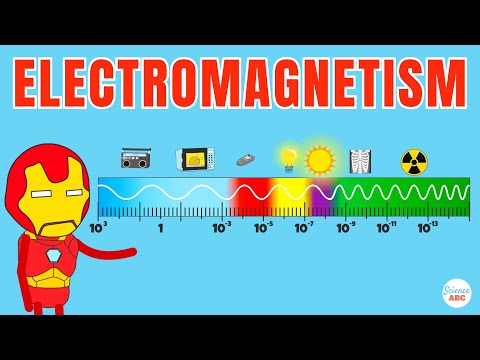
Alright, let’s chat about electromagnetic waves. These invisible superheroes are all around us, and they play crucial roles in our daily lives. From radio waves to gamma rays, they’re part of a single spectrum that we often take for granted. So, let’s explore some real-life examples of these waves and see how they impact science and our world.
- Radio Waves: You know when you tune into your favorite radio station? Those sounds travel through space as radio waves. They’re used for broadcasting AM and FM stations! Not only that, but radio waves also help in communication with satellites and even in Wi-Fi connections.
- Microwaves: Ever heated up your leftover pizza in the microwave? That tasty treat gets warm because of microwaves! These waves cause water molecules to vibrate, heating your food up quickly. Plus, they’re used in radar technology for things like weather forecasting.
- Infrared Radiation: Remember those cozy moments wrapped up in a blanket on a chilly evening? Well, infrared radiation keeps you warm! It’s also emitted by the sun and used in remote controls for TVs. Seriously, next time you zap the channel, think about those nifty infrared signals at work!
- Visible Light: This is the part of the electromagnetic spectrum we can actually see! All the colors of the rainbow fall under this category. From a stunning sunset to vibrant flowers, visible light is what makes our world so colorful and beautiful!
- Ultraviolet (UV) Light: So, ultraviolet light comes from the sun—hello tan lines! But beware; it can also damage your skin if you stay out too long without sunscreen. UV light has medicinal uses too, like treating certain skin conditions.
- X-Rays: Think about those times you’ve had to get an X-ray at the doctor’s office. Those images help diagnose broken bones or dental issues without invasive procedures. The way X-rays penetrate tissues but not bones makes them super handy!
- Gamma Rays: These are high-energy waves produced by radioactive atoms and certain cosmic events. They’re useful in cancer treatment because they can target cancer cells while sparing healthy ones—talk about dual action!
- Eletromagnetic Fields (EMF): They surround every electrical device we use daily. Just think about all those gadgets charging beside you right now! While some folks worry about EMF exposure, research is ongoing to understand its long-term effects better.
- Lidar Technology: This one’s cool! It stands for “Light Detection and Ranging” and uses laser beams (which are part of visible light) to measure distances accurately. It’s great for mapping terrain or helping self-driving cars navigate.
- Pulsed Electromagnetic Field Therapy (PEMF): While still being researched, some people use this therapy for healing purposes by applying electromagnetic fields over their bodies to reduce pain or improve circulation.
To sum it up: electromagnetic waves are everywhere—in our radios, microwaves ovens, cellphones—seriously everywhere! They’ve got a significant role in science that enhances our understanding of the universe while making life just a little more enjoyable (and easier). So next time you use any tech or step outside in the sunshine, give a little nod to those amazing electromagnetic waves buzzing all around you!
So, let’s chat about electromagnetic fields. Yeah, sounds like something out of a science fiction movie, right? But seriously, they’re super important in our everyday lives. I remember when I first learned about them in school. It was one of those lightbulb moments for me. I mean, I had no idea that invisible forces were all around us, shaping how we interact with technology and even with each other.
Electromagnetic fields (or EM fields for short) are generated by electric charges and are key to understanding how many devices work. Think about your cell phone. Every time you send a text or hop on a video call, those electromagnetic waves are zipping back and forth between your phone and the cell towers. It’s like magic! But rather than wands and spells, it’s all physics.
You know what’s really wild? The Earth itself has its own electromagnetic field. You ever felt that tingling sensation when you’re near a big magnet? Well, the planet’s magnetic field protects us from harmful solar radiation. It’s like an invisible shield keeping us safe while we go about our lives.
But here’s another cool example: microwaves! When you pop some popcorn in the microwave, those waves are microwaving water molecules in the kernels to heat them up until they burst into fluffy goodness. Just imagine all those excited little water molecules dancing around inside that bag until—bam—popcorn!
Now, let’s talk about medicine for a second. Electromagnetic fields play a huge role there too—like in MRI machines! These machines use powerful magnets and radio waves to create images of the inside of your body without needing any invasive procedures. Seriously incredible if you think about it!
And hey—don’t forget about wireless charging pads for your phone or electric toothbrushes! They utilize electromagnetic fields to transfer energy wirelessly from one place to another. You just set your device down on the pad and voila—you’re charging without plugging anything in.
So yeah, whether it’s through communication devices or health care technologies, electromagnetic fields are everywhere around us and doing some heavy lifting behind the scenes! Pretty neat how something invisible can have such a massive impact on our daily lives, huh? Sounds simple, but it shows how interconnected everything really is—like an unspoken bond holding our modern world together.