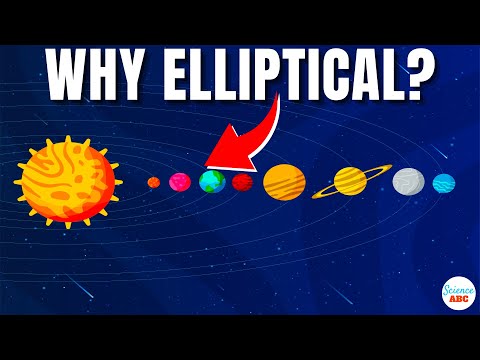
So, picture this: you’re at a party, right? And someone starts talking about how they fell in love with astronomy. They go on about stars and planets, but then someone pipes up about ellipses. Seriously, ellipses! Sounds boring, huh? But wait!
Here’s the thing: those funny-shaped orbits are like the secret sauce of the universe. They’re not just shapes; they tell us how everything moves up there in space. Believe me, understanding them can change how you see the night sky.
You might think planets are just spinning around in neat circles. Haha, not quite! Those celestial bodies take their own sweet time along paths that curve and loop. It’s kinda like watching a dance—dramatic and graceful, with a hint of chaos.
So let’s unpack this whole ellipse situation together. Trust me, it’ll feel less like math homework and more like a wild cosmic adventure!
Revealing the Astronomer Behind the Discovery of Planetary Elliptical Orbits
Did you know that the shape of planetary orbits is kind of a big deal in astronomy? It all goes back to this brilliant guy named Johannes Kepler. He was not just any astronomer; he was like the rock star of the 17th century when it came to celestial mechanics.
Kepler started off as an assistant to Tycho Brahe, another famous astronomer. Now, Tycho had all these incredible observations of the night sky—like seriously detailed stuff that nobody else had managed before. Unfortunately, Tycho passed away before he could put it all together. That’s where Kepler came in, and boy, did he make use of those observations!
So here comes the fun part: Kepler proposed that planetary orbits were not perfect circles, which was what everyone thought at the time. Instead, he discovered they were shaped like ellipses—kind of like squished circles! This was a pretty radical idea because it challenged what scientists believed for centuries.
Think about it: when you throw a frisbee, it can wobbly fly in different directions depending on how you throw it. Similarly, planets move in these elongated paths around the sun where one focus point is at the sun itself and the other is just empty space! Here’s where things get cool:
Kepler’s Three Laws are key to understanding this whole elliptical orbit thing:
Kepler figured all this out by meticulously analyzing years’ worth of data from Brahe—and let me tell you, that’s no walk in the park! He faced tons of challenges and doubts but kept pushing forward.
You know, there’s something pretty inspiring about how Kepler didn’t give up despite his obstacles. His discoveries paved the way for Newton later on who built upon this foundation with his law of universal gravitation.
So next time you look up at those twinkling stars and think about how planets dance around in their own unique ways, remember Kepler and his leap into understanding celestial dynamics! He really changed our perspective on how we understand our place in this vast universe. It’s kind of beautiful when you think about it—how one person’s curiosity and passion for knowledge can shift an entire field forever.
The Proposal of Elliptical Orbits: Historical Insights and Key Figures in Astronomy
So, let’s chat about elliptical orbits. You know, those smooth, stretched-out circles that planets take around the sun. It’s such a cool concept with a rich history behind it. Seriously, understanding how these orbits work helps us make sense of our universe.
First off, you’ve got to give a nod to Johannes Kepler. This guy was like the rock star of astronomy in the early 1600s. He proposed that planets don’t just zip around in perfect circles but follow elliptical paths instead. This was a pretty radical idea back then, you know? Imagine everyone thinking that circles were the only way things moved in space!
Kepler didn’t come up with this idea randomly. He was analyzing data from Tych Brahe, another big name in astronomy. Brahe spent years meticulously charting the positions of planets and stars. When Kepler got his hands on this treasure trove of information, he realized that the data didn’t match up with circular orbits at all! Instead, he figured out that planets actually travel faster when they’re closer to the sun and slower when they’re farther away—this is known as Kepler’s Second Law.
Now, what’s super interesting is how Kepler’s laws changed how we view not only our solar system but also other celestial bodies! Think about it: if planets can orbit in elliptical patterns, then maybe comets and asteroids do too! This leads us to think larger about gravitational interactions.
A few decades later, Isaac Newton stepped onto the scene and took all this knowledge further. His law of universal gravitation clarified why these elliptical paths happen in the first place: it’s all about gravity pulling objects toward one another. You tug on me; I tug on you—that kind of deal!
The concept spread like wildfire after Newton published his work. People realized that understanding orbits wasn’t just for show—it had real implications for navigation and predicting celestial events! Imagine sailors plotting their courses based on star positions; knowing where things are going is pretty vital!
- Elliptical Orbits: They are defined by two points called foci; for planets, one focus is where the sun hangs out.
- Shape Variation:<!– Depending on how stretched out or circular an ellipse is, we describe it using something called eccentricity.
- The Role of Gravity: It keeps planets moving along their elliptical paths instead of straight lines.
This whole journey—from Kepler to Newton—wasn’t just about math and science; it was nearly poetic! There’s something beautiful about realizing we’re part of this grand dance around a giant flaming ball in space. So next time you glance up at the night sky or feel a chill because fall is around the corner (thanks to Earth moving), remember those guys who figured out why everything moves as it does!
Kudos to those early astronomers who paved the way for modern astronomy and helped us understand our little corner of space better than ever before!
Revealing the Elliptical Orbit of the Moon: The Astronomical Discoveries of Johannes Kepler
The story of the Moon’s orbit is super interesting, especially when you think about how Johannes Kepler got us there. You see, before Kepler, folks believed orbits were perfect circles. Sounds simple, right? But Kepler came along and shook things up big time!
Kepler’s most famous work, known as the **Three Laws of Planetary Motion**, changed our view of the solar system. One of those laws says that planets move in elliptical orbits. This was a huge revelation because it meant they weren’t just going around in circles like a ferris wheel.
So what’s an ellipse? Picture an elongated circle, like a stretched-out balloon. If you were to look at it from above, an ellipse has two foci instead of just one center point. In the case of planetary motion, one focus is where the Sun hangs out, and the other… well, it’s empty space!
Now let’s talk about how this ties into our Moon. The Moon’s orbit isn’t a perfect circle either; it follows an elliptical path around Earth. At some points in its orbit, it’s closer to us (called perigee) and at other times farther away (apogee). This variation in distance is why we sometimes see larger or smaller full moons in the night sky.
Kepler figured out that this wasn’t just a fancy coincidence—it has real effects on how fast the Moon moves. When it’s closer to Earth (remember that perigee?), it zooms around faster compared to when it’s farther away.
But hold on! It wasn’t just about figuring out shapes and speeds; Kepler also used observations from Tycho Brahe to make these discoveries happen. He carefully analyzed Brahe’s data on planetary positions over years and years—talk about patience!
Interestingly enough, Kepler’s work laid down some groundwork for Newton later on; Newton took those principles and developed gravity theory to explain why planets move as they do.
To sum up:
- Elliptical Orbits: No more perfect circles; orbits are oval-shaped.
- Moon’s Orbit: Follows an ellipse with varying distances from Earth.
- Speed Changes: Moves faster when closer due to gravitational pull.
- Collaboration: Worked with Tycho Brahe’s data for his discoveries.
In a way, Kepler opened up our eyes to understanding not just how things move but also why they do so. It makes you think about how much more there still is to learn about our celestial neighbors!
So, let’s chat about ellipses in space, shall we? You might think of ellipses like those squished circles or ovals you see in math class. But out there, in the vastness of the cosmos, they’re doing some seriously cool stuff when it comes to orbits. It’s like a cosmic dance, where planets, moons, and comets twirl around each other in an elegant rhythm.
Back when I was a kid, I remember lying on the grass at night with my friends. We’d stare up at the stars and imagine what it would be like to fly through space. The idea of celestial objects moving in predictable paths was kind of magical to me. It’s fascinating how Newton figured this out after watching an apple fall—something so simple guiding thoughts that changed our understanding of the universe.
You see, when we talk about orbits being elliptical rather than circular, it’s all about gravity and motion. The whole thing is based on Kepler’s laws of planetary motion. Basically, his first law states that planets move in ellipses with the Sun at one focus point. This means their distance from the Sun changes as they travel along their path—sometimes they’re zipping by really fast while other times they slow down as they get farther away.
Imagine how it feels for a planet like Earth! As we orbit the Sun every year—yeah, just one year!—sometimes we’re closer to it than during other times. That brings a little bit more energy our way when we’re close and makes summers warmer while winters can feel colder when we’re farther away.
But here’s where it gets even cooler: not all ellipses are created equal. Comets have super elongated elliptical orbits that take them very far out into space before they come racing back toward the Sun again. Talk about a long journey! It’s almost like these icy travelers are saying “See you later!” before wandering off into deep space for ages before returning home.
Wrapped in this dance of celestial bodies is a little chaos too—it’s not exactly perfect out there! Various gravitational pulls from moons and other planets can cause tiny shifts over time—a bit like how your friends might tug you one way while you’re trying to walk straight through a crowd.
So next time you gaze up at the stars or catch sight of a comet zipping by, just remember: those paths aren’t random; they’re part of an intricate system shaped by gravity and motion. Space feels huge and wild—but really, there’s something beautifully orderly about this cosmic ballet that keeps everything moving along its way.
And who knows? Maybe someday you’ll find yourself among those stars too!