You know that feeling when you get a new gadget, and you just can’t wait to see what it can do? I remember the first time I got my hands on a fancy kitchen blender. I thought, “This thing can make smoothies, soups, and even ice cream!” It was like magic in my kitchen.
Well, in the world of scientific research, there’s a similar sense of excitement happening right now with advancements in ESI MS MS. Yeah, that’s a mouthful! It stands for Electrospray Ionization Mass Spectrometry-Mass Spectrometry. Sounds fancy, huh? But hold on! Before you roll your eyes and think it’s just more science mumbo jumbo, let me tell you why it matters.
Picture this: scientists are using this tech to unlock mysteries hidden in cells and molecules. It’s like discovering secret recipes for life itself! And as we explore all these advancements together, I promise it’ll feel less like a lecture and more like an adventure. Ready to unpack this exciting world? Let’s go!
Recent Advancements in ESI MS/MS Technology: Transforming Modern Scientific Research
ESI MS/MS technology, or Electrospray Ionization Tandem Mass Spectrometry, has really made waves in the scientific community. You might be wondering, what’s so special about it? Well, the thing is, this technique allows scientists to identify and quantify molecules in complex mixtures with incredible precision.
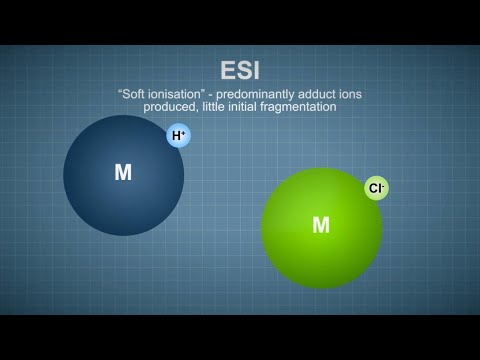
First off, Electrospray Ionization (ESI) is a method that converts molecules into ions using a high voltage. It’s like turning your favorite drink into tiny droplets for a spray. This ionization is crucial because mass spectrometry analyzes these ions based on their mass-to-charge ratio. You follow me? This means you can differentiate between very similar substances, which is key in fields like proteomics and drug discovery.
Now let’s talk about MS/MS, or tandem mass spectrometry. In this step, you take those ions and fragment them further to analyze the components more thoroughly. It’s kind of like a detective who breaks down clues to figure out the whole story behind a mystery. With this approach, researchers can get detailed structural information about the molecules they’re studying.
One of the recent advancements in ESI MS/MS technology is its increased sensitivity. Scientists have developed new methods and instruments that can detect even lower concentrations of substances. Imagine being able to find a single drop of ink in an entire swimming pool! This sensitivity opens doors for early disease detection and environmental monitoring—where every molecule counts!
Moreover, improvements in data analysis software have also come into play. These tools help researchers process complex data sets faster than ever before. Think about how much easier it gets to sift through piles of information when you’ve got solid software backing you up! Complex biological samples are no longer an insurmountable challenge; instead, they’re just another puzzle waiting to be solved.
Let’s not forget about automation either! Modern ESI MS/MS systems often feature automated sample handling and analysis processes. This means scientists spend less time fiddling with samples and more time interpreting results. It’s like having a trusty robot sidekick doing all the heavy lifting—way cooler, right?
In real-world applications, these advancements have significantly impacted various research areas:
- Drug Development: Researchers can now identify drug metabolites more efficiently.
- Environmental Science: Detecting pollutants at trace levels has become more feasible.
- Clinical Diagnostics: Early disease markers can be spotted using less invasive methods.
But hey, it’s not just about finding new molecules or proteins; it’s also about understanding how they interact with each other in biological systems. Think of it as connecting dots on a map where each dot represents important data leading to insights about diseases or environmental issues.
So next time you hear someone mention ESI MS/MS technology, remember: it’s transforming modern scientific research by enhancing detection capabilities and improving data handling techniques—which ultimately leads us closer to solving some pretty complex biological puzzles! Isn’t science amazing?
Exploring Advances in Mass Spectrometry: Key Articles and Insights in the Field of Science
Mass spectrometry, or MS for short, is like the detective of the science world. It helps us identify and quantify molecules in a sample by measuring their mass. Seriously, it’s all about figuring out what’s out there on a tiny scale. One of the latest game-changers in this field is **Electrospray Ionization Mass Spectrometry** (ESI MS), especially when you add a second round of fragmentation, which gives us ESI MS/MS. Let’s break it down.
Easiest way to think about ESI MS? Imagine spraying a perfume into the air. The liquid gets charged and forms droplets that evaporate, leaving behind ionized particles. These ions are then analyzed in the mass spectrometer to reveal details about their composition and structure. Pretty neat, huh?
Now let’s touch on ESI MS/MS. This is where things get really cool! In this process, once we make the initial measurements with ESI MS, we can break those ions apart again to gather even more information—like peeling back layers of an onion! This technique allows scientists to identify compounds more accurately and even see how they interact with each other.
Here are some key insights into why this is buzzing in modern research:
- High sensitivity: ESI MS/MS can detect very low concentrations of substances. This is super useful for studying complex samples like blood or environmental samples without losing track of what you’re looking for.
- Selectivity: It can differentiate between molecules that might seem similar at first glance. You know how sometimes you can’t tell two friends apart just by looking? Well, this tech does just that—identify unique features.
- Real-time analysis: Researchers can analyze samples quickly and efficiently without extensive preparation time. Think about how awesome it would be to get fast results—like having your favorite food delivered instantly!
Imagine being at a lab where scientists are working on identifying biomarkers for diseases like cancer or Alzheimer’s. They’re using ESI MS/MS to find tiny signals that could lead them closer to crucial discoveries about these conditions! It’s like hunting for treasure buried deep in a treasure chest—it takes skill and precision, but when you find it, it’s so rewarding!
Another exciting application? Drug development! And here is why: understanding how drugs break down in our bodies is key to ensuring they work as intended. With ESI MS/MS, researchers can monitor drug metabolites—those leftover bits after your body processes medication—in real-time.
So, looking forward, it seems like advancements in mass spectrometry will keep pushing boundaries across multiple fields—from healthcare to environmental monitoring—exposing new layers of knowledge we’ve yet to explore fully.
In essence, these strides in technology really show us how science can evolve rapidly when researchers leverage innovative techniques like **ESI MS/MS**. Who knows what breakthroughs are waiting just around the corner?
So, let’s chat about ESI MS MS, or Electrospray Ionization Mass Spectrometry—sounds fancy, right? But hang on a sec. It’s a neat tool that has totally transformed how scientists analyze compounds. Imagine you’re at a bazaar, looking for your favorite snack. Every stall has something unique to offer, but you want to find that one perfect treat. That’s kind of what ESI MS MS does—it helps researchers pinpoint and identify specific molecules in complex mixtures, which is super useful in tons of fields like biology and chemistry.
I remember this one time during my college days when I had a project on protein analysis. I was caught up in the excitement of trying to unravel how proteins work in the body. But then came the tricky part—how do you even separate and identify all these proteins? That’s where mass spectrometry really showed its power! It was like having a magic wand that made all these invisible compounds suddenly visible and understandable.
So, here’s how ESI MS MS works: First off, it gets samples into the gas phase as ions (think tiny charged particles). Then it uses two stages of mass spectrometry to really hone in on what’s there. The first stage helps sort out the ions by their mass-to-charge ratio; then the second stage gives even more detail about those ions. You could say it’s like getting a sneak peek at both what something is and where it came from all at once.
And what’s wild is that this technique isn’t just stuck in the lab anymore—it’s been used to solve real-world problems. For instance, scientists have used it to detect disease biomarkers in blood samples or even trace environmental pollutants back to their source. It’s like putting together a complex puzzle but with molecular pieces instead.
But there are still challenges ahead. As powerful as ESI MS MS is, sometimes it struggles with very small amounts of certain substances or intricate mixtures that don’t behave well under scrutiny. So there’s always room for improvement.
That said, it’s exciting to think about where advancements will take us next! With ongoing research and innovation, who knows what other breakthroughs we might see? You might just find that your next visit to the lab feels a lot like an adventure!