So, once upon a time, in the land of science labs, some scientists were basically playing detective with tiny molecules. They had this fancy tool called mass spectrometry that’s like a superhero for figuring out what stuff is made of. Sounds nerdy? Well, let me tell you—it’s actually pretty cool!
Now, picture this: you’ve got a mystery box filled with all sorts of ingredients, but you have no idea what they are. That’s where mass spectrometry swings into action! And when they added something called electrospray ionization (ESI) to the mix? Game changer! It turned complex mixtures into simple puzzles that scientists could finally solve.
But wait, there’s more! Thanks to advancements in ESI MS spectrometry, we’re now discovering things about chemistry and biology that we never even imagined before. So if you think about it, these advancements are not just techy upgrades; they’re opening doors to new realms of research. Exciting stuff ahead!
Cutting-Edge Advancements in ESI MS Spectrometry: Transforming Scientific Research
So, let’s chat about Electrospray Ionization Mass Spectrometry, or ESI MS for short. This fancy term might sound like something out of a sci-fi movie, but it’s actually one of the coolest tools in modern science. It helps researchers understand complex mixtures by breaking them down into tiny, identifiable pieces.
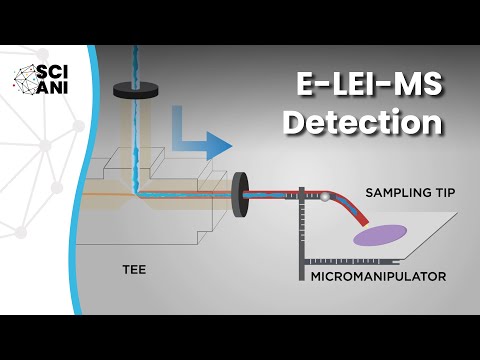
You see, ESI MS works by taking a sample, usually in liquid form, and then spraying it out through a charged nozzle. Like, picture a fine mist of tiny droplets! These droplets carry the molecules from your sample. And here’s the tricky part: as the droplets evaporate, they leave behind ions—the charged bits we actually want to analyze.
Now, thanks to some nifty advancements in this technology, scientists are able to analyze even more complex samples than ever before. For instance:
- Sensitivity Improvements: Recent tweaks have made ESI MS way more sensitive. This means we can detect smaller amounts of substances. Think about discovering trace toxins in water—now that’s important!
- Speed: Advances have also sped up the process significantly. Instead of waiting ages for results, researchers can get info almost instantly.
- High-Throughput Analysis: With new technologies like multiplexing and better software for data processing, labs can analyze many samples at once without losing quality.
- Better Resolution: Enhanced resolution allows scientists to separate molecules that are really similar to each other—think of it like sorting identical twins!
And you know what’s super exciting? This tech isn’t just for chemists anymore! It’s being used across fields—from biology studying proteins and peptides to environmental science checking pollutants or even in food safety testing.
I remember hearing about a study where researchers used ESI MS to identify specific biomarkers in human blood that indicated diseases. They could do this much quicker than with previous methods—like opening the door to earlier diagnoses!
But it’s not all sunshine and rainbows; there are challenges too! Some researchers find that when they push this technology too far—for instance with very complex mixtures—it can sometimes give mixed signals or not yield consistent results.
Still, the ongoing improvements in ESI MS definitely hold promise for transforming scientific research as we know it. It’s kind of like having a superpower for scientists—helping them uncover details hidden deep within our world!
Exploring Recent Advancements in ESI-MS Spectrometry: Impact on Scientific Research and Applications
Hey, let’s talk about ESI-MS, or Electrospray Ionization Mass Spectrometry. Sounds fancy, right? But seriously, this technique has been shaking up the scientific world recently. You see, it’s all about analyzing compounds by getting them into the gas phase and then measuring their mass. Crazy useful for chemists and biochemists alike!
Electrospray Ionization (ESI) is this cool method where you take a liquid sample and shoot it out of a tiny nozzle, creating a mist of charged droplets. As these droplets evaporate, the ions left behind zoom through an electric field to be detected by a mass spectrometer. This whole process has some real game-changing impacts.
First off, one major advancement is in sensitivity. Newer ESI-MS systems can detect even minuscule amounts of substances. Think about it: you can now find biomarkers in tiny samples of blood or other body fluids. This is huge for early disease detection! Imagine being able to catch something like cancer way earlier than we ever thought possible.
- Improved resolution: Modern instruments have kicked up their game with better resolution capabilities. So what that means is you can distinguish between compounds that are really similar in structure—like siblings who look alike but aren’t quite the same.
- Increased speed: The rush to get results has also sped up thanks to advancements in technology. This means researchers can get timely data without stalling their projects.
- Diverse applications: ESI-MS isn’t just for basic research anymore; it’s now being used in pharmaceutical development, proteomics (that’s studying proteins), environmental science—you name it! It’s actually playing a pivotal role in finding new drugs.
You know, I remember hearing about a research team that managed to track down trace amounts of drug metabolites using ESI-MS in real time during clinical trials. This not only saved time but also provided valuable insights into how drugs behave in the body—super important stuff!
Another notable point is how these advancements are making ESI-MS more accessible. There’s been a push for smaller machines that fit into regular lab spaces and don’t cost an arm and a leg. Like, if you’re working at a smaller institution or even at home as an independent researcher, you now have options to dabble with this tech without breaking the bank.
And let’s not forget how software has improved too! New algorithms help analyze complex datasets more effectively than ever before. In fact, there are programs today that can identify molecules based on their spectra much faster than humans can manually do—a pretty sweet boost for productivity!
So yeah, these recent leaps forward in ESI-MS spectrometry are not just cool tricks; they’re opening doors to new scientific inquiries and applications we never dreamed were possible before! It really feels like we’re standing on the brink of something exciting.
This field keeps evolving so quickly that who knows what else might come next? From medicine to environmental studies—it’s like being part of an ongoing adventure where every little discovery could lead us down an unexpected path!
Exploring the Latest Advances in Mass Spectrometry: Key Insights and Discoveries in Scientific Research
Mass spectrometry, or MS for short, is like a super detective for molecules. It’s all about figuring out the composition of different substances by measuring their mass. This technique has come a long way and got really fancy lately, especially with Electrospray Ionization (ESI). Let’s break it down.
First off, ESI is important because it helps scientists analyze large biomolecules. Imagine you’re at a party and trying to listen to one person talk in a crowded room. That’s what traditional methods are like when they try to analyze complex mixtures. ESI makes it easier by turning molecules into ions that can be easily studied!
Now, let’s talk about some of the cool advances we’ve seen recently:
- Sensitivity Improvements: Modern ESI MS devices have become way more sensitive. They can detect even tiny amounts of substances. This means researchers can look at less material and still get accurate results
- Real-Time Analysis: New tech allows for real-time measurements. Imagine being able to see what happens in a chemical reaction as it unfolds instead of waiting forever! That’s exactly what scientists can do now with the latest MS tools.
- Better Imaging Techniques: Some new mass spectrometers come with advanced imaging capabilities that let scientists see how molecules spread in tissues or samples.
- Integration with Other Technologies: There’s this exciting trend where ESI MS teams up with other techniques, like chromatography or NMR. It creates a more comprehensive picture of what’s going on.
What does this mean for research? Well, think about biomedical studies. Let’s say researchers are trying to find new drugs from natural sources like plants or fungi. With improved sensitivity and real-time analysis, they can quickly identify which compounds work best against diseases without having to sift through mountains of data first.
And then there are environmental applications! Imagine tracking pollutants in air or water samples more accurately than ever before. Thanks to these advances, we’re getting closer to solving some pretty tough environmental issues.
Sure, not everything is perfect—there are often challenges in interpreting the data and costs involved in keeping this technology up-to-date—but the benefits are huge.
So next time you hear someone mention mass spectrometry, remember it’s not just about the numbers and graphs; it’s about understanding our world at its most molecular level and making groundbreaking discoveries!
So, you know how there’s this whole universe of tiny things going on around us? I mean, think about it: molecules, ions, and all sorts of other particles swirling about. It’s pretty wild when you dive into it. That’s where techniques like ESI MS spectrometry come into play. ESI stands for Electrospray Ionization, and MS is Mass Spectrometry. So basically, these are super cool tools that help scientists look at the composition of complex mixtures—like figuring out what’s in your favorite smoothie but on a molecular level.
A few years back, I remember sitting in a lab during college, surrounded by all this high-tech equipment. One of my professors was showing us how to use a mass spectrometer to analyze proteins. I was just blown away watching it separate these tiny molecules based on their mass. It felt like witnessing magic—seeing something invisible become tangible right before your eyes.
Anyway, let me tell you: advancements in ESI MS spectrometry have been pretty huge lately! Scientists have been refining the techniques to make them more sensitive and faster than ever. This means they can identify compounds at much lower concentrations now—like spotting a needle in a haystack! Imagine being able to detect pollutants or biomarkers from diseases at such minute levels; that’s game-changing for research.
But here’s the thing: with great power comes great responsibility—or something along those lines! The more we can identify with this tech, the more we need to interpret that data carefully. There’s always room for error or misinterpretation, especially when dealing with complex biological samples. It reminds me of trying to figure out someone’s emotions just by their facial expression; context is everything!
Nonetheless, what excites me even more is how ESI MS spectrometry opens doors for interdisciplinary research. Chemists working hand-in-hand with biologists or environmental scientists—now that’s a recipe for innovation! People are finding new ways to combat diseases and environmental issues simply by analyzing what’s already around them.
In short, ESI MS spectrometry isn’t just another shiny tool in the lab; it’s a gateway into understanding our world better—tiny particle by tiny particle. And who knows? Maybe someday we’ll crack some mysteries that could really change lives or even help save our planet! Isn’t that just… wow?