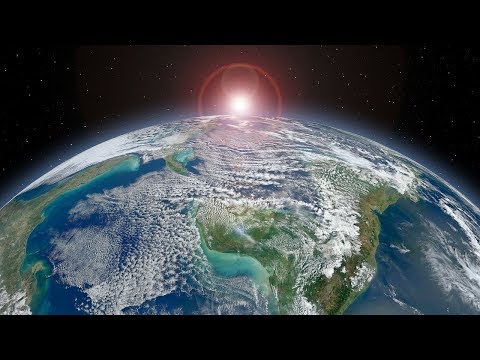
You know, I once thought the Earth was just a giant blue marble spinning in space. Pretty naïve, right? But then I learned about its journey.
Imagine all the crazy stuff that’s happened here over billions of years! Dinosaurs stomping around, tiny microbes taking their first breaths, and continents drifting like awkward dancers at a party. It’s wild!
Every rock tells a story, every fossil is like a time capsule. The thing is, life hasn’t just been hanging out; it’s been evolving, adapting, and sometimes even throwing tantrums with mass extinctions.
So let’s take a little stroll through time together. You’ll be amazed by where we’ve been and how far we’ve come. Seriously, it’s like nature’s epic rollercoaster ride!
Exploring the Timeline of Earth and Life Sciences: Key Events in Our Planet’s History
It’s pretty wild to think about how long Earth has been around, huh? Let’s explore some key moments in the timeline of our planet and the life that calls it home.
First off, Earth is about 4.5 billion years old. Can you even wrap your head around that? It started as a hot mess of molten rock, gradually cooling down to form a solid crust.
Then, let’s jump to around 3.5 billion years ago. This is when we see the first signs of life – tiny little microorganisms that were probably hanging out in the oceans. Life was super simple back then, just bacteria and archaea. But these little guys were groundbreaking! They kicked off the long journey toward more complex organisms.
Fast forward a billion years or so to 2 billion years ago. The atmosphere started changing, thanks to those tiny microbes. They produced oxygen through photosynthesis—yeah, they were basically ancient trees without legs! In time, this oxygen made conditions right for more complex life forms to develop.
By 600 million years ago, we see the first multicellular organisms popping up. These included creatures like jellyfish and sponges. Can you imagine swirling around in an ancient ocean filled with those?
Now, let’s talk about the big bang of evolution: the Cambrian Explosion! This amazing event happened around 541 million years ago. Suddenly (well, not suddenly in human terms), all sorts of bizarre creatures began to evolve. Think trilobites and early fish—they’re like the rock stars of early life on Earth!
Then came a tough time about 250 million years ago, when more than 95% of species went extinct during the Permian-Triassic extinction event. It was like nature’s reset button—crazy stuff!
But hey, things took a turn for the better! By 200 million years ago, dinosaurs strutted their stuff all over land. They ruled for millions of years until another mass extinction wiped them out about 66 million years ago. You might have heard it was caused by an asteroid hitting Earth—definitely something you’d want to avoid on your vacation checklist!
As we rolled into the last 66 million years or so, mammals started taking over. Humans didn’t show up until really recently—about 200 thousand years ago. That’s like a blink compared to everything else!
Now here we are today, navigating modern challenges and ongoing changes in our environment. The timeline of Earth is long and complicated but also super fascinating! We’re just one tiny part of this epic story—a story that started billions of years ago with some simple microbes floating around in primordial seas.
So next time you’re staring at a rock or maybe even at some trees in your neighborhood park, think about all that history packed into them! That’s our planet’s story—you know? Pretty cool if you ask me!
Exploring the Scientific Insights into the Origins of Life on Earth
The origins of life on Earth is a super intriguing topic that has drawn the curiosity of scientists for ages. Imagine, just a few billion years ago, our planet was this wild and chaotic place. Volcanic eruptions, lightning strikes, and all sorts of chemicals mingling together created the perfect recipe for something extraordinary.
So, how did it all start? Well, one popular idea is called the primordial soup theory. This theory suggests that life began in a warm pond or ocean filled with basic organic compounds. Think of it like a cosmic kitchen where simple molecules cooked up into more complex ones. It’s really cool to think about how these tiny bits came together to eventually form living cells.
Then there’s this experiment by two scientists named Miller and Urey back in 1953. They took gases like methane and ammonia—stuff you’d find in that primordial soup—and zapped them with electricity to simulate lightning. After a week, they found amino acids! These are like the building blocks of proteins, which are essential for life. It was groundbreaking because it showed that life’s ingredients could form under conditions similar to those on early Earth.
Now, another theory floats around called hydrothermal vent theory. This one proposes that life might have kicked off near these underwater hot springs. Here’s where it gets exciting: these vents ooze out mineral-rich water at super high temperatures. Some scientists think that the unique chemistry around these vents could have led to the first organisms. So basically, it’s like nature’s own hot tub for life!
Moving forward in time, life started as simple single-celled organisms. Picture little bacteria floating around in ancient oceans. Fast forward billions of years later—that’s when things got really interesting! These tiny creatures developed into more complex forms through a process called evolution. You’ve probably heard of Charles Darwin; he had some pretty amazing insights about how species adapt over time due to natural selection.
But here’s where it gets emotional—imagine the struggle these early organisms faced! They had to find ways to survive amidst changing climates and fierce competition from other species. Some adapted by figuring out how to use sunlight for energy; others evolved into different shapes and sizes just to thrive in their environments.
In summary:
- Primordial Soup Theory: Life began from simple organic compounds.
- Miller-Urey Experiment: Simulated early Earth conditions created amino acids.
- Hydrothermal Vent Theory: Life might have originated near underwater geothermal springs.
- Evolving Complexity: Simple cells turned into complex organisms through evolution.
The story of life’s origins is still unfolding today with research unlocking more secrets about our past every day! Even though we’ve made heaps of discoveries, there are still mysteries left unsolved—like exactly how those first cells formed into everything we see now. Isn’t it amazing? The journey from primordial goo to us has been quite the adventure!
The Evolution of Life on Earth: A Comprehensive Exploration in Life Science History
The evolution of life on Earth is one of those epic tales that can totally blow your mind. Seriously, just think about it! We’re talking billions of years of change, adaptation, and survival. So, let’s break it down in a way that feels more like swapping stories over coffee rather than reading a textbook.
First off, life kicked off about **3.5 billion years ago** with tiny little creatures called unicellular organisms. These microscopic guys were the first pioneers, doing their thing in oceans filled with crazy chemicals. It’s amazing to think that all the complex life we see today started from something so simple!
Now, fast forward to around **600 million years ago** when multicellular organisms decided to join the party. This was a big deal! Picture huge underwater parties with jellyfish floating around and strange looking creatures crawling on the ocean floor. It was like an ancient version of *Finding Nemo*, but way less kid-friendly.
Then came **the Cambrian explosion**, around **540 million years ago**, which changed everything. Suddenly – bam! – there were loads of new species showing up all at once. Imagine a super vibrant coral reef bursting with color; that’s what Earth looked like back then, teeming with different forms of life competing for food and space.
After that, things got interesting on land too! About **475 million years ago**, plants decided they wanted to try out living outside water. Mosses and ferns began to cover the ground. Eventually, they set the stage for bigger plants and trees that would follow suit.
Fast forward a bit more to around **350 million years ago**, when animals hitched a ride onto land as well. Think about those giant prehistoric bugs – yikes! But this era brought forth amphibians and then reptiles; you know, dinosaurs strutting their stuff millions of years later.
Speaking of dinosaurs – who doesn’t love them? They ruled the planet for about **165 million years** until a massive asteroid took them out roughly **66 million years ago**. It’s hard not to feel a little sad about that because they were some amazing creatures! But their extinction paved the way for mammals (like us) to thrive in their place.
And here’s where it gets really cool: mammals evolved into many shapes and sizes after the dinosaurs disappeared—like fluffy little rodents or gigantic woolly mammoths roaming around during ice ages! It’s incredible how adaptation works; those who survived had traits that helped them live better in changing environments.
So here we are today—about **7 billion humans** later—standing on this planet filled with an astonishing variety of life forms ranging from tiny bacteria to gigantic whales swimming in our oceans! Can you believe it?
In short:
– The journey began over 3 billion years ago, starting small.
– Multicellular organisms emerged, leading to complex ecosystems.
– The Cambrian explosion brought diversity like never before.
– Life transitioned from water to land with both plants and animals.
– Dinosaurs ruled but ultimately gave way for mammals.
– And now we share this planet with countless species!
This whole process is fundamentally about change through time: adapting flesh-and-blood creatures learning how to survive in unpredictable environments—and honestly? That’s kind of beautiful when you think about it! Life as we know it is just one big story shaped by resilience over eons, showing us how interconnected everything is on this planet we call home.
Life on Earth, wow, what a journey it’s been! I mean, just think about it – billions of years unfold right beneath our feet. Imagine standing in a field and looking around; every tree, every insect buzzing by has its own story that traces back through time. It’s like each little thing is a chapter in this epic tale of existence.
So, where do we even start? Let’s go way back to the beginning. Picture Earth forming out of a bunch of dust and gas floating in space. Crazy, huh? Fast forward to around 3.5 billion years ago, and voilà – the first signs of life emerge! Tiny microorganisms swimming around in the primordial soup. Honestly, it’s mind-boggling to think that all the complex life we see today evolved from something so simple.
I remember once watching a documentary and seeing these ancient stromatolites – they’re basically fossilized structures formed by those early microbes. It really struck me how long life has been trying to thrive on this planet despite everything – asteroids crashing down, ice ages freezing everything solid… Talk about resilience!
Then you have this moment when those tiny organisms start figuring out how to take sunlight and turn it into energy – enter photosynthesis! Suddenly the atmosphere begins filling up with oxygen. It literally changed everything for life on Earth. This whole process took millions of years but shaped the planet like nothing else could.
And you can’t talk about our journey without mentioning dinosaurs! Those massive creatures ruled the land for over 160 million years before their sudden exit. It feels like such a dramatic plot twist; one minute you’re king of the world, and the next you’re… well, not around at all. And just like that, mammals start taking center stage eventually leading us to where we are today.
It makes me think about how interconnected all these events are—like an elaborate web woven through time. Each shift opens doors for new species while closing them for others; nature has its own way of balancing things out.
As someone who stares at trees and wonders how old they are sometimes, it’s humbling to consider that life is full of surprises and adaptations. We’re just one small part of this vast ongoing narrative that began eons ago.
Life on Earth isn’t just history written in textbooks; it lives on through every living thing today—from fungi decomposing leaves to humans pondering their place in all this drama! So when you feel overwhelmed by your own journey or stressors, just remembering that you’re part of an incredible legacy can be pretty uplifting.
In a way, life itself is a constant exploration—a never-ending adventure where science helps us piece together clues left behind over millennia. So here’s to continuing this wild ride together with curiosity as our guide!