Okay, so picture this: you’re at a party, and you see someone trying to decide between two snacks—chips or pretzels. Suddenly, like a movie scene, you notice how their brain lights up. You can just tell they’re weighing options. It’s kinda funny, right? But that’s psychology in action!
Now, think about it. We make choices every day. Some are silly, while others? They really shape our lives. That’s where experimental psychology comes in. It’s all about figuring out why we do what we do.
You know, scientists love to poke around in the human mind and see what makes it tick. They set up experiments—sometimes wild and wacky—to understand everything from stress to happiness. It’s like being a detective but with emotions and thoughts instead of crimes.
So, let’s take a little journey together into this mind-bending world! You’ll find out how these practices help us understand ourselves better. Seriously, it’s way cooler than it sounds!
Exploring the Benefits of Experimental Psychology in Advancing Scientific Understanding
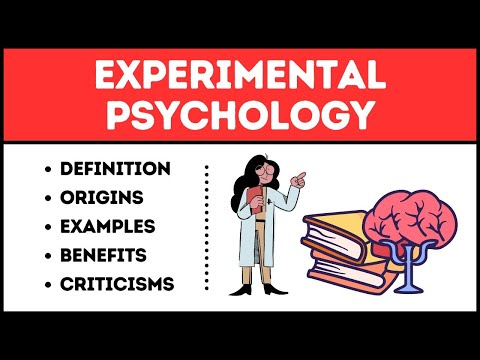
Experimental psychology is a super interesting field that dives deep into how we think, feel, and behave. It’s like peeking into the complex workings of our minds! But why does it matter? Well, let’s break down some key benefits of this exploration.
First off, it helps us understand human behavior better. By conducting carefully designed experiments, psychologists can observe how people respond to various situations. Imagine you’re studying why folks choose one brand over another. You can set up an experiment where you change some variables—like colors or slogans—and see which ones catch attention the most. This gives direct insight into consumer behavior.
Secondly, it advances mental health treatments. Experimental psychology plays a crucial role in understanding mental disorders and developing effective treatments. Take depression, for instance. By experimenting with different therapeutic techniques—like cognitive behavioral therapy versus medication—scientists can figure out what works best for different individuals. It’s all about personalizing care based on real results!
Another amazing aspect is that it contributes to educational methods. Ever wonder why certain teaching strategies work better than others? Psychologists test various instructional techniques to find out which ones enhance learning and memory retention. For example, they might compare traditional lectures with interactive group activities to see which gets students more engaged and learning faster.
Also, it informs public policy. When governments want to create laws or policies that affect people’s lives significantly, they often turn to experimental psychology for advice. For example, they may study how social norms influence behaviors like smoking or recycling before implementing new regulations aimed at changing those behaviors.
And here’s something cool: it encourages interdisciplinary collaboration. Experimental psychologists often team up with neuroscientists, sociologists, and even computer scientists! This blend enhances research quality and leads to more innovative solutions. Think about how understanding brain patterns can improve psychological theories or how data from social media can reflect broader psychological trends.
Lastly, it promotes critical thinking skills. Conducting experiments isn’t just about finding answers; it’s also about asking the right questions! People involved in this field learn to analyze information critically and assess claims carefully. This skill set is invaluable—not just in science but in everyday decision-making as well.
In short, experimental psychology is a treasure trove of insights that push the boundaries of what we know about ourselves and each other. The benefits span from improving mental health treatment to shaping educational practices and influencing policy decisions—all while fostering critical thinking skills along the way! So hey, next time you think about psychology, remember it’s not just sitting on a couch talking things through; it’s active research that actively shapes our understanding of humanity!
Enhancing Your Understanding of Psychology: Effective Strategies for Deepening Knowledge in the Science of Mind
Alright, let’s talk about enhancing your understanding of psychology. Seriously, delving into the science of the mind can be a real eye-opener! You know, psychology isn’t just about understanding behavior; it’s like peeking into the complex world of thoughts and feelings. So how do you really deepen your knowledge in this field? Let’s break it down.
First things first, immerse yourself in experimental psychology. This involves diving into research studies that test hypotheses about how we think and behave. For example, consider how memory works. Researchers often conduct experiments by asking participants to recall words or events under various conditions. This helps uncover how memory is influenced by factors like stress or distraction.
Another great strategy is to read widely. There are tons of books, articles, and journals out there that cover different aspects of psychology. Try picking up a classic like “Thinking, Fast and Slow” by Daniel Kahneman. It explores how we think in two distinct ways: quickly and intuitively versus slowly and more deliberatively. This contrast can really shape your understanding of decision-making processes.
Also, engage in discussions with others. Talking to friends or joining study groups can encourage you to see different perspectives on psychological theories. Imagine you’re chatting with someone who has a completely different background from yours—it can open up new ways of thinking! Plus, explaining concepts to someone else often reinforces your own understanding.
Don’t forget about applying what you learn—real-world practice is key. Try observing behaviors in everyday situations or conducting informal surveys among friends to gauge their reactions to various stimuli. For instance, if you read about cognitive dissonance (the discomfort felt when holding conflicting beliefs), you might notice instances where people justify their choices after making decisions they regret.
Next up is keeping up with the latest research. Psychology is an ever-evolving field with new findings popping up all the time. Follow reputable journals or subscribe to newsletters that summarize recent studies. You might come across something groundbreaking that changes how you view human behavior!
And finally, consider taking a formal class if that’s an option for you. Whether online or at a local college, structured learning can provide guidance through foundational theories and advanced concepts alike. Plus, having access to experienced instructors means you can ask questions and get clarity on tough topics.
So there it is—ways to enhance your understanding of psychology through experimental practices and engaging strategies! Remember that learning takes time; it’s like piecing together a puzzle—each bit adds depth to the picture of human thought and behavior!
Exploring Advanced Experimental Psychology: Innovations and Insights in the Science of Human Behavior
So, let’s chat about advanced experimental psychology, shall we? This field is all about diving deep into what makes us tick as humans. You know, our thoughts, feelings, and behaviors. We’re not just looking at the surface; we’re going under to see what really drives us.
It’s pretty cool to think about how psychologists design experiments to figure out complex stuff. For instance, there’s a lot of work around cognitive biases. These are those little quirks in our thinking that can lead us to make bad decisions. Researchers have come up with innovative ways to test these biases using things like virtual reality. They create scenarios where you make choices and then analyze why you picked one thing over another.
An exciting innovation in the field involves the use of neuroimaging, like fMRI scanning. Imagine lying in a big machine while scientists peek inside your brain as you solve puzzles or react to different situations! They get real-time insights into brain activity, uncovering how different parts of your brain light up when you process emotions or make decisions.
Then there’s the role of big data in psychology research today. With so many people online sharing their thoughts and behaviors, researchers can analyze massive amounts of data to see patterns and trends. It’s like having access to a treasure chest filled with insights about human behavior that was never available before!
- Psychological experiments often involve manipulation—like changing one thing and seeing how it affects another. For example, changing the lighting in a room could affect how people feel or act.
- Longitudinal studies help researchers look at changes over time. For instance, they might study how stress impacts people during various life stages.
- Field studies, conducted outside the lab, help researchers see how behavior differs in real-world settings compared to controlled environments.
You know what’s neat? Sometimes these findings lead us to better understand social issues too! Like, they can help psychologists get why certain stereotypes persist or why some groups face prejudice more than others. By getting deep into these behaviors through experiments, they can suggest ways to foster understanding among diverse communities.
A personal story: A friend of mine once volunteered for an experiment on decision-making under stress. The researchers threw different challenges at her—like math problems while someone yelled numbers at her (seriously!). She said it was eye-opening! She realized just how much environment impacts her choices and mood.
The world of advanced experimental psychology is ever-evolving, making it both exciting and challenging! Innovations spark new questions every day about who we are as humans and why we do the things we do. And honestly? That knowledge isn’t just academic; it has practical implications—from education to improving mental health treatments—making a real difference in people’s lives!
Experimental psychology is like peeking behind the curtain of our own minds. It’s this fascinating, sometimes messy journey into understanding how people think, feel, and behave. You know how when you talk to a friend about something that happened and you both see it in a totally different way? Well, experimental psychology digs into those differences and tries to make sense of them.
I’ll never forget this time I was at a family gathering. My cousin and I got into this heated debate over a childhood memory. We both remembered the same event but with completely different feelings attached to it. In that moment, it became super clear to me how subjective experiences are; we could be in the same room, witnessing the same thing, yet walk away with drastically different interpretations. That’s the beauty of psychology! It’s not just about what we see; it dives deep into emotions, biases, and context.
In experimental psychology, researchers set up controlled studies to figure out why we think or act in certain ways. They ask questions like: What influences our decision-making? How do our emotions shape our perceptions? By running experiments—like asking one group of people to make decisions when they’re hungry versus another group that just ate—they can unravel pieces of the human experience bit by bit.
What’s really cool is that these studies can challenge assumptions we didn’t even know we had. You might assume you’re always logical in your decisions, but studies often show that emotions sneak in there like uninvited guests at a party. The thing is, as much as we love feeling certain about our views or choices, experimental psychology reminds us that there’s often more going on beneath the surface.
But let’s be real: experimental psychology isn’t just about numbers or data charts. It’s like piecing together a giant puzzle where every study adds a new piece to help us understand ourselves better. And sometimes those pieces don’t fit perfectly; they can even contradict each other! And that’s ok because it leaves space for new questions and explorations.
So yeah, through these experiments and practices, we not only learn more about human behavior but also challenge ourselves to think critically about our own perceptions and beliefs. It encourages conversations—like my cousin and I had—opening up pathways for understanding rather than arguments over who was right or wrong.
In essence, advancing knowledge through experimental psychology isn’t just an academic exercise; it’s about connecting dots between mindsets across cultures and backgrounds. It encourages empathy because once you start grasping why people act the way they do—well, you might find yourself being a bit kinder when someone sees things differently than you do. After all, aren’t we all just trying to navigate this crazy world—together?