Did you know that there was a time when a computer could actually “learn” like us? Sounds like something out of a sci-fi flick, right? But back in the late 1950s, Frank Rosenblatt was out here shaking things up with his perceptron model.
I remember reading about it and thinking, “Wait, so machines can learn from experience?” It blew my mind! Imagine teaching your toaster how to make the perfect toast—well, sort of. The whole idea of a machine “seeing” patterns and making decisions was groundbreaking back then.
Rosenblatt’s work didn’t just spark conversations among scientists; it kicked off debates about what machines could really do. And even today, his legacy is still felt in the world of artificial intelligence. Crazy how one guy’s idea created ripples through time, huh?
So let’s take a little stroll through this fascinating journey together. You might just find yourself appreciating the good ol’ perceptron model a lot more than you thought!
Understanding Rosenblatt’s Perceptron Model: Foundations and Applications in Computational Science
The Perceptron model is like the granddaddy of neural networks, created by Frank Rosenblatt back in the 1950s. It’s one of those ideas that, honestly, changed the game in computational science and artificial intelligence. Imagine a simple brain made up of tiny processing units that could learn from data – that’s basically what a perceptron does.
What is a Perceptron?
In its simplest form, a perceptron takes multiple inputs, processes them, and then gives you an output: yes or no, true or false. Think about it like deciding if you want pizza for dinner. You might consider various factors: are you hungry? Is pizza your favorite food? If enough reasons point towards a “yes,” then boom! You order pizza!
How Does It Work?
So here’s how it rolls. The perceptron has weights assigned to each input. These weights play an essential role because they represent how important each input is to the final decision. When an input gets fed into the model, it gets multiplied by its weight. Then all those products are added up and passed through something called an activation function—kind of like flipping a switch—to decide if the output should be on or off.
The Learning Process
Now, here’s where it gets even cooler:
After seeing examples and making predictions, it adjusts its weights based on whether it got things right or wrong—a process called training. If it predicts “no” when it should’ve said “yes,” the weights are tweaked a bit until it gets better at guessing next time.
Applications
These little models aren’t just theoretical; they’ve got real-world applications! You can find them in places like:
And take image recognition as an example: A perceptron can learn to identify pictures of cats versus dogs by looking at tons of labeled images until it figures out what makes them different.
The Legacy Continues
Even though technology has advanced since Rosenblatt’s day—like the deep learning algorithms we see today—the original perceptron laid down some foundational concepts. It’s inspiring to think about how one man’s idea sparked so many developments in machine learning!
So if you ever find yourself using face recognition on your phone or getting recommendations for movies online, remember that at least part of this cool tech traces back to Rosenblatt’s perceptron model. The journey from simple computations to complex neural networks shows us just how far we’ve come and hints at all the exciting stuff still ahead!
Exploring Rosenblatt’s 1957 Invention: A Landmark Contribution to Science
Frank Rosenblatt’s Perceptron Model is one of those cool nuggets in the world of artificial intelligence. Back in 1957, Rosenblatt introduced a model that would go on to shape a lot of what we know about neural networks today. But what’s the deal with the perceptron? Let’s break it down, shall we?
The perceptron is pretty much like a simple brain cell. It takes inputs, processes them, and then provides an output. Think of it this way: imagine you’re trying to decide whether to wear a jacket. You consider factors like the temperature, whether it’s raining, and how windy it is. Each factor acts as an input for your decision-making process.
Basically, in Rosenblatt’s model:
- Inputs: They are weighted values representing different features.
- Activation Function: This checks if the sum of inputs passes a certain threshold.
- Output: This tells you whether to wear that jacket or not.
Rosenblatt’s perceptron could learn from mistakes! If it misclassified something—a poor weather choice perhaps—it would adjust its weights based on feedback. This idea of learning was revolutionary at the time.
But here’s where things get even more interesting: while the perceptron was groundbreaking, it had its limits too. It could only solve linearly separable problems. Basically, if you could draw a straight line to separate two categories in your data (like cats and dogs), the perceptron could handle it. But toss in something like “XOR” patterns? Good luck!
During the late 1960s, some folks became skeptical about its capabilities after researchers like Minsky and Papert pointed out these limitations in their book *Perceptrons*. They suggested that more complex architectures were needed for truly intelligent systems.
Yet, Rosenblatt’s work didn’t just fade away! The seeds he planted grew into more sophisticated models over time—think deep learning networks today. His perceptron isn’t just a relic; it’s part of our AI foundation.
Looking back, I remember being totally amazed when I learned about how computers could “think” like this through simple mathematical functions. It felt like magic! The idea that we could program machines to learn from data and improve over time was nothing short of mind-blowing.
In short, Frank Rosenblatt’s invention wasn’t just an academic exercise; it paved the way for future developments that led us to where we are now with AI technology—whew! So next time you see AI in action or even just debate whether to wear that jacket again based on weather predictions from your favorite app, remember: it all started with a humble perceptron!
Exploring the Legacy of Frank Rosenblatt: The Father of the Perceptron in Artificial Intelligence
Frank Rosenblatt was a pretty fascinating guy. Back in the late 1950s, he introduced a concept that would, like, change the way we understand artificial intelligence—specifically with his idea of the **perceptron**. You might be asking yourself, what exactly is a perceptron? Well, it’s basically one of the earliest models of a neural network. Think of it as a super simple brain cell that processes information!
Rosenblatt imagined that just like our brains learn from experiences, machines could do the same and improve their performance over time. This was revolutionary back then! The perceptron was designed to recognize patterns and make decisions based on input data. That’s like teaching a robot to differentiate between cats and dogs just by showing it pictures!
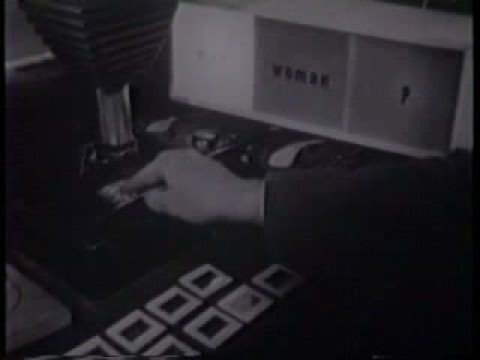
Now, here’s where it gets even cooler—he built an actual machine called the *Perceptron*. It used these basic principles to classify images. Imagine seeing this clunky device trying to tell whether it was looking at an apple or an orange. It was way ahead of its time!
But let’s not forget, Rosenblatt faced criticism too. Some folks said his model wouldn’t scale well with complexity. And sure enough, as technology progressed, more sophisticated algorithms emerged that could handle way more complexity than his original idea.
Still, that didn’t erase his impact on AI research! He opened up discussions about how machines could learn and adapt—topics we are still wrestling with today. These days, deep learning and complex neural networks owe a lot to the groundwork laid by him.
Now look at how pervasive AI is in our lives! From facial recognition on your phone to recommendation systems on streaming services, they all stand on the shoulders of giants like Frank Rosenblatt.
So yeah, when you think about artificial intelligence today, know that Frank’s legacy is woven into its very fabric:
- The foundation for early neural networks.
- Inspiration for modern learning algorithms.
- A push towards understanding how machines can mimic human cognition.
His work reminds us that every grand leap starts somewhere small—and sometimes clunky! It’s kinda comforting when you think about it; humanity has always been about trial and error while pushing boundaries. So keep this in mind as you explore AI: behind those complex algorithms lies a simple idea born from curiosity and determination from pioneers like Frank Rosenblatt!
So, let’s talk about Frank Rosenblatt and his perceptron model. It’s kind of like stepping back into the good old days of artificial intelligence. Picture it: the late 1950s, a time when computers were just starting to find their footing and really make an impact in our lives. Rosenblatt was like this visionary, wanting to create machines that could “learn” just like humans.
His root idea was pretty simple but groundbreaking—he wanted to mimic how our brains work using a mathematical model. The perceptron is like this basic building block of what we now call neural networks. Imagine a child learning to recognize, say, different types of fruits. At first, they might mix up an apple and a pear, but with some guidance and practice, they get better at it over time. That’s sort of what the perceptron did—taking in data, adjusting itself based on errors, and learning from experience.
But here’s a little twist! As promising as it sounded back then, the perceptron had limitations too. For instance, it struggled with more complex problems—like how you can’t just outline what makes a cat different from a dog with simple rules. That kind of complexity wasn’t something Rosenblatt’s model could tackle at the time.
Here’s where my mind drifts back to my school days—when I was taught about these artificial intelligences in class but didn’t really get how foundational these early models were. Imagine sitting there with your classmates as your teacher explained how even though there were bumps along the road for AI development, those very bumps helped pave the way for everything that followed! It’s kind of inspiring when you think about how many researchers took those ideas and ran with them.
Rosenblatt’s work really opened doors for future advancements in machine learning and neural networks. So many bright minds have built upon that original concept—layering deeper architectures to handle complex tasks like image recognition or language processing today! We’re talking cutting-edge stuff that seems straight out of sci-fi movies.
When I reflect on all this history, it feels like these innovators lay down tracks for others to follow—even if they didn’t see every twist and turn that would come next! We’re still riding on waves created by early pioneers like Rosenblatt. And you know what? There’s something incredibly beautiful in knowing that every leap forward builds on earlier dreams and discoveries made by folks who dared to dream big about machines thinking for themselves.
In wrapping up this little trip through memory lane—the legacy of Frank Rosenblatt isn’t just about one model; it’s about igniting curiosity and setting off sparks that continue to illuminate paths in AI today! It’s incredible how much potential lies in foundational ideas; sometimes it’s just waiting for someone else who’s curious enough to explore them further!