So, picture this: You’re huddled over your chemistry textbook, and suddenly, you’ve got a headache. The structures just look like a bunch of squiggly lines and letters, right? Yeah, I get it.
But here’s the thing—what if I told you there’s a way to actually see those molecules in 3D? Like turning those nerdy scrawls into actual shapes that you can hold!
Ochem model kits are like a magic wand for chemistry students. Instead of memorizing complex structures, you can build them with your own hands. Seriously, it’s like playing with LEGO but for science nerds! It makes understanding organic chemistry a whole lot more fun.
Just imagine sitting there in class, showing off your colorful models while others are staring blankly at their notes. How cool is that?
Enhancing Chemistry Education: The Impact of Organic Chemistry Model Kits in Learning
When you’re getting into organic chemistry, things can get pretty tricky. You’re suddenly thrown into a world of molecules, bonds, and structures that can feel like learning a new language. That’s where organic chemistry model kits come in handy. These little tools are like your sidekick, helping you visualize what you’re studying.
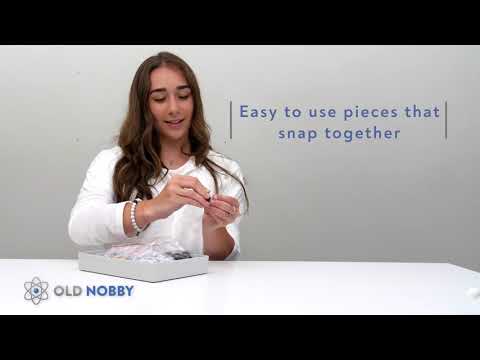
So, what’s the big deal about these model kits? Well, they allow you to physically manipulate atoms and bonds. Imagine building a miniature version of a molecule instead of just looking at it on paper or a screen. It’s like playing with LEGO! You snap together different colored atoms to create structures like glucose or benzene. This tactile experience helps reinforce your understanding.
Here are some ways these model kits make learning organic chemistry more engaging:
- Visualization: Seeing is believing! When you hold the models in your hands, you can better grasp concepts like three-dimensional shapes. Molecules aren’t flat drawings; they’re 3D forms that take up space.
- Bonds in action: You can create single, double, and even triple bonds by snapping pieces together. This interactive approach clarifies how atoms connect and interact with one another.
- Molecular Geometry: Understanding geometry is critical in organic chemistry. With these kits, you can explore shapes like tetrahedral and planar geometries more intuitively.
- Simplifying Complex Concepts: Sometimes textbooks dive deep into topics that make your head spin! Model kits break down complex ideas into manageable pieces.
I remember the first time I used a model kit during my own studies. I was struggling to visualize how different molecules could rotate around their bonds. But once I started piecing things together—actually turning those little atom balls—it all clicked! Suddenly, I wasn’t just memorizing structures; I was understanding them.
The interactive nature of these kits also promotes group learning. Picture this: you and your friends gather around the table with your model kits after class. You start building different compounds while debating their properties or reactions—like a casual study session but way cooler!
A great thing about model kits is their versatility. Whether you’re tackling simple hydrocarbons or complex biological molecules, they adapt easily to various levels of chemistry concepts. Plus, it’s super easy to share them with classmates; no more fighting over textbooks!
In short—model kits aren’t just toys for nerds (though it’s totally okay if you feel nerdy about them!). They’re valid educational tools designed to enhance understanding and retain information better than traditional methods alone. They open up a whole new way for students to connect with organic chemistry on a personal level!
If you’re diving into this crazy world called organic chemistry soon or know someone who is—don’t skip out on grabbing one of those model kits! They might be the thing that clicks everything into place for you.
Unlocking the Future of Chemistry Education: The Impact of Online Ochem Model Kits on Learning
The future of chemistry education is evolving, and one exciting element in the mix is the use of online organic chemistry (ochem) model kits. These digital tools are making it easier for students to grasp complex concepts while enjoying a more interactive learning experience. You know how sometimes, just reading about something doesn’t cut it? Actually manipulating models can change that totally.
So, what’s up with these online ochem model kits? They’re like virtual playsets where you can build molecular structures right from your computer or tablet. You can drag and drop atoms into place, bond them together, and visualize how different compounds look in three dimensions. This hands-on aspect can be super valuable for students who might find traditional textbook learning a bit daunting.
Think about it: when you were little, did you ever play with building blocks? That feeling of creating something from simple pieces? Online ochem kits tap into that same sense of curiosity and creativity. Instead of just memorizing formulas or reaction mechanisms, students can understand how molecules interact and change shape during reactions. It’s like bringing chemistry to life!
Here are some key points about how these kits impact learning:
- Visualization: Seeing molecules in 3D makes it easier to understand their structures.
- Interactivity: Students learn better when they can actively engage with the material.
- Accessibility: With online tools, more students have access to quality resources regardless of location.
- Differentiation: They’re great for all learners—visual learners get a boost, but so do kinesthetic ones who thrive on hands-on activities.
It’s pretty clear that these tools make complex topics more approachable. For instance, let’s say you’ve got a test on stereochemistry—the arrangement of atoms in space matters a lot here! Using an online kit allows you to manipulate chiral centers and see how enantiomers differ in 3D. Just imagine studying for hours without really getting it until that “aha!” moment hits because you finally see it!
Another cool thing about online kits is their portability. You don’t need to lug around heavy models or worry about losing pieces—that was always my biggest stress as a student! Just fire up your device and dive into your studies wherever you are.
Now, I won’t pretend there aren’t challenges ahead with this method too. Some people might miss the tactile feel of real models or find screen fatigue an issue. Still, educators can balance traditional methods with these innovative tools to create a richer learning environment.
Anyway, as we move forward in chemistry education, integrating online organic chemistry model kits seems to be paving the way for engaged learning experiences that stick better than traditional ways alone. So if you’re diving back into organic chemistry—or exploring it for the first time—maybe it’s time to give those digital models a shot! Trust me; they could change how you view molecules forever!
Enhance Your Understanding of Organic Chemistry with the Hgs Organic Chemistry Model Kit
The world of organic chemistry can feel like a maze at times, right? But let’s break it down. You see, organic chemistry is all about carbon-containing compounds. These compounds are everywhere—in your body, food, and even in the air. One of the best ways to really *get* the structures and reactions in this field is by using model kits.
So, what’s up with these model kits? Well, they help you visualize molecules in three-dimensional space. You know how hard it can be to picture something flat on paper, especially with all those bonds and angles? With a model kit, you can actually build the molecules yourself. It’s like playing with building blocks but for science!
Here’s why a kit can be super useful:
- Hands-On Learning: Building models lets you interact with the material physically.
- Visualizing Structures: You get to see how atoms connect and what shapes they make.
- Understanding Geometry: The arrangement of atoms affects how molecules behave—like why some are solid at room temperature while others are gases.
Let’s take water as an example. It’s H2O—two hydrogen atoms bonded to one oxygen atom. If you’re using a model kit, you can snap those pieces together and see that water is actually shaped like a V! This shape influences its properties; for instance, it allows water to stick together (that’s surface tension). Pretty neat, huh?
Now think about complex molecules like glucose or amino acids. They have multiple functional groups and bonds that give them unique characteristics. Building these structures helps reinforce concepts like chirality or resonance—basically fancy terms that describe how certain molecules behave differently based on their arrangements.
But here’s the kicker: not everyone learns the same way! Some people need to touch things to truly grasp them. If you’re someone who likes seeing and doing rather than just reading or hearing about stuff, then these model kits are your best friend.
Another thing is collaboration with peers. Nothing beats studying with friends while assembling models together. You could debate different molecular shapes or even work through homework problems while putting together structures.
So yeah, incorporating an organic chemistry model kit into your studies could seriously enhance your understanding of this wild world of carbon compounds! No more feeling lost in lectures because you’ve got a hands-on tool by your side that turns abstract ideas into something tangible—like a science superhero moment waiting to happen!
You know, chemistry can be a bit of a tough nut to crack. I remember sitting in my college courses, staring at the blackboard filled with structures and reactions. My brain would feel like it was juggling flaming torches while riding a unicycle! So, when I stumbled upon organic chemistry model kits, it felt like getting an extra pair of hands.
These kits are pretty neat. They come with colored balls and sticks that let you build molecules in 3D. Honestly, it’s so much easier to grasp how these complex structures fit together when you’re not just looking at them on a flat screen or paper. You can twist and turn them around, see the angles between bonds, and understand why some molecules look the way they do.
It’s kind of like playing with Lego… if all the pieces were different atoms bonded together instead of plastic bricks! Remember how satisfying it was to snap those blocks together? That’s sort of what this feels like but with science. I remember one time I was trying to build a molecule for hours and then suddenly everything clicked into place—it was such a rush!
Also, these kits really help when you’re trying to visualize reactions or mechanisms. Instead of just memorizing steps from textbooks, you’re actively engaging with the material. You can almost see the electrons dancing around during reactions—so cool!
And let’s face it: not everyone learns the same way. Some folks might be auditory learners; others are visual or kinesthetic. These model kits cater to that hands-on learning style perfectly! It’s about making chemistry accessible and fun—because who doesn’t want a little bit of creativity mixed in with their science?
In classrooms where these kits are used, I’ve seen students light up as they manipulate their models. It’s like they finally see beyond the formulas and theories; they’re building connections—literally! And that’s what education should be about: sparking curiosity and making concepts come alive.
So yeah, incorporating ochem model kits into chemistry education might just be one way to demystify this often-daunting subject. It encourages creativity while grounding students in fundamental concepts—and honestly, we could all use more excitement in learning!