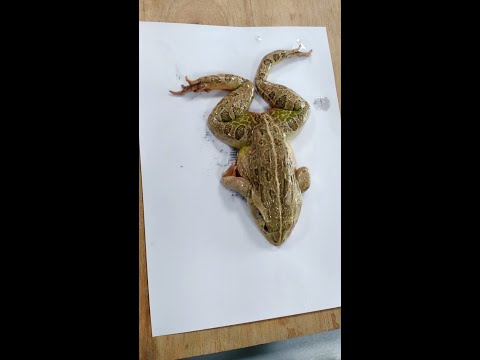
So, there I was, chilling by a pond the other day, and I saw this frog leap like it was auditioning for the Olympics. Seriously, that little dude could jump way higher than I could ever dream of! It got me thinking—what’s going on in those froggy muscles?
You see, frogs aren’t just cute little bouncers that hang out by the water. They’ve got some pretty amazing muscle anatomy that lets them do all sorts of cool stuff, like jump, swim, and even make those funky croaking sounds.
It’s wild to imagine how all those muscles work together to help them survive in their watery worlds. Ever wondered how they pull it off? Well, come on this ribbit-ing journey with me as we dig into the secret life of frog muscle anatomy!
Exploring the Muscular Adaptations of Frogs: How Muscle Arrangement Enhances Jumping and Swimming Efficiency
Frogs are truly amazing creatures, and when it comes to their **muscle anatomy**, it’s like they were made for jumping and swimming. So, let’s take a closer look at how their muscles work, shall we?
First off, the **muscle arrangement** in frogs is all about efficiency. You see, frogs have two main types of muscles: fast-twitch and slow-twitch. Fast-twitch muscles are like that one friend who can sprint really fast but gets tired quickly. They help frogs leap high and far in short bursts. Meanwhile, slow-twitch muscles are more like the tortoise—they’re built for endurance, helping frogs swim long distances without tiring out.
One of the most impressive things about frog muscles is how they’re **arranged** in bundles. This arrangement allows them to maximize power output during jumps or swims. When a frog prepares to leap, its leg muscles contract almost simultaneously—a bit like an orchestra playing in perfect harmony. This coordination helps them achieve explosive movements. You know when you see one jump and it seems effortless? That’s all thanks to their well-structured muscle groups!
For jumping specifically, **the hind legs** are where the magic happens. Frogs have incredibly strong thigh muscles that store energy before a jump—like pulling back on a slingshot! When they release that energy, they shoot off into the air with impressive speed.
Swimming is another story but just as cool! Frogs use their webbed feet as paddles when swimming, which works beautifully with their muscle structure. The **flexibility** of their limbs allows for powerful strokes through water that propel them forward quickly and efficiently.
The frog’s unique body shape also contributes to its movement skills. Their *longer* bodies help with swimming since it reduces drag in water while providing stability—think of a torpedo cutting through waves! And here’s something nifty: while swimming, a frog’s body can rotate slightly which helps change direction easily.
You might think that all these adaptations are just about survival or catching food—it’s mostly true! But also consider this: these muscle adaptations allow frogs to escape predators swiftly or find mates during breeding season when they’re more vulnerable.
In summary, the muscular adaptations of frogs—like the way their fast and slow-twitch fibers work together and how they’re strategically arranged—make them some of nature’s best jumpers and swimmers. Next time you see one hop or glide through water with ease, just remember how cool their anatomy is behind those moves!
Exploring the Frog Skeletal System: Parts, Functions, and Its Role in Amphibian Biology
The frog skeletal system is pretty fascinating, and it plays a crucial role in how frogs move and live. Frogs are amphibians, which means they can thrive both in water and on land. Their skeletal system is specially adapted for this dual lifestyle.
First off, let’s talk about the basic parts of the frog’s skeleton. The main structure is called the axial skeleton, which includes the skull, vertebrae, and ribs. Specifically, frogs have a unique skull that’s somewhat flat and broad, allowing them to catch prey easily with their long tongues. You know how they snap up insects? It’s all thanks to that cool skull design.
Then there’s the appendicular skeleton, comprising the limbs and pelvic bones. Frogs have strong hind limbs that are longer than their front ones. This design helps them jump really far—some species can leap over 20 times their body length! How cool is that? These powerful legs also assist when swimming in water.
Now onto function: why do we care about these bones anyway? Well, they provide structure and support for the frog’s body. But it doesn’t stop there! The bones protect vital organs too; for instance, the ribs offer safety to lungs and heart while still allowing flexibility for breathing.
Another important aspect is how the skeleton connects with muscles. Muscles work alongside bones to enable movement. Frogs have muscles attached at various points on their bones; when these muscles contract, they pull on bones—like pulling a string on a puppet! This connection allows frogs to perform impressive movements like leaping or swimming with grace.
There’s also something quite cool about frogs’ limb joints called “flexible joints.” These allow frogs to bend and stretch their limbs efficiently during jumps or when landing safely after a hop. It’s kind of like having springs instead of rigid connections; you feel me?
Amphibians like frogs go through a lifecycle that makes their skeletal system even more interesting. When they’re tadpoles, they start off with a completely different skeletal system—more like fish! As they mature into adults, they develop those sturdy legs for life on land.
To sum things up:
- The axial skeleton
- The appendicular skeleton
- Mature frogs
- Flexible joints
- Bones protect internal organs
- Muscles connect to bones
supports vital organs.
enables movement.
adapt from tadpole form to land-dwelling creatures.
assist in jumping and swimming.
, providing structure.
, facilitating movement.
So, basically, each part of the frog’s skeletal system works together with its muscles to create an agile creature that’s perfectly designed for life both in water and on dry ground—the best of both worlds! Isn’t nature just brilliant?
Comparative Analysis of Anuran Pelvic and Hindlimb Muscle Anatomy: Insights into Locomotor Adaptations
So, let’s talk about the cool world of frogs and their muscles, specifically focusing on their pelvic and hindlimb muscle anatomy. Frogs are fascinating creatures, and their adaptations for movement are just one thing that makes them stand out in the animal kingdom.
Firstly, the pelvic girdle in frogs is super important because it connects their hindlimbs to their body. Think of it as the anchor point for all that jumping they do. It’s not just a simple structure; it’s really shaped to help with those powerful leaps. You know how when you squat down to jump? Frogs kind of do the same thing with their bodies.
Now, let’s dive into those hindlimb muscles. The main players here are the gastrocnemius and soleus muscles. These guys work together like a team to provide the power behind a frog’s jump. When a frog gets ready to leap, these muscles contract really fast, helping to propel them off the ground. It’s almost like they’re spring-loaded!
Another interesting point is how these muscle arrangements vary among different species of frogs. Some frogs might have thicker or differently shaped muscles depending on whether they hop long distances or prefer shorter bursts of speed. For instance:
- Long-distance hoppers: Frogs that travel long distances often have more developed gastrocnemius muscle fibers.
- Short bursts: Species that need quick jumps usually have thicker soleus muscles.
One time, I watched a frog at a pond trying to catch flies. It was amazing! The way it crouched down before jumping was like watching an athlete getting ready for a race. That quick burst of energy came directly from its powerful hindlimb muscles.
Also, there’s this concept of muscle fiber composition. Different types of muscle fibers can affect how fast or how far they can jump. There’s slow-twitch fibers for endurance and fast-twitch fibers for quick sprints. Depending on what kind of environment they live in (like swamps vs. high grass), frogs can adapt their muscle makeup accordingly.
But wait, there’s more! Frogs also rely on certain connective tissues around these muscles that enhance performance by storing elastic energy when they land and then releasing it when they jump again—basically helping them become little bouncy balls!
Overall, looking at frog anatomy gives us valuable insights into how these amazing creatures have adapted through evolution to be such efficient jumpers in various environments. So next time you see one leaping by, remember all those fantastic adaptations working together behind the scenes!
You know, frogs are kind of fascinating when you think about it. I mean, these little critters can leap around, swim like pros, and even change their skin color! All that awesomeness comes down to their muscles. So let’s chat a bit about frog muscle anatomy and how it connects to who they are as amphibians.
First off, frogs have this cool set of muscles that help them do those impressive jumps. Their back legs are like the ultimate springs. Seriously! If you’ve ever seen a frog hop, you probably noticed how powerful those legs look. The big muscles in the thighs are called the quadriceps; they contract hard when the frog is ready to leap into action. It’s kind of like a mini Olympic athlete, don’t you think?
When I was a kid, I spent summers catching frogs by the pond with my friends. We’d watch them jump from lily pad to lily pad—it was magical! There’s something mesmerizing about those movements; they just seem so effortless, right? But behind that grace is this intricate network of muscles working together in perfect harmony.
Now let’s not forget about their front legs! They might seem less muscular compared to the back ones, but they still play an important role in balance and landing. Imagine if every time you jumped, you had to land perfectly without stumbling—yeah, no pressure there! Frogs use their forelimbs for stabilizing themselves after an impressive leap.
And here’s something interesting: amphibians like frogs have a unique muscle structure that allows them to switch between swimming and jumping quite easily. When they’re in water, those same leg muscles help propel them through like little torpedoes. It’s pretty wild to think how adaptable they are!
Also worth mentioning: unlike humans who primarily rely on one type of muscle fiber for endurance or strength, frogs have different types that support both quick bursts of energy and longer activities. This flexibility helps them survive in all kinds of environments—whether it’s lounging by your local pond or sprinting away from predators.
So yeah, next time you spot a frog hopping around or chilling on a rock with its bulging eyes staring at you—remember all those incredible muscles working behind the scenes! They’re not just cute little creatures; they’re marvels of evolutionary engineering with fascinating anatomy that allows them to thrive in two different worlds: land and water. How cool is that?