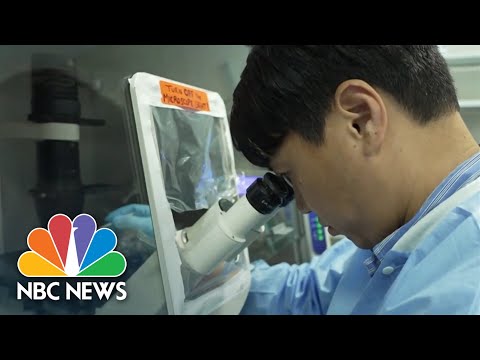
So, picture this: you’re at a family gathering, and the topic of conversation turns to weird genetic traits. You know, like that cousin who can wiggle their ears or your aunt who swears she has a sixth sense. It gets you thinking—what if we could dive deeper into our DNA?
Enter gene chips. They’re like the tiny superheroes of genetic research! Seriously, these little gadgets pack a punch in advancing our understanding of genetics and health care. I mean, it’s wild how something so small can hold so much information about who we are and where we come from.
But what exactly are these gene chips, and why should you care? Well, they’re not just for scientists in lab coats anymore; they’re revolutionizing healthcare solutions too. So let’s unravel this together!
Exploring the Largest Genetic Testing Company: Industry Insights and Scientific Innovations
Exploring the largest genetic testing company is kind of like diving into a treasure chest of science and healthcare. A big player in this field is, well, one that you might have heard about but let’s not name names. What they do is fascinating, though, especially when you look at their use of gene chips. These tiny devices are changing the game in genetic research and healthcare solutions.
Gene chips, or microarrays, are these amazing tools that can analyze thousands of genes at once. Imagine a tiny plate with spots on it. Each spot holds a different gene sequence. So when scientists want to see what genes are active in a sample—like blood or saliva—they just need to stick it on this chip! It’s like multitasking for genes. This technology speeds things up and makes research more efficient.
Now, you might be wondering about the science behind this. Essentially, gene chips work by detecting DNA sequences through hybridization. It sounds fancy, but here’s the deal: the sample DNA binds to complementary sequences on the chip. If there’s a match, scientists get a signal—like an “Aha!” moment when you find your lost keys!
But wait, there’s more! These gene chips aren’t just for research; they’re making waves in healthcare too. For example:
- Personalized Medicine: They help tailor treatments based on your unique genetic makeup.
- Disease Prediction: By analyzing genetic markers, doctors can foresee potential health issues.
- Drug Response: They can predict how well you’ll respond to certain medications.
One time I was with a friend who was kind of worried about her family history of heart disease. When she got tested using one of these advanced genetic tools, it was eye-opening! The results helped her and her doctor create a personalized plan to keep her heart healthy.
Another cool thing is that gene charts aren’t stagnant; they evolve as we learn more about genetics. Companies invest heavily in research and development, pushing the boundaries all the time. Innovation doesn’t slow down here! Imagine being at the forefront where each new discovery can save lives or improve health outcomes.
However, alongside all these advancements come questions about ethics and privacy. Like how secure is your data? Or who gets access to your genetic information? These are crucial conversations we need to have as we embrace this tech-driven world.
So yeah, exploring the largest genetics testing company reveals not just how far we’ve come scientifically but also where we can go next with innovations like gene chips leading the way! It’s an exciting time for anyone interested in science or personal health—you follow me?
Exploring the Medical Significance of Human Gene Microarray ChIP in Precision Medicine and Genomic Research
Okay, let’s break this down a bit. When we talk about human gene microarray ChIP, we’re getting into a blend of two powerful technologies that are changing how we think about medicine and genetics. First off, gene microarrays allow researchers to look at thousands of genes at once. It’s like having a super microscope for DNA! It helps us see which genes are turned on or off in different conditions.
Now, you might be wondering what ChIP stands for. It’s short for Chromatin Immunoprecipitation. This technique helps scientists figure out how proteins interact with DNA. Imagine proteins as the busy workers in a factory, and DNA as the blueprint they follow. ChIP tells us which workers are hanging out with which blueprints and when! Super cool, right?
The magic happens when you throw both of these tools together—gene microarrays and ChIP. You can see not just which genes are active but also how those activities change based on different conditions, like disease states or treatments. This is where precision medicine steps in—it tailors medical treatment to the individual patient’s needs based on their unique genetic makeup.
- Personalized Treatments: Instead of using a one-size-fits-all approach to drugs, doctors can use information from microarrays to predict how a patient will respond to specific medications.
- Disease Understanding: By analyzing changes in gene expression tied to diseases like cancer, researchers can identify new pathways and targets for drug development.
- Predicting Outcomes: With precise data on gene activity, it becomes easier to anticipate disease progression or treatment success.
A little while back, I met someone whose life was basically transformed by this kind of research. She had breast cancer that wasn’t responding well to standard treatment options. After some genetic testing—including microarray analysis—doctors found specific markers indicating that another drug could be effective for her type of cancer. And guess what? It worked! That’s the tangible power behind these techniques.
The fact is, the field is still evolving. Scientists are constantly refining these technologies and discovering new applications all the time. For instance, you might hear about single-cell RNA sequencing being combined with similar approaches to gain even more insights into complex diseases or conditions.
The bottom line is that human gene microarray ChIP sits at an exciting intersection of precision medicine and genomic research. These tools help us understand our individual differences better than ever before—and potentially lead us towards more effective treatments tailored just for you or me!
Understanding ChIP: A Key Technique in Genetic Research and Analysis
Alright, so let’s talk about ChIP, which stands for Chromatin Immunoprecipitation. It’s a nifty technique in genetic research that helps scientists understand how proteins interact with DNA. You see, our DNA isn’t just hanging out freely in cells. It’s wrapped around proteins called histones, forming a complex called chromatin. This structure is super important because it controls how genes are turned on or off.
ChIP allows researchers to study these interactions. Basically, you take a bunch of cells and cross-link the DNA with proteins using formaldehyde. Then, those proteins can be pulled out specifically by using antibodies—those little warriors made by our immune system that go after specific targets. Once you’ve pulled out the protein-DNA complexes, you can break the cross-links and analyze the DNA sequences bound to those proteins.
Here’s where it gets interesting: ChIP is used a lot to look into gene regulation. For instance, if you have a protein like a transcription factor (think of it as a switch), ChIP can show you where this protein binds on your DNA. Maybe it turns on a gene related to growth or stress response? Understanding these binding sites can give insights into diseases or how organisms react to their environment.
- Versatility: ChIP isn’t just for one type of molecule; it can be used for different types of proteins involved in gene regulation.
- Applications: Researchers use it in many fields like cancer research, developmental biology, and even neuroscience.
- Caveats: But hey, it’s not perfect! There are limitations regarding resolution and the need for high-quality antibodies.
I remember when I first learned about this technique—it was during my undergrad years. We were studying epigenetics and trying to figure out why some people develop certain traits or diseases while others don’t. Someone started explaining ChIP, and it clicked! If we could just *see* which proteins are working at specific parts of the genome during crucial moments in development… that would open so many doors!
And speaking of opening doors—this technique links up nicely with genetic chips (or gene chips). These are essentially little slides containing thousands of probes (tiny pieces of DNA) that help scientists monitor gene activity across multiple genes at once. Combine them with ChIP data? You’ve got yourself a powerful toolkit for understanding complex genetic networks!
The thing is—ChIP is helping pave the way for real breakthroughs in healthcare too! By discovering how certain genes are regulated differently in diseases like cancer versus healthy cells, researchers might find new therapeutic targets or ways to personalize medicine.
So there you have it! ChIP shines a light on the dark corners of our genetics by revealing how proteins play their roles in managing our genetic materials. It’s one of those techniques that may seem technical but truly connects us with understanding life on such an intricate level.
Gene chips are like tiny little windows into our genetic makeup, right? They’re these amazing tools that scientists use to look closely at our DNA and find out what makes us tick. Honestly, it’s kind of mind-blowing when you think about it.
Imagine sitting in a lab one day, surrounded by all those high-tech gadgets, and realizing that with just a chip smaller than your fingernail, you can analyze thousands of genes at once. That’s like having the entire library of your genetic information compressed into a single page! You’d get a rush of excitement thinking about how this could change everything we know about health and medicine.
I remember chatting with a friend who was really worried after a family member got diagnosed with a genetic condition. They were feeling lost and helpless, but then they mentioned hearing about gene chips and how researchers might use them to understand more about these diseases. It gave them some hope! Just the thought that scientists could potentially spot risks or tailor treatments based on someone’s unique genetic makeup is pretty incredible.
Now, gene chips aren’t perfect—they have limitations and people are still figuring out the best ways to use them responsibly. But the fact that they can help identify disease susceptibility or even guide more personalized medications just blows my mind! It feels like we’re stepping into the future of healthcare where treatments can be more targeted instead of one size fits all.
But there’s also this ethical edge to consider. You know? Like when people think about privacy and how much info we want to share about our genes. It’s super crucial for us to strike a balance between advancing medical science and respecting personal boundaries.
So yeah, it’s wild to think how something as small as a gene chip can hold so much potential for understanding ourselves better—both our strengths and vulnerabilities in terms of health. It’s an exciting time in genetic research, promise me you keep an eye on what comes next!