Alright, so picture this: You’re sitting around with your friends, and someone starts talking about genetics. Suddenly, they drop a bomb about how your eye color is linked to a bunch of other traits like hair color or even the way you laugh. Like, what?
Honestly, it’s pretty wild when you think about it. Our genes are like this massive tangled web of information that determines who we are—how we look, how we act, even our quirks! The mind-blowing part? Scientists have ways to untangle that web and figure out the connections.
That’s where gene linkage and mapping come into play. It’s not just for lab coats and microscopes; this stuff is like a treasure map for understanding life itself! Interested yet? Trust me; it gets even better from here!
Exploring Gene Linkage and Mapping Tools: Innovations in Genetic Discovery
So, gene linkage and mapping, huh? It’s kinda like uncovering a treasure map where the treasure is hidden deep within our DNA. When you think about it, our genes are literally what makes us who we are—like a recipe. But just how do scientists figure out where those ‘ingredients’ are located on this genetic map? Let’s break it down.
First off, gene linkage is this cool concept where genes that are located close to each other on a chromosome tend to be inherited together. Imagine two friends who always hang out—they just go together, right? Well, that’s how these genes roll. It’s super helpful when scientists are studying traits or diseases because it can show them which genes might be involved in certain characteristics or conditions.
Now, here’s where it gets even more interesting with mapping tools. These tools help researchers figure out the precise location of these linked genes on chromosomes. One of the most popular methods used today is called genome-wide association studies (GWAS). This fancy-sounding term is basically a way for scientists to look at thousands of genomes at once and see if they can spot differences between people with certain traits or diseases and those without them.
But wait! There’s more! Another technique that has really changed the game is next-generation sequencing (NGS). What happens here is pretty wild: scientists can sequence entire genomes quickly and affordably. This helps them figure out not only where certain genes live but also what variations might cause specific traits or illnesses. It feels like having a superpower!
To visualize all this info, researchers create genetic maps. Think of these as detailed blueprints showing where each gene is located relative to others on the chromosomes. One example would be constructing what they call a “linkage map,” which shows how frequently certain genes are inherited together based on their distance from one another.
And let me tell you about something really exciting happening nowadays: CRISPR technology. This tool lets scientists snip out or edit specific parts of DNA like you’re editing a document on your computer. It’s not just cool; it’s revolutionizing how we understand gene functions and relationships!
Imagine being able to pinpoint exactly which gene you want to change for advanced medicine—sounds like sci-fi stuff, right? But it’s happening! Researchers are using CRISPR alongside mapping tools for targeted therapies against diseases like cancer and genetic disorders.
In short, gene linkage and mapping tools have opened up new frontiers in genetic discovery. They’re allowing scientists to understand better what makes us tick at our most fundamental level—and who knows what kind of breakthroughs we’ll see next? So keep an eye out; the world of genetics is moving fast!
Advanced Gene Linkage and Mapping Tools for Genetic Discovery: A Comprehensive PDF Guide
Gene linkage and mapping are like the treasure maps of genetics, helping us trace where genes live on chromosomes. It’s kinda like trying to find your way around a big maze, you know? These tools have come a long way since the early days of genetics.
When scientists talk about **gene linkage**, they’re referring to how certain genes tend to be inherited together because they’re located close to each other on a chromosome. This closeness can affect how traits are passed down through generations. So, if you’ve got one trait from your parents, there’s a good chance another trait might tag along. It’s wild how these tiny strands of DNA can have such an impact!
One of the coolest tools for gene mapping is **linkage analysis**. This method looks at families and sees how traits appear across generations. By studying patterns in inheritance, researchers can pinpoint the possible location of genes related to specific traits or diseases. Imagine putting together a jigsaw puzzle where each piece represents a gene—it helps build the bigger picture.
Another handy tool is **marker-assisted selection (MAS)**. This technique is super useful in agriculture and animal breeding; it helps breeders select plants or animals for desirable traits without needing to wait for them to grow up completely. For example, by identifying specific genetic markers linked to disease resistance in crops, farmers can cultivate strains that are more resilient right from the start.
Genetic mapping takes this even further by physically locating genes on chromosomes using techniques like **single nucleotide polymorphism (SNP) genotyping**. SNPs are basically tiny differences in our DNA that make us unique—like little fingerprints! By scanning for these variations across different individuals, scientists can create detailed maps showcasing where specific genes hang out.
- Genome-wide association studies (GWAS): These analyze the genomes from many individuals to find common genetic variants linked to traits.
- Quantitative trait locus (QTL) mapping: This helps researchers find regions of DNA associated with complex traits—like height or weight.
- Next-generation sequencing (NGS): A game changer that allows rapid sequencing of entire genomes; it’s like getting an all-access pass!
Oh! And let’s not forget about bioinformatics—the cool field that combines biology and computer science. Without bioinformatics tools, organizing all that data from genetic studies would be like trying to organize your messy room blindfolded! These tools help interpret massive amounts of information and make sense of complex genetic interactions.
So here’s why all this matters: understanding gene linkage and mapping is key for tackling health issues, developing new crops, and even learning more about evolution itself. Every time we unlock another piece of genetic info, we’re one step closer to understanding not just what makes us tick but also how we can improve life on Earth.
Feeling overwhelmed yet? Don’t worry! The field’s growing fast with advancements making this information more accessible than ever before. Just remember: every research paper or guide out there is just one step in our ongoing journey into genetics—like chapters in an ever-evolving storybook waiting for someone curious enough to read them!
Understanding Gene Linkage: Key Examples and Implications in Genetics
Gene linkage is one of those concepts in genetics that can initially feel a bit complex, but once you get a grip on it, it’s pretty cool. So, let’s break it down.
In short, gene linkage happens when genes are located close to each other on the same chromosome. Think of chromosomes like long streets lined with houses (genes). If two houses are next to each other, they’re more likely to be inherited together when cells divide.
Now, why does this matter? Well, gene linkage can really influence how traits are passed down through generations. For example, let’s say you have a gene for flower color and another for flower height on the same chromosome. If those genes are linked, plants with purple flowers might also tend to be taller because their genes like to stick together during reproduction.
Here are some key points about gene linkage:
- Recombination: During meiosis (the process that creates egg and sperm), chromosomes can exchange bits of DNA in a process called recombination. This is where things get interesting because if two genes are far apart on a chromosome, they’re more likely to get separated during recombination.
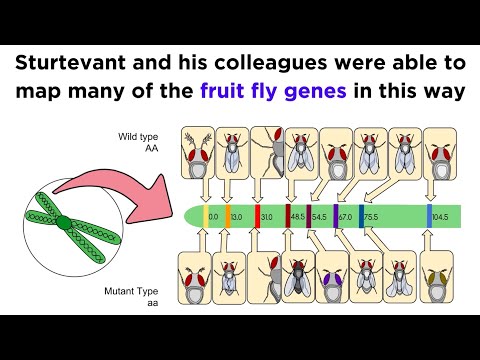
- Mapping Genes: Scientists use the concept of gene linkage to create genetic maps. By looking at how often certain traits occur together in offspring, they can figure out which genes are linked and how far apart they are.
- Examples in Nature: A classic example comes from fruit flies (Drosophila melanogaster). Researchers found that certain traits like body color and wing shape were linked because they were located near each other on the same chromosome.
- Implications for Breeding: Understanding gene linkage can aid in breeding programs—like plant or animal breeding—because it helps predict which traits will be passed on together.
You might even think back to Mendel’s work with pea plants. He showed how certain traits could appear together or separately based on their inheritance patterns. Although he didn’t know about chromosomes yet, he was touching on the basics of what we now understand as linkages!
The implications go beyond just breeding though! Ever heard of genetic disorders? Some diseases occur due to specific mutations that might be closely linked with other traits or conditions. If scientists know how these genes correlate, they could find better ways to predict and manage these disorders.
And here’s something neat: researchers are still discovering new aspects of gene linkage today. Modern techniques like genome sequencing have opened up so many doors! For instance, finding out how certain diseases spread within families has improved thanks to understanding these genetic connections.
So there you have it! Gene linkage isn’t just a dry scientific concept; it’s a crucial part of genetics that helps explain why some traits show up together and why they’re inherited the way they are—for better or worse! It’s kind of like uncovering the secrets behind family resemblances but at a much smaller scale!
You know, genetics is one of those topics that can feel like a maze at times. I remember sitting in my biology class, staring at these complex diagrams, trying to wrap my head around how genes work. It’s like a puzzle, and every piece has its place; you just need to figure out how they fit together.
So, gene linkage and mapping—that’s where the magic happens! Basically, genes located close together on a chromosome tend to be inherited together. Think of it like best friends on the playground; they stick together during games. This linkage helps scientists understand inheritance patterns better.
Imagine you have two traits, say flower color and height in plants. If those traits are linked, when you get one characteristic from a parent, you’re more likely to get the other too. Crazy, right? This is where mapping comes into play! Mapping helps us see which genes are connected and how far apart they are on that chromosome string.
There’s this old-school tale about a scientist named Thomas Morgan who really paved the way for genetics with fruit flies—yes, fruit flies! He noticed certain traits were inherited together more than others. His work gave birth to the concept of gene linkage back in the early 1900s. It blows my mind that such simple creatures could unravel so much about our genetic code!
And today? With modern tools like DNA sequencing and high-tech computer programs, mapping genes has become way more precise. Scientists can pinpoint the exact location of genes on chromosomes now! They use techniques like genetic markers—you know, tiny snippets of DNA that help pinpoint where certain traits lie.
But here’s the thing: it’s not just a scientific exercise; it affects real life too. Like when researchers look for genetic contributions to diseases or traits we might want to understand better or even modify in crops for food security—fascinating stuff.
So yeah, this whole world of gene linkage and mapping isn’t just abstract science. It’s a crucial tool for discovering how life works at its most fundamental level and solving some pretty big puzzles we face today!