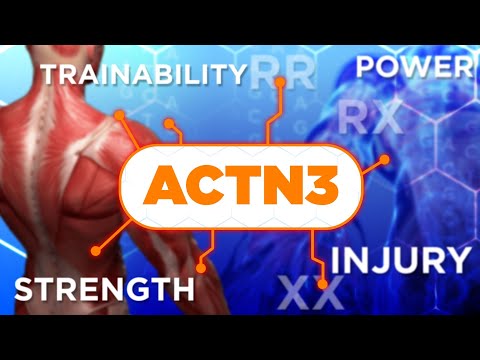
You know how some people can just sprint like the wind while others struggle to get off the couch? Well, scientists have a pretty neat explanation for that. It’s all about this little thing called the ACTN3 gene.
Seriously, it’s like the cool kid in the playground of your DNA. Some folks are born with a version that helps them build fast-twitch muscle fibers—those are the ones that make you super quick and powerful. Imagine running a race and leaving everyone in your dust because of a freaky little gene!
But it’s not just about speed. The ACTN3 gene plays into muscle type too, influencing how our bodies respond to training and even recovery times. So, whether you’re dreaming of Olympic medals or just trying to outpace your buddy on a weekend run, this gene could be part of the story.
Stick around as we unravel how this tiny piece of genetic code can shape athletic performance!
Exploring the Role of ACTN3 Gene in Muscle Strength: Insights from Sports Science
To understand the role of the ACTN3 gene in muscle strength, we need to dive a bit into genetics and how it relates to our physical abilities. So, ACTN3 is often called the “speed gene.” It’s like having a secret code that influences whether you might be more suited for sprinting or long-distance running. Cool, right?
This gene helps produce a protein known as alpha-actinin-3, which is predominantly found in fast-twitch muscle fibers. These fibers are the ones that help you sprint and lift heavy weights. Fast-twitch fibers can generate a lot of force quickly, but they also tire out faster compared to slow-twitch fibers, which are more about endurance.
Now, here’s where it gets interesting: not everyone has this gene functioning at full capacity. Some folks carry a version known as R577X, which can lead to little or no production of the alpha-actinin-3 protein. Those with this variant might find themselves leaning towards sports that require endurance rather than explosive power.
You might be thinking, “So what does this mean for athletes?” Well, studies have shown that athletes who perform best in power sports often have a higher frequency of the functional version of the ACTN3 gene. For example:
- Sprinters: Many top sprinters and weight lifters tend to carry two copies of the active allele (like having two cheat codes).
- Endurance athletes: Runners who excel in marathons may more frequently possess one or two copies of the inactive allele.
It’s not just about genes though; environment and training play big roles too! You might have fantastic genes for speed, but if you don’t train hard or get proper nutrition, you won’t reach your potential.
But hold on! It’s also about balance. While having the ACTN3 gene influencing fast-twitch muscle fibers can give an edge in strength sports, it’s crucial not to overlook those slow-twitch fibers—especially if you’re looking at overall athletic performance long-term.
I remember watching a documentary about Olympic athletes when I was younger. The differences between sprinters and marathon runners were staggering! It really struck me how genetics could lay down some groundwork for potential but passion and hard work pretty much built the house.
In short, while your ACTN3 genotype can offer insights into whether you’re more likely to crush it in short bursts or endure longer challenges, it’s just one piece of the puzzle. Embrace your unique genetic makeup combined with dedication and training! That’s where true greatness lies.
Exploring the ACTN3 Gene Variation Across Racial Groups: Implications for Athletic Performance and Genetic Diversity
Exploring the ACTN3 gene is like peeling back the layers on what makes athletes tick. This gene, known for its role in muscle performance, has variations that some people say could give certain groups an edge in sports. But what does this mean, really? Let’s break it down.
First off, the **ACTN3 gene** encodes a protein called α-actinin-3. This protein is found in fast-twitch muscle fibers, which are great for sprinting and explosive movements. So you can see why athletes would be curious about it! Some folks have a version of the gene that functions perfectly—let’s call them “RR” individuals. Others might have a version that doesn’t work as well—these are the “XX” individuals.
Now, when we talk about **racial groups**, things get even more interesting. Research shows that different populations have varying frequencies of these gene types. For example, in some studies:
This variation suggests that genetic diversity plays a significant role in athletic performance across different groups. It’s like having different tools in your toolbox; not everyone will have the same ones!
But hold on—this doesn’t mean someone with two copies of the XX variant can’t excel at sports! Seriously! Athletic success isn’t just about genetics; it’s also shaped by training, nutrition, and even mental toughness. I remember my friend Sam who was always on the heavier side of things but still could out-sprint us all during track practice. He didn’t have a flashy genetic advantage but made up for it with sheer willpower and relentless training.
Another thing worth mentioning is the **environmental factors** influencing how these genes express themselves. Training methods differ around the world based on culture and access to facilities, creating an exciting mix of genetic potential and learned skills.
So yeah, while there may be some genetic predispositions tied to athletic performance through variations in the ACTN3 gene across racial groups, it’s essential to understand that winning isn’t just given; it’s earned through hard work and dedication.
To sum up:
No matter where you come from or what genes you’ve got running through your veins, remember: hard work can level the playing field!
Exploring the Role of the ACTN3 Gene in Muscle Growth: Implications for Sports Science and Human Performance
The ACTN3 gene, often called the “athlete gene,” has quite an interesting role when it comes to muscle growth and performance. Basically, this gene encodes for a protein known as alpha-actinin-3, which is found in fast-twitch muscle fibers. These fibers are super important for explosive movements like sprinting, jumping, or lifting heavy weights. So, you see where this is going?
When you’re doing something that requires quick bursts of energy, your body relies heavily on these fast-twitch fibers. Now here’s the twist: not everyone has a fully functional version of the ACTN3 gene. Some folks have a variant that actually leads to a non-functional protein. This can seriously shape athletic abilities and muscle characteristics.
Let’s break it down a bit more:
- Fast-twitch vs. Slow-twitch Fibers: Muscle fibers come in two main types: fast-twitch (type II) and slow-twitch (type I). Fast-twitch fibers are great for short bursts of power but fatigue quickly. In contrast, slow-twitch fibers are more about endurance and can keep you going for longer.
- ACTN3 Variants: There are primarily two variants of the ACTN3 gene: RR (which produces functional alpha-actinin-3) and XX (which doesn’t). Athletes with RR tend to excel in sports requiring sprinting or high-intensity efforts.
- Muscle Growth Implications: For someone with the RR genotype, there’s potential for greater overall muscle strength and power output due to those fast-twitch fibers being more functional.
So imagine you’re at the gym trying to lift some serious weights. If you have that functional ACTN3 protein pumping through your muscles, you’re probably going to feel stronger and faster than someone who doesn’t have that advantage. But it’s not just about what genes you’ve inherited; training plays a massive role too!
Seriously though, genetics is just one piece of the puzzle when it comes to athletic performance. You can’t just write off hard work or proper training because they matter as much—if not more—than your DNA.
Speaking of hard work, I remember my buddy Brad who was always trying to smash his personal records in the gym. He worked out like crazy but always wondered why he wasn’t hitting those numbers as easily as his friends who seemed naturally gifted with speed and strength. Turns out, after some genetic testing (yeah!) he discovered he had the XX genotype for ACTN3—it was enlightening! It didn’t mean he couldn’t succeed; it just meant he had to tailor his training differently.
Oh! And here’s another fun tidbit: research shows that people with the XX variant might be better at endurance sports like marathon running since they tend toward having more slow-twitch fibers! So it’s not all doom and gloom if you don’t have that RR variant; different strengths fit different sports!
In summary:
- The ACTN3 gene plays a vital role in determining muscle performance by influencing fiber types.
- The presence of functional alpha-actinin-3 can lead to advantages in explosive activities.
- Your genetic makeup isn’t destiny—training, perseverance, and passion can lead anyone to success!
So whether you’re pushing yourself at the gym or cheering from the sidelines, remember: genes matter but so does heart—and both can lead you far!
You know, when you think about why some people are just naturally better athletes than others, it’s pretty fascinating to realize that a lot of it might come down to something as tiny as a gene. Like, it’s wild to think that our DNA can influence the way we run, jump, or lift heavy stuff. Enter the ACTN3 gene. It’s like a little instruction manual tucked away in our chromosomes, whispering secrets about muscle performance.
So, here’s the deal: ACTN3 is known as the “speed gene.” It codes for a protein called alpha-actinin-3, which hangs out in fast-twitch muscle fibers. Those are the muscle types that help you sprint like Usain Bolt or do explosive jumps. If you’ve ever seen someone bolt off the blocks or lift super heavy weights with ease, you may be witnessing some luck with their genetic makeup. Imagine being a kid on the playground watching your friend win every race and thinking: “What gives?!” Well, some of them might owe part of their speed to this crafty little gene.
Now let me tell you a quick story. I remember back in high school when I was on the track team. There was this girl named Mia who could just fly! We’d be running sprints and I swear she had rocket boosters in her shoes. It always seemed unfair—like she didn’t even break a sweat while I felt like I was dragging a truck behind me! Later on, it turned out her family had tons of athletes; they just had that knack for speed. Maybe they were packing more than just practice—perhaps they had an extra dose of ACTN3 working for them too.
But before you think genetics has all the answers about athletic ability, hold up! Genetic predisposition doesn’t mean you’re doomed if you don’t have certain versions of this gene. There are plenty of factors at play: environment, training, mindset—all these things shape an athlete just as much as their genes do. You can be born with all sorts of athletic potential but still need to put in the work and dedication.
Oh! And there are two variants of ACTN3: one that creates more functional proteins (the “fast” version) and another that doesn’t work quite as well (the “slow” version). A huge chunk of people carry one copy from each parent—meaning they straddle between different performance capabilities depending on other factors too.
So yeah, while your genes might give you some hints about your athletic prowess—like maybe whether you’ll excel in sprinting or endurance events—it doesn’t seal your fate! Everyone has their own unique combination of strengths and weaknesses that makes them who they are on the field—or track—or gym floor. So whether you’re sprinting ahead or pacing yourself steadily along a long run; it’s not all set in stone by your genetic code alone!