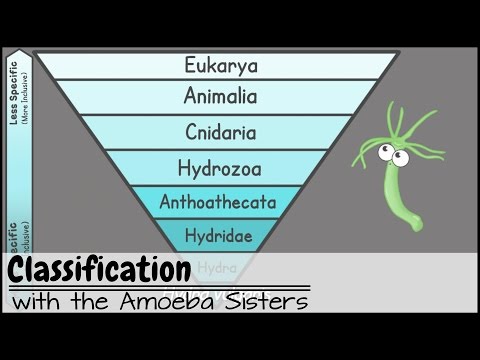
So, picture this: you’re at a family reunion, and you can’t tell if your uncle is a distant cousin or just your dad’s best friend. Family trees get messy, right? Well, the same thing happens in nature!
Hierarchical taxonomy is like that family reunion but for all living things. It sorts everything from tiny bacteria to gigantic blue whales into neat little categories. Crazy to think we have a system for that, huh?
When scientists classify organisms, they’re basically trying to figure out who’s related to whom—like who’s in the same branch of the family tree. You might not think it matters much, but trust me; it leads to some pretty wild discoveries!
We’ll dig into how this classification system works and why it’s super important for research. So grab a snack, and let’s untangle this web of life together!
Understanding Hierarchical Taxonomy in Scientific Classification: Insights and Applications
Alright, let’s chat about hierarchical taxonomy. Sounds complicated, right? But really, it’s just a neat way scientists organize and classify living things. You know how you’ve got your family tree that shows how everyone is related? Taxonomy does something similar but for all sorts of organisms on Earth.
So, what’s the big deal with hierarchical taxonomy? Well, it gives us a structured way to name and group species based on their characteristics and evolutionary history. Basically, it helps us make sense of the vast diversity of life out there.
The hierarchy has different levels, which are called taxa. Here’s how it breaks down:
- Domain: This is the highest level. There are three main domains: Archaea (like ancient bacteria), Bacteria (regular bacteria), and Eukarya (organisms with complex cells like plants and animals).
- Kingdom: Under domains, you’ll find kingdoms. For example, animals belong to the Kingdom Animalia.
- Phylum: This groups organisms based on major body plans or features. For instance, humans belong to Phylum Chordata because we have a backbone.
- Class: Classes further divide organisms. Humans are in Class Mammalia because we’re warm-blooded and feed our young milk.
- Order: Each class is split into orders. For example, our order is Primates—so that includes monkeys and apes too!
- Family: Families group closer relatives together. We’re in the family Hominidae along with other great apes.
- Genus: This narrows it down even more. Our genus is Homo, which includes only modern humans and our close relatives.
- Species: And finally, this is where you get super specific; we’re Homo sapiens—the only surviving species in our genus!
You might’ve noticed something interesting here: each level gets more specific as you go down the hierarchy! It’s kind of like zooming in on a photo until you see every little detail.
You know what else? Hierarchical taxonomy isn’t just about organizing species; it’s also super useful in research! Scientists use it to study relationships between organisms and track their evolution over time. For instance, if researchers discover a new species of frog, they can use taxonomic classification to figure out where it fits in the big picture of life!
This system also helps in fields like conservation biology. By understanding relationships among species, conservationists can prioritize efforts toward those that are endangered or closely related to others that might also be at risk. It’s like protecting not just one tree but an entire forest!
A well-known anecdote comes from paleontology where scientists classified dinosaurs using this system too! Initially puzzling over various fossils scattered around different sites led them to create hierarchies that explained how some dinosaurs were related while others weren’t—even if they looked similar at first glance.
You see? The science behind hierarchical taxonomy is crucial for understanding life itself! It creates connections between living beings that seem worlds apart at first glance but actually share common ancestry or traits—a beautiful reminder of how intertwined all forms of life truly are.
If you think about it this way—next time you’re out for a walk or just chilling at home with your pet cat or dog—you can appreciate just how fascinating these classifications can be! It’s more than names; it’s a glimpse into the history of our planet’s biodiversity!
Understanding Hierarchical Taxonomy in Scientific Classification: Key Concepts and Research Applications
Hierarchical taxonomy is like a family tree, but for all living things on Earth. This system helps scientists organize and classify organisms based on shared characteristics. It’s not just for nerds in lab coats; it’s actually super useful in understanding and studying life in all its forms!
So, let’s break it down a bit. The basic idea is that you group organisms into categories based on how closely related they are to each other. Here are the main levels of this hierarchy:
- Domain: The largest category, which includes three groups: Archaea, Bacteria, and Eukarya.
- Kingdom: This level divides organisms into broad groups like Animals, Plants, Fungi, and Protists.
- Phylum: Each kingdom gets further divided. For example, Chordata includes animals with backbones.
- Class: Phylum gets split again; Mammalia (mammals) is one such class.
- Order: Within mammals, we have orders like Carnivora (carnivores) or Primates (which include us humans!).
- Family: This narrows it down even more; for example, Felidae is the family of cats.
- Genus: This group contains closely related species. Panthera includes lions and tigers.
- Species: The most specific classification; Panthera leo is the scientific name for lions.
Imagine you’re exploring the zoo with your kiddo. You see a lion and a tiger—both belong to the same genus but different species! It’s like saying they’re distant cousins at a family reunion.
This hierarchical approach isn’t just for organizing creatures: it has real-world applications in research too. For instance:
- Biodiversity studies: By classifying organisms hierarchically, researchers can track how many different species exist in an area and their relationships to each other. It helps in conservation efforts!
- Epidemiology: Understanding how diseases spread often relies on knowing how species are related. Like if a virus jumps from one type of animal to another—knowing their taxonomic relationships plays a key role in predicting outbreaks.
- Agriculture: Farmers can select crop varieties that are more resistant to pests by understanding which plants are more closely related genetically!
You see? Hierarchical taxonomy is all about connections—kind of like how we’re all connected through our families! When I was younger, I once spent an afternoon collecting bugs with my friends. We had so much fun categorizing them based on their colors and shapes until we realized some were really similar but from totally different families! That little adventure was my first taste of taxonomy without even knowing it!
Ultimately, this classification system helps scientists communicate clearly about organisms—even when they’re speaking different languages or working in different fields. So next time you’re out enjoying nature or even at the grocery store eyeing those fruits and veggies—know there’s so much more than meets the eye when it comes to taxonomic relationships!
Understanding Hierarchical Taxonomy: A Comprehensive PDF Guide for Scientific Classification and Research
Taxonomy is like a big family tree for living things, and hierarchical taxonomy? Well, that’s just a fancy way of saying we organize these living things in layers. So, imagine categorizing everything from tiny bacteria to giant whales in a system that makes sense. You follow me?
At the very top, you have the broadest categories. These are the domains. There are three of them: Bacteria, Archaea, and Eukarya. Each domain contains all life forms that share certain similarities. For instance, if it’s got a cell nucleus (like you and me!), it’s in the Eukarya domain. But if it doesn’t, well then it’s either in Bacteria or Archaea.
Then we get into the next level called kingdoms. In Eukarya, there are kingdoms like Animals and Plants. Just think about how diverse animals are! You’ve got insects buzzing around, cats lounging on your couch, or fish swimming in your local pond—amazing variety!
After kingdoms come phyla. Here’s where it gets specific! For example, within the Animal kingdom, there’s a phylum for vertebrates (that’s animals with backbones) and another one for arthropods (think bugs with exoskeletons). Each phylum groups together organisms that share key traits.
Next up is classes. Let’s stick with vertebrates. They can be further divided into classes like Mammalia (mammals), Aves (birds), and Reptilia (reptiles). Pretty neat how we’re getting more precise as we go deeper into this structure!
From there, we continue downward through orders, families, genera, and finally come to species—the most specific classification of all! A species identifies an individual organism that can breed together. It’s like naming your pet Fluffy; it distinguishes her from other cats.
So when scientists classify something—let’s say a human—they would use a full taxonomic breakdown:
- Domain: Eukarya
- Kingdom: Animalia
- Phylum: Chordata
- Class: Mammalia
- Order: Primates
- Family: Hominidae
- Genus: Homo
- Species: Homo sapiens
This system helps scientists communicate clearly about different organisms without confusion—which is super important when researching biodiversity or studying ecosystems!
Feeling a bit overwhelmed? Don’t worry! It’s kind of like building blocks: start from the wide base and get narrower as you go up—er, I mean down! And every step down gives you a clearer picture of what you’re looking at.
One time I was out hiking and stumbled upon some wildflowers I couldn’t identify. Instead of just calling them “the pretty flowers”, I learned their scientific names by using hierarchical taxonomy! It made me appreciate their uniqueness so much more.
Anyway, understanding hierarchical taxonomy opens doors to better research practices and clearer communication in science. So next time you see a cool creature or plant, try thinking about where it fits into this big family tree of life—it might just spark your curiosity even further!
You know how sometimes, when you’re hanging out with friends, you sort of create a hierarchy of who knows more about a certain topic? Like, maybe one person is super into music and knows all the bands, while another is more into movies. You kind of naturally sort things out by expertise or interest. Well, that’s kind of what hierarchical taxonomy does in science!
At its core, hierarchical taxonomy is all about organizing life on Earth into categories based on shared characteristics. It’s like a big family tree for organisms. Each level in this hierarchy helps us understand how different species relate to one another. So you’ve got domains at the top—those are the big players like Bacteria and Eukarya—and then it breaks down through kingdoms, phyla, classes, orders… all the way down to species.
Let me tell you a little story that might help illustrate this idea. A few years back, I went on a hiking trip with some friends. We stumbled upon a gorgeous field filled with wildflowers. I was just in awe! Each flower was so unique yet somehow connected; it reminded me of how taxonomy works. So my friend Jen started pulling out her phone and identifying them using an app. One flower led to another as we discovered they all belonged to the same family but had different traits based on their environment—even colors varied! It was like peeling back layers of an onion—one classification led us deeper and deeper into understanding them.
But here’s where it gets tricky: while this system can be really helpful for research and understanding biodiversity, it can also be pretty limiting sometimes. For example, what about organisms that don’t fit neatly into one category? Or when new discoveries challenge traditional classifications? The science world has had to adapt over time to account for these nuances.
So yeah, hierarchical taxonomy is not just some boring system; it’s like a living document that helps scientists make sense of the incredible variety of life on our planet! It shapes research and conservation efforts too; knowing how species relate can influence everything from ecological studies to saving endangered wildlife.
In a way, it makes me appreciate nature even more—knowing there’s so much thought behind how we classify life! It’s wild how interconnected everything is when you stop to think about it!