You know, I once tried training my dog using a clicker, and let me tell you, it turned into a comedy show. My pup was totally confused. One minute he was getting treats for sitting, the next he thought jumping on the couch was his ticket to a snack!
That’s kinda like what applied behavior science is all about—figuring out how behaviors work and how we can shape them. It’s not just for dogs though; this stuff has roots in psychology that reach back centuries.
Picture ancient philosophers tossing around ideas about human behavior, totally unaware that their musings would eventually lead to some serious science.
So, buckle up! We’re about to take a wild ride through history and see how applied behavior science evolved from those early thoughts into the fascinating field it is today. You ready?
Evolution of Applied Behavior Analysis: A Historical Perspective on Advancements in the Field of Science
Evolution in Applied Behavior Analysis (ABA) has been quite a journey, you know? It’s like tracing back to the roots of behaviorism, where scientists started to figure out how behavior is shaped and influenced. This all kicked off in the early 20th century. So let’s take a stroll down memory lane, shall we?
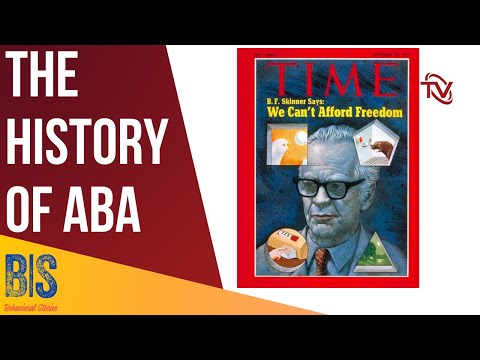
It all started with B.F. Skinner, who really got the ball rolling. He introduced ideas about how rewards and punishments could shape behavior. Basically, if you do something and get a treat for it, you’re likely to do it again, right? This concept became super important in ABA later on.
By the 1960s, ABA began to take a formal shape. Researchers realized this stuff was not just for lab rats; it could help real people! The focus shifted towards practical applications of behavior strategies for things like education and therapy.
- SOCIAL REFORM: In the 1970s, ABA became instrumental in helping individuals with disabilities live more fulfilling lives.
- EVIDENCE-BASED PRACTICES: By the late 1980s and early 1990s, researchers were all about using data to back up techniques in ABA—like collecting data on student progress!
- DIVERSIFICATION: Fast forward to the 2000s; ABA started branching into different areas like autism treatment and workplace training.
You see what I mean? It was becoming more than just a theory—it became a hands-on approach that impacted lives directly! One touching example is how children with autism responded positively to ABA techniques. Families reported huge changes when they applied these methods at home.
The field kept evolving with technology too! With online training programs and applications for tracking behaviors popping up everywhere, accessibility improved massively over time. Now therapists can use apps to monitor progress minute by minute!
But it’s not without its bumps along the way. There have been some debates about ethics—like how we use punishment or control behaviors rather than understanding them fully. It’s essential that as we advance further, we stay grounded in ethical practices.
The thing is, looking back at where this has all come from gives you such perspective on how far we’ve really come—and where we can go next! It’s an exciting field that’s always changing as new research comes out. So whether you’re just curious or thinking about getting involved yourself, there’s plenty more evolution ahead for Applied Behavior Analysis!
Exploring the Three Stages of Evolution in Behaviorist Psychology: A Scientific Perspective
Alright, let’s chat about behaviorist psychology and those three stages of evolution. Although it sounds a bit heavy, you’ll find that the journey is pretty interesting when you break it down.
Behaviorism started to take shape in the early 20th century, primarily through the work of folks like John B. Watson and B.F. Skinner. They believed that human behavior could be understood through observable actions rather than internal thoughts or feelings. Basically, they were all about the science of “What can we see?”
In the first stage, we have Classical Conditioning. This is all about association. Remember Pavlov? He was the guy with the dogs who salivated at the sound of a bell because they associated it with food. What happens here is that a neutral stimulus (the bell) becomes linked to an unconditioned stimulus (the food), leading to a conditioned response (salivation). It’s like your friend who immediately thinks of pizza every time their favorite song plays! Just as you associate certain sounds or sights with experiences.
Then, we roll into Operant Conditioning, which was really highlighted by Skinner. This one’s more about consequences and rewards for behaviors. Essentially, behaviors are modified based on reinforcements or punishments. Imagine a kid studying hard for a test; if they get praised for their effort or rewarded with treats, they’re more likely to keep studying in the future! On the flip side, if they’re punished for not studying—well, that might lead them to avoid tests altogether.
Lastly, we hit up Social Learning Theory. This stage adds another layer by suggesting that people can learn new behaviors just by observing others—without needing direct reinforcement. You know how sometimes you pick up new phrases from friends or imitate dance moves after watching someone? That’s this theory in action! Albert Bandura really pushed this idea forward with his famous Bobo doll experiments where children mimicked aggressive behavior after seeing adults demonstrate it.
These three stages represent big leaps in how we understand behavior over time. From simple associations to complex social influences, they highlight not only how we learn but also how our environments shape us.
So yeah, each stage has its quirks and significance in psychology’s evolution and really helps shine a light on why we behave the way we do today! Understanding these foundations makes us better equipped not just as students of psychology but also as fellow humans interacting with each other amidst all those learned behaviors.
Exploring the Evolution of Applied Behavior Analysis: A Comprehensive Documentary on its Scientific Foundations and Impact
Applied Behavior Analysis, or ABA, has come a long way since its inception. It all started in the early 20th century when scientists began seriously studying behavior as a measurable and observable entity. You know, before that, psychology was more about guesswork and theories without solid backing.
In the 1930s, B.F. Skinner emerged as a key figure. He introduced operant conditioning, which is based on the idea that behavior can be shaped by reinforcement or punishment. Imagine training a dog: give it a treat for sitting, and it learns to sit on command. This concept fundamentally changed how we approach human behaviors too.
Fast forward to the 1960s and 70s, ABA really starts to gain traction in education and therapy settings. The idea was simple: apply behavioral principles to help people with social skills, learning disabilities, or even autism spectrum disorders. One story that stands out is that of Ivar Lovaas. His work pioneered interventions for children with autism using ABA techniques. It was revolutionary at the time!
But here’s the thing: while many embraced these practices, others raised eyebrows about ethical considerations. Some feared that focusing just on behavior might ignore the emotional and mental aspects of individuals. It’s like tuning an engine without checking how well it runs overall—you might miss crucial elements!
- The 1980s saw more research popping up validating ABA’s effectiveness in treating various conditions.
- In the late 90s and early 2000s, states began mandating coverage for ABA therapy for autism under health insurance plans.
- Today, there are numerous certifications for practitioners globally—showing its acceptance in mainstream psychology.
The impact of ABA is noticeable in schools where teachers use positive reinforcement strategies to motivate students; think stickers or extra recess time! It’s heartwarming to see how this science-based approach can lead to meaningful improvements in people’s lives.
As we look toward the future of ABA, challenges still linger regarding accessibility and diversity within research samples used to establish treatment protocols. There’s this ongoing push for innovation too—combining tech like apps and virtual reality with traditional ABA methods to make learning even more engaging.
You see? The evolution of applied behavior analysis isn’t just about making behaviors better; it’s about understanding people holistically while helping them thrive in their environments. And that’s pretty amazing if you ask me!
You know, thinking about the evolution of applied behavior science is kind of like looking through a time capsule filled with ideas and breakthroughs. It’s so interesting how our understanding of behavior has changed over the years!
I remember a time back in school when we had this fascinating teacher who would tell us stories about experiments that shaped how we think about learning and behavior. There was this one story about B.F. Skinner and his infamous operant conditioning chamber, or the “Skinner Box.” Basically, he put rats in a box and studied how rewards influenced their actions. Just picture it: a little rat pressing a lever for a treat! It gave me this lightbulb moment about how our own actions can be influenced by rewards or consequences. I mean, that’s pretty relatable when you stop to think about it.
Now, zooming out a bit, applied behavior science really took off in the early 20th century. People like John Watson were waving goodbye to the idea that we should only study what’s inside our heads—like thoughts and feelings—and instead said, “Hey! Let’s look at observable behaviors!” This shift was massive; it started paving the way for things like behavioral therapy that we rely on today.
Then came the 1950s and 60s with people like Albert Bandura who introduced social learning theory. The cool part? He showed that we learn not just from direct experiences but also by watching others. Remember your first bike ride? You probably watched someone else do it before you hopped on, right? That’s super relatable!
Fast forward to now, and applied behavior science is everywhere—school systems use it to help kids learn better, therapists use it to help with social skills, even businesses tap into its principles for employee training. It’s amazing how something that began as an experiment with rats has evolved into all these practical applications.
But here’s the kicker: while we’ve made strides in understanding behavior scientifically, sometimes I wonder if we’re fully grasping all its nuances. People are so complex! Emotions play such a big role in what we do—or don’t do—that it’s hard to fit everything neatly into boxes (no pun intended).
So yeah, when you think about behavior through history, it’s like watching an evolving story unfold—a story filled with curiosity and discoveries about why we tick. Just makes me appreciate all those little quirks of human nature even more! And honestly? It’s kind of exciting thinking about where this journey will take us next!