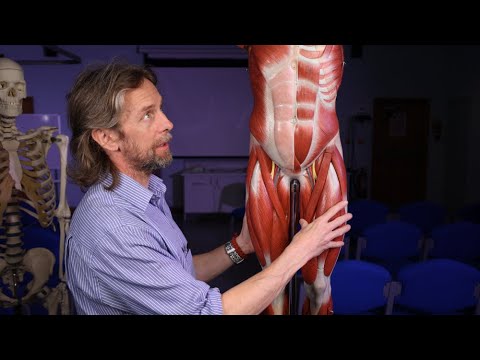
Did you know that your body has over 600 muscles? Yeah, it sounds like a lot, right? I mean, it’s basically a muscular concert in there!
Now, picture this: you’re trying to impress your friends with some cool facts about how muscles work. You flex your biceps and say, “Did you know these bad boys help me lift all my groceries?” Your friends nod, but inside they’re probably thinking about pizza instead.
Muscle anatomy can be super fascinating. Seriously! It’s not just about getting ripped at the gym or doing those crazy yoga poses. There’s so much more happening in there than we give it credit for. So let’s take a little peek at how we can visualize this amazing network of tissues that keep us moving, grooving, and well… living life to the fullest!
Comprehensive PDF Guide to Visualizing Human Muscle Anatomy for Scientific Analysis
When it comes to understanding our bodies, visualizing human muscle anatomy can be a game changer. Seriously. Think about the muscles you use every day—whether you’re lifting groceries or just running to catch the bus. But how do you really get into the details of that muscular system?
Well, one popular way is through comprehensive guides, often available in PDF format. These guides can be super helpful for students, educators, or anyone just keen on picking apart how we move and function. They usually have clear illustrations that show each muscle group in detail. On top of that, they break down information about origins, insertions, and actions of each muscle.
You might be thinking: “What are origins and insertions?” Good question! Essentially:
- Origin: The point where a muscle attaches to a stationary bone.
- Insertion: The end of the muscle that attaches to a moving bone.
This distinction is vital because it tells us how muscles change length and pull on bones to create movement. For example, when your bicep contracts (that bulge on your upper arm), it pulls on your radius (the bone in your forearm), allowing you to flex your elbow.
If a guide showcases muscle anatomy visually, it’s like having a road map for all these connections and functions! You can see where each muscle lies in relation to others. That’s pretty cool for anyone studying anatomy or physiology.
And don’t get me started on 3D visualizations! Some guides even take it up a notch by offering interactive models. Imagine rotating a model of the human body, peeling away layers until you’re staring directly at the muscles underneath the skin. It’s like playing surgery without any risk—just knowledge!
The best part? These resources often come packed with extra content like quizzes or practice questions to test what you’ve learned. Engaging with material in different ways truly boosts retention—you know what I mean? Plus, when you’re looking at diagrams or animations while studying, the information sticks better than just reading text alone.
If you’re curious about how muscles work together during different activities—like sprinting versus stretching—you’ll find that these guides typically explain functional anatomy too.
For instance:
- Sprinting relies heavily on fast-twitch fibers in muscles like the hamstrings.
- Stretching utilizes different mechanisms involving your slow-twitch fibers.
This contrast can actually help athletes tailor their training regimens based on a clear understanding of their muscular system and its capabilities.
The takeaway? A well-crafted PDF guide is more than just images and labels; it’s an avenue into deeper insights about how we move as humans. Whether you’re gearing up for an exam or simply want to expand your knowledge about our amazing biology, getting hands-on with this material can make all the difference!
Comprehensive PDF Guide to Human Body Muscles: Anatomy and Function in Scientific Context
When we talk about our muscles, it’s like stepping into a fascinating world of movement and strength. The human body has over 600 muscles, and they play crucial roles in everything from lifting your grocery bags to doing a backflip—if you’re into that sort of thing. Understanding muscle anatomy is pretty essential for anyone curious about how our bodies work.
Anatomy of Muscles
Muscles can be categorized into three types:
- Skeleton muscles: These are the ones that move your bones and allow you to perform daily activities. They’re striated and under voluntary control.
- Smooth muscles: Found in your organs, these muscles work without you thinking about them. Want your stomach to digest? Thank smooth muscles!
- Cardiac muscle: This one’s unique! It’s found only in the heart, pumping blood throughout your body continuously without needing a break.
When you look at skeletal muscles, they have a really cool structure made up of bundles called fascicles. Each fascicle contains muscle fibers—like tiny threads working together. And guess what? Muscles grow stronger by creating more fibers or enlarging existing ones when you exercise.
The Function of Muscles
Muscles do more than just move bones around; they help maintain posture and generate heat. When you shiver from being cold, that’s your muscles working overtime! And those strong biceps? They help with flexion—it’s all about bending at the elbow.
One fun thing to note is how different muscle groups are interconnected. For example, during a simple task like picking up something off the floor, it involves multiple muscle groups working together harmoniously. Your legs stabilize you while your arm reaches for that object.
Scientific Context
In scientific study, visualizing these muscle structures is super helpful. Anatomists often use detailed diagrams and 3D models to understand where each muscle lies and how they interact with each other. It makes sense to see things in action rather than just read descriptions.
Advancements in technology have allowed researchers to develop software where they can manipulate these models on-screen—it’s essentially like playing video games but with anatomy! This way, students or medical professionals can deep dive into specifics without needing a cadaver right in front of them.
Understanding human muscle anatomy not only helps athletes train better but also aids doctors in diagnosing issues related to movement and strength loss. It gives insight into injuries too—think about sports injuries or even back pain that many people face nowadays.
So basically, whether you’re an athlete trying to enhance performance or someone wanting to keep active well into old age, grasping this knowledge helps immensely! You see how essential our muscles are? They literally make life happen every day!
Comprehensive Guide to Human Muscles: Free PDF Download for Scientific Study
You know, muscles are pretty amazing. They’re not just these squishy bits that help us move around; they play a huge role in pretty much everything we do. Whether you’re running, writing, or just sitting on the couch binge-watching your favorite show, muscles are working hard behind the scenes.
What Are Muscles?
So, muscles are basically bundles of fibers that contract and relax to create movement. There are three main types:
- Skeletal Muscle: These are the ones you can control and are attached to our bones.
- Cardiac Muscle: This type is found only in the heart and works on its own—no control needed!
- Smooth Muscle: Found in places like your intestines and blood vessels, these muscles work automatically too.
Imagine your bicep muscle when you lift a dumbbell. That contraction is skeletal muscle at its finest!
Anatomy of Muscles
Now, let’s talk about how muscles look inside our bodies. They have different parts that make them function properly. Each muscle fiber is like a tiny rubber band that pulls tight when it gets a signal from your brain. And guess what? This communication happens through something called neurons—special cells that send messages.
The coolest part? Muscles come together to form larger groups called muscle groups! For example:
- The Quadriceps: Located at the front of your thigh, they help you kick and jump.
- The Hamstrings: Found at the back of your thigh, these babies help bend your knee.
So whenever you’re doing squats or lunges, those specific muscle groups engage all at once to get things moving.
Muscle Function
Muscles don’t just sit there looking pretty—they have real jobs! Here’s what they do:
- Movement: They help us change positions or lift heavy stuff.
- Posture: Yep, those muscles keep you upright when you’re standing or sitting.
- Circulation: The heart pumps blood thanks to cardiac muscles!
It’s kind of funny when you think about how much effort goes into something as simple as standing still for a few minutes.
The Importance of Understanding Muscles
Why should we care about muscles? Well, understanding them helps athletes perform better and can even aid in physical therapy for injuries. Plus, knowing how they work can make those gym sessions way more effective.
And if you’re into science or studying human anatomy, visualizing muscle anatomy is super helpful—like having an internal map of where everything is and how it all interacts.
So next time you flex in front of the mirror (we’ve all been there), remember it’s not just about looking good; it’s all about understanding the hard-working structures underneath! Every little movement involves a complex ballet between various muscles working together in harmony.
When you think about your muscles, do you ever just stop and marvel at how they function? It’s pretty wild, really. Each one is like a tiny engine, working together to let us move, lift things, and even just stand up straight. I remember one time in high school, we had this super hands-on biology class where we actually got to dissect a chicken wing. Sounds gross? Maybe a little! But honestly, it was eye-opening. Seeing the tendons, ligaments, and muscles in action made anatomy feel so much more real.
Anyway, when it comes to studying human muscle anatomy, visualization is key. It’s like trying to read a map without having any landmarks; kinda tricky! You know how some people can visualize things easily? Well, others may struggle a bit more. So being able to see what muscle groups look like—how they attach to bones or how they work together—is essential for understanding our bodies.
There are 600-something muscles in the human body—about 640 if you’re counting! Each serves its purpose, from the little ones that help with facial expressions to those massive ones that power our legs for running or jumping. Visual tools like diagrams and 3D models help break it all down into bite-sized pieces. Plus, digital apps can show these muscles flexing in real time which is honestly so cool.
I mean think about it: If you’re an athlete or even just someone who likes staying fit, knowing your anatomy helps you understand what happens when you exercise. Stretching? You want to know which muscle you’re targeting so you don’t pull something! And let’s not forget about rehabilitation; physical therapists use visual aids too when guiding patients through recovery exercises.
But here’s the kicker: It’s not just for science nerds or athletes. Understanding muscle anatomy can help anyone appreciate how incredible our bodies are—right down to those microscopic fibers that make up each muscle group. So next time you’re working out or even just chilling on the couch after a long day on your feet, take a moment to appreciate all that hard work happening under your skin! That’s some impressive stuff if you ask me.