You know that moment when you trip over your own feet but somehow manage to make it look intentional? It’s like a mini miracle in a clumsy world. Well, in drug development, we’re chasing those mini miracles too, but with science instead of caffeine-fueled parkour!
So, picture this: scientists working tirelessly in labs to create life-saving medication. Sounds intense, right? But here’s the kicker: instead of testing all these drugs on actual humans or animals from the get-go, they’re using something super cool called in vitro pharmacology. It’s all about experimenting with cells and tissues outside the body first.
Imagine being able to test how effective a new drug might be without any ethical dilemmas. How amazing is that? Researchers are getting more creative than ever! They’re cooking up innovative methods that could change the game entirely.
Stick around—this isn’t just about beakers and test tubes. This is about the future of medicine, and believe me, it’s way more exciting than you might think!
Advancements in In Vitro Pharmacology: Transforming Drug Development Strategies
Well, let’s talk about advancements in in vitro pharmacology and how they’re literally shaking things up in drug development. You know, it’s all about moving away from old-school methods that often take ages and might not even be super effective.
So, what do we mean by in vitro pharmacology? Basically, it’s the study of drugs using techniques that take place outside a living organism, like in a petri dish or a test tube. It’s kinda like how you might try out a recipe before serving it up at a dinner party. This approach lets researchers see how drugs interact with cells or tissues without diving into animal testing right away.
Here are some cool advancements:
Now think about why these advancements matter. For instance, if you’re working on a medication for something tricky like cancer, you want to see how it behaves in realistic conditions before making any big decisions. Remember that story when scientists thought they had the next best thing for treating Alzheimer’s? They found out through these advanced methods that their drug didn’t quite do what they thought after all. Way better to find that out early on!
And let’s not forget about lessening the reliance on animal testing. As tech improves, we’re learning we can conduct our experiments ethically while getting reliable results—pretty heartwarming if you ask me.
These are just some ways in vitro pharmacology is transforming drug development strategies and speeding up the process while making it safer and more effective. With continual progress, who knows? We might start seeing breakthroughs that could change lives way faster than ever before!
Recent Innovations in In Vitro Pharmacology: Enhancing Drug Development Strategies
In vitro pharmacology is a pretty cool field that focuses on testing drugs in controlled environments, like Petri dishes or test tubes, rather than in live animals or humans. This approach has seen some exciting innovations recently, which are helping to speed up drug development and make it more efficient.
One of the biggest movers and shakers in this area is the use of humanized models. These models incorporate human cells and tissues to mimic how our bodies would respond to medications. This is crucial because sometimes drugs behave differently in humans compared to animals. And you know what? This can help scientists figure out early on if a drug is likely to work or not.
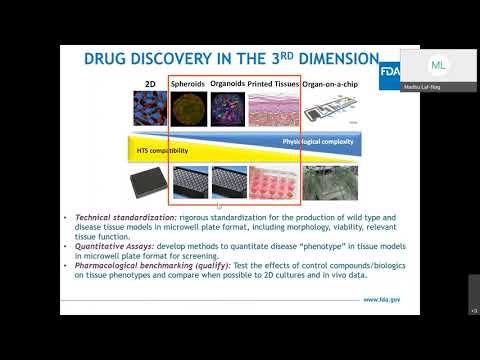
Another game-changer is organ-on-a-chip technology. Imagine tiny devices that replicate human organs and their functions! These chips allow researchers to study the effects of drugs on specific organs without needing whole lab animals. For example, a liver chip can show how a drug gets metabolized, which gives researchers insights without extensive testing.
Additionally, advancements in high-throughput screening techniques are making waves too. This method allows scientists to test thousands of compounds quickly against specific biological targets. It’s like having super-fast robots that can do what used to take forever! By speeding up this process, researchers can hone in on promising candidates much sooner.
Let’s not forget about machine learning and AI, which are supercharging data analysis. With so much data generated in drug testing, having computers crunch the numbers helps identify patterns that human eyes might miss. For instance, AI can predict how likely a compound will be successful based on past data from similar drugs.
Then there’s the growing trend towards sustainable practices. Many labs are now focusing on reducing waste and using renewable resources for their experiments. The idea is not just about finding new drugs but doing so while being kind to our planet. Sounds great, right?
Also worth mentioning are the innovations around patient-derived cell lines. Researchers are increasingly using cells from actual patients’ tumors or tissues for studies. This method ensures that drug responses reflect real-world scenarios much better than traditional cell lines.
Overall, these recent advances in in vitro pharmacology highlight a shift toward more accurate and efficient ways of developing drugs. They’re like little stepping stones leading us towards not just faster discoveries but hopefully safer and more effective treatments down the road!
Advancements in In Vitro Pharmacology: Transforming Drug Development in 2020
So, in 2020, the world saw some pretty cool advancements in in vitro pharmacology, which is essentially how scientists study drug effects on cells in a lab. Instead of testing drugs directly on humans or animals right away, researchers can look at how these substances affect cells grown in dishes. It’s a pretty neat way to understand things before they hit the market.
First off, let’s chat about the technology behind it. Scientists have been using organoids, which are miniaturized organs created from stem cells. They mimic how actual organs work much more closely than traditional cell cultures do. Imagine trying to figure out how your heart works by studying a flat piece of tissue versus a tiny version of your heart that beats! This has made drug testing way more effective and accurate.
Then there’s this thing called high-throughput screening. This fancy term means researchers can test thousands of compounds at once. If you think about it, that’s like throwing a huge party and inviting all your friends to whoop it up together instead of having one-on-one coffee dates. This method speeds up the process significantly.
Also, artificial intelligence came into play big time. Using machine learning algorithms, researchers analyzed data from successful drug trials and identified patterns that might not be obvious to the naked eye. Basically, AI helps predict how new drugs might behave based on past data—kind of like having a smart buddy who knows all the ins and outs!
But with all these innovations, there’s still something important you need to consider: ethical concerns around testing techniques. While in vitro tests are generally seen as more humane than animal testing, they do come with their own set of ethical questions. For instance, as we become better at creating organoids or mimicking human responses, what does that mean for consent or research practices? It’s like stepping into a philosophical maze sometimes!
Lastly, let’s not forget about collaboration across fields. In 2020, researchers started working more closely with tech companies and engineers to create better devices for screening and analysis. It turned into this awesome blend of biology and technology—it’s like bringing together two groups at a family reunion who didn’t know they belonged together.
In summary:
- Organoids: They mimic actual organs closely.
- High-throughput screening: Testing many compounds at once speeds things up.
- AI assistance: Helps predict drug behavior using data analysis.
- Ethical concerns: Raises questions around consent and testing practices.
- Interdisciplinary collaboration: Joining forces between biology and tech is super effective.
These advancements are reshaping how we develop drugs today! You see? In vitro pharmacology is becoming an essential part of getting safe medications into our hands faster while also being mindful about ethics along the way!
You know, when you think about how far medicine has come, it’s pretty mind-blowing. I mean, just a few decades ago, we were relying heavily on animal testing to figure out if drugs would work. But now, with innovations in in vitro pharmacology, things are changing in some really cool ways.
Imagine sitting at a café with a friend who’s super curious about how new drugs get developed. You’d start talking about how scientists can now use human cells in lab dishes to test drugs before they ever hit the market. It’s like having a front-row seat to the action without the drama of animal trials! These in vitro methods can mimic human organ functions, allowing researchers to see how a drug behaves at the cellular level. They can even predict potential side effects! Pretty neat, huh?
And here’s a little story: I remember hearing about this young researcher who was trying to find a cure for an overlooked disease. She had this passion and vision but worked with limited resources. Instead of going the traditional route with animals—where results can be unpredictable—she used advanced cell cultures that replicated the disease environment. It was like she was tuning an instrument, carefully adjusting until she found the right notes that showed promise for her drug candidate. This approach not only sped things up but also made her research way more efficient and ethical!
So you see? Innovations in this field aren’t just about faster drug development; they’re also making it more humane and precise. There are challenges too – like ensuring these lab models truly reflect real human biology or figuring out how to scale this on larger levels – but the momentum is there!
The thing is, every time scientists push boundaries with these technologies, we move closer to treatments that are safer and more effective for people everywhere. And that should give us all hope as we think about where medicine’s heading next!