So, picture this: you’re at a party, right? Everyone’s mingling, and someone starts talking about their weekend hike. You hear “mountains,” “wildlife,” and “getting lost.” But then they drop this bomb: they calculated the average number of steps it took to get back. Wait, what?
Seriously though, that’s kind of like what inferential techniques do in science. They help us make sense of things we can’t see directly—like predicting how many stars are in the universe or figuring out trends in climate change.
It’s wild how we can take a small sample of data and project it to areas way beyond our immediate reach. Like magic but with numbers! So let’s unpack the power of these techniques—you’re gonna love how they turn chaos into clarity.
Understanding Inferential Techniques in Scientific Research: A Comprehensive Guide
Alright, so let’s talk about inferential techniques in scientific research. It might sound a bit, you know, intimidating at first. But don’t worry! I promise we can wrap our heads around this together.
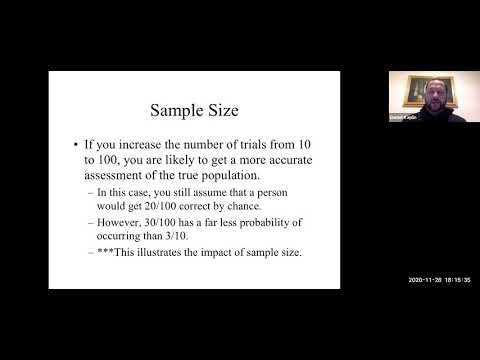
Inferential techniques are basically methods that allow researchers to make conclusions about a larger group based on data collected from a smaller sample. Imagine you wanted to know how many people in your town like pizza. Instead of asking every single person—yikes!—you might just survey a few hundred folks and then use that info to guess how the whole town feels. Pretty neat, right?
Now, why do we need these techniques? Well, conducting studies on every single member of a population is often impossible or just plain impractical. That’s where inferential statistics come into play! They give us tools to make those educated guesses while also accounting for uncertainty.
Here’s how it works:
- Sampling: This is all about picking a group from a larger population. You want this sample to reflect the broader group as closely as possible. So if you’re studying students at a university, you’d want students from different majors, ages, and backgrounds.
- Hypothesis Testing: This means making an educated guess (the hypothesis) about what you think will happen in your study. For example, if you think students who study late at night do better on tests than those who study in the morning.
- Confidence Intervals: After analyzing your data, you can create confidence intervals which give you an estimated range where the true answer likely lies. If your findings say that 70% of students like pizza with a confidence interval of 60%-80%, it means you’re pretty confident that somewhere between 60% and 80% of all students actually like it.
- P-Values: These are kind of the rock stars of inferential statistics! A p-value helps you determine if your results are statistically significant. So if your p-value is lower than 0.05 (for example), it usually means that there’s a less than 5% chance your results happened by random chance.
Let’s take an example to tie this all together: Suppose you’re curious whether wearing blue socks affects people’s mood. You gather data from 100 people wearing blue socks and ask them how they feel on a scale from 1-10.
Maybe you find they rate their mood as an average of 8 when wearing blue socks compared to an average of 6 when not wearing them. You’d start by using sampling, choose participants carefully without bias.
Next up is hypothesis testing: Your guess could be “Wearing blue socks makes people happier.” When you analyze the results and perhaps find a p-value smaller than 0.05, that suggests strong evidence supporting your hypothesis!
The cool part is that with these techniques, you’re not just playing darts at night—you actually have structure and logic guiding your research.
In short, inferential techniques are like giving scientists superpowers! They help us make valid conclusions about larger populations without needing to survey everyone under the sun.
So next time someone says “inferential statistics,” don’t sweat it—you’ve got the scoop! These methods are essential for making sense of data and helping us understand our world better. It’s all about drawing those meaningful connections between what we see in our sample and what’s likely happening out there in real life.
Feel free to reach out if you’ve got more questions or if there’s something else on your mind!
Understanding the Role of Inferences in Advancing Scientific Discovery
So, let’s chat about inferences and how they work in science. You might be wondering what that even means, right? Well, simply put, inferences are conclusions we draw based on the evidence we have. It’s like figuring out a puzzle even when some pieces are missing.
When scientists look at their data, they don’t just say “yep, that’s it.” They think deeper! They take what they know and connect the dots to come up with new ideas or theories. It’s kind of like how you might see smoke and infer there’s a fire somewhere nearby. You can’t see the fire directly, but you make an educated guess based on what you do see.
Here’s where it gets interesting: inferential techniques allow scientists to predict outcomes or explain phenomena without needing every single detail. Imagine studying the behavior of a rare bird species. You can’t observe every individual all the time, but by watching a few of them closely and taking notes on their habits, you can infer a lot about the whole species.
So why is this important? Because it leads to discoveries! For instance:
- Hypothesis testing: Scientists come up with a hypothesis—basically an educated guess—then use statistics to infer whether their idea is likely true or not.
- Modeling: In fields like climate science, models can simulate different scenarios based on existing data to predict future changes.
- Generalization: By studying samples from a population, scientists can make generalizations that apply to larger groups.
I remember reading about how researchers discovered new planets outside our solar system. They couldn’t directly observe these planets; instead, they looked at how stars dimmed slightly when planets passed in front of them. From that little clue—a tiny dip in brightness—they inferred there were planets orbiting those stars!
But here’s something that trips people up sometimes: just because we draw conclusions based on inferences doesn’t mean they’re always right! New evidence can change everything. Remember how scientists once thought Pluto was a planet? As more data came in and our understanding grew, they reclassified it as a “dwarf planet.”
That shows how important it is to stay open-minded and willing to update our thoughts! Science isn’t about being right all the time; it’s about learning more as we go along.
In summary: inferences play a crucial role in scientific discovery by helping researchers make educated guesses based on available evidence and observations. This process not only enriches our understanding but also propels scientific inquiry forward, revealing new insights one inference at a time! How cool is that?
Understanding Inferential Methods: The Key to Assessing Statistical Significance in Scientific Research
So, let’s talk about inferential methods in science. You might have heard of them before, but what are they really about? Well, buckle up, because it’s all about making sense of data without having to count every single instance. Basically, it helps scientists figure out if their findings mean something or if they just happened by chance.
Inferential statistics are like the magical bridge between the world of sample data and the larger population it represents. Imagine you’re trying to understand if a new teaching method is better than an old one. Instead of testing every student in a school district (which sounds exhausting and kinda impossible), you’d test a smaller group. Then, you use inferential methods to say something about the whole population based on that smaller group.
One common way to do this is through something called hypothesis testing. This is where you make an initial assumption (or hypothesis) about your data. For example, let’s say your hypothesis is that students taught with the new method will score higher on their tests than those with the traditional one. You then collect your data and run some stats to see if there’s enough evidence to reject that original idea.
When you’re doing this, you’ll often come across p-values. These little guys help you determine the likelihood that your results happened by random chance. A common threshold for statistical significance is a p-value of 0.05 or lower. That means there’s only a 5% chance those results occurred randomly—pretty convincing stuff!
But wait! P-values can be tricky sometimes, and they don’t tell the whole story on their own. It’s important not to just cling to them like they’re gospel truth—context matters! For instance, if you’re observing effects in a really small sample size, big p-values might lead you astray. So always keep an eye out for other statistical metrics too.
Then there’s confidence intervals, which work hand-in-hand with hypothesis testing but offer more insights into how sure we are about our estimates. Think of confidence intervals as giving us a range where we believe our true population parameter lies—like saying we’re 95% sure that the average test score increases by between 5 and 10 points when using the new method.
Also, remember that significance doesn’t always mean practical importance! Just because something shows statistically significant results doesn’t mean it’ll change lives dramatically or that it’s useful in real-world applications.
So yeah, grasping inferential methods is super crucial for scientists and researchers alike because it helps them draw conclusions from limited data while navigating through uncertainties. It provides tools for evaluating claims and making informed decisions based on statistical evidence.
In short:
- Inferential statistics: They help generalize findings from small samples to larger populations.
- Hypothesis testing: An initial idea tested against collected data.
- P-values: Indicate how likely results happened by chance; usually below 0.05 for significance.
- Confidence intervals: Offer ranges where true values might lie; good for context.
- Caution needed! Significance doesn’t always equal practical importance.
And there you have it! Inferential methods can feel complex at first glance, but they’re super powerful tools in science that let researchers draw conclusions beyond mere numbers—a bit like solving a mystery where every clue counts!
Inferential techniques in science are pretty neat, and honestly, they’re a little like magic. It’s that moment when you look at a small piece of information and suddenly, bam! You’re drawing conclusions about something way bigger. I remember in school, we did this experiment with plants. We had a few pots with seeds, some got water and sunlight, while others just got…well, not much love. After a couple of weeks, we saw how the watered ones thrived while the other pots sat there looking sad. From just those pots, we inferred that plants need water and light to grow. Simple? Sure! But it’s also the tip of the iceberg.
When scientists use inferential techniques—like statistical methods—they’re basically taking samples or specific observations to make predictions or hypotheses about larger populations or trends. Picture it like trying to guess what a whole pizza tastes like by eating just one slice. If that slice is cheesy and delicious, you might think the rest is too! But if it’s burnt? Well, then you might think twice before ordering again.
These techniques help in fields ranging from psychology to medicine. Take clinical trials for instance; they often rely on small groups to infer how effective a new drug might be for larger populations. It’s fascinating, right? They throw in variables like age and health status, and boom! They get insights not just about what works but also why it might work differently for other people.
However, there is a bit of risk involved too. If those initial samples aren’t representative—or if there are hidden variables—you could end up making big mistakes. Like if someone were to taste only pepperoni pizza and proclaim all pizza must be pepperoni-flavored—uh-oh!
The beauty of these inferential methods is that they open up new avenues for exploration but require careful scrutiny every step of the way. It’s kind of exciting because it reflects this balance between creativity and rigor in science; you’re making educated guesses based on evidence but still remaining open to new findings.
So next time you hear about some fancy research that uses inferential techniques, remember the little plant experiment or that one slice of pizza! You’ll realize there’s an entire world behind those conclusions—a world connected by curious minds trying to figure out life one inference at a time!