You know those moments when you’re at a party, and someone’s like, “I can totally tell what you’ve been eating just by looking at your breath?” Well, it turns out that’s kinda true—only way cooler.
Imagine using fancy lights and vibrations to figure out what stuff is made of. Sounds sci-fi? Welcome to the world of infrared and Raman spectroscopy! These techniques are like detectives for materials, revealing secrets with just a beam of light.
It’s not just for lab coats and beakers anymore though. Seriously, they’ve got some wild applications in medicine, art, and even space exploration. Can you believe how much they’re changing the game?
Stick around as we explore some mind-blowing ways these tools are shaking up science and beyond!
Exploring Innovative Applications of Infrared and Raman Spectroscopy in Scientific Research: A Comprehensive PDF Guide
Infrared and Raman spectroscopy are powerful tools that scientists use to analyze materials at a molecular level. If you’ve ever seen a rainbow, you know that light can be broken down into different colors; well, these techniques break light down even further to help us understand what substances are made of.
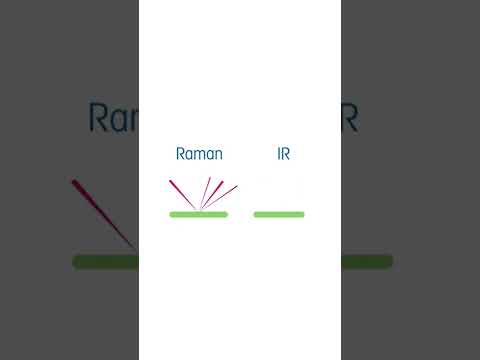
So, infrared spectroscopy relies on infrared light, which is just beyond the visible spectrum. When this light hits a molecule, some of it gets absorbed. This absorption happens at specific wavelengths that correspond to various molecular bonds. It’s like each molecule has its own signature that tells us what it’s made of. For example, if you want to figure out whether a sample contains water, all you need is infrared and you’ll spot the telltale signs pretty quickly.
On the other hand, Raman spectroscopy uses scattered light to gather information about molecular vibrations. It’s kind of cool because when you shine a laser on a sample, most of the light bounces back unchanged—like most people in a conversation might just nod along without adding anything new. But some photons scatter off the molecules with changes in energy levels that reveal details about their structure.
A great thing about these techniques is their versatility. They’re applied in various fields!
- Environmental science: For instance, they help detect pollutants in air and water samples.
- Pharmaceuticals: Researchers use them to analyze drug formulations or identify counterfeit medicines.
- Cultural heritage: Conservationists can use these methods to study ancient artifacts without altering them; imagine examining precious items without touching them!
In practical research settings, combining both infrared and Raman spectroscopy can provide complementary data. So if one technique isn’t clear enough or misses something important, the other might fill in those gaps. It’s like having two friends who see things differently but together they offer a fuller picture!
Here’s where it gets even cooler: both methods are often non-destructive! That means they allow scientists to investigate samples with minimal damage. This is super important for historical artifacts or delicate biological specimens.
Now let’s chat about some innovative applications recently seen:
- Biomaterials: Scientists are using these techniques to develop smarter materials—think bandages that monitor wounds for infections.
- Nano-engineering: Researchers employ these methods for characterizing nanoparticles which can be used in drug delivery systems.
Honestly, every time I learn more about infrared and Raman spectroscopy, I’m amazed by how they’re pushing boundaries across scientific fields. Just think about someone hunting for treasure—these techniques are like high-tech metal detectors for researchers seeking hidden knowledge tucked away at the molecular level.
So yeah, whether it’s helping save our planet or preserving history’s secrets, infrared and Raman spectroscopy are changing the game in research!
Exploring Innovative Applications of Infrared and Raman Spectroscopy in Scientific Research: Insights and Advances
Infrared and Raman spectroscopy are two powerful tools in the world of scientific research. They help scientists understand materials at a molecular level, which is super important in fields like chemistry, biology, and even medicine. So what’s the deal with these techniques? Let’s break it down.
First off, infrared spectroscopy works by shining infrared light onto a sample. When the light hits the molecules, they absorb some of that energy. This absorption causes vibrations in the bonds between atoms—kind of like how you can feel a guitar string vibrating when it’s plucked. Each type of bond absorbs different wavelengths of light, creating a unique “fingerprint” for each substance.
On the other hand, Raman spectroscopy is based on scattering. Instead of just absorbing light, it looks at how light interacts with molecules when it bounces off them. A small fraction of this light gets scattered in different directions and changes its energy based on how it interacted with the molecules. This change gives info about molecular vibrations too!
Both types have been used in many innovative ways lately:
- Medical diagnostics: These techniques can identify diseases based on tissue composition or biochemical changes. For example, researchers are working on using Raman spectroscopy to detect cancerous cells early.
- Material science: Infrared spectrometers are used to characterize polymers and nanomaterials. They help figure out what materials can be combined to create new products!
- Environmental monitoring: Detecting pollutants in air or water samples is crucial for public health. Scientists can use these methods to identify harmful substances quickly.
- Cultural heritage preservation: Art conservators use infrared spectroscopy to analyze paint layers without damaging artwork. This helps understand artists’ techniques and materials.
Here’s a neat anecdote: there was this one time a team tried to analyze old parchment using infrared spectroscopy. Turns out that the method not only helped identify age-old inks but also revealed hidden messages beneath the surface! It’s like uncovering history without even lifting a finger.
Now let’s get into some advances! Recently, combining both methods into hybrid technologies has been a hot topic among researchers. These blended approaches aim to enhance sensitivity and specificity when analyzing complex samples.
Also, developments in sensors, miniaturization of devices, and machine learning integration improve data interpretation significantly! Imagine having portable devices that could give instant analysis right at your fingertips; that’s where we’re headed.
To wrap things up (and believe me, there’s so much more), infrared and Raman spectroscopy are reshaping scientific research across various domains with their innovative applications. They’re making complex analyses accessible and revealing insights we previously thought were out of reach—you know? It’s an exciting time for science!
Revolutionizing Diabetes Management: FDA-Approved Non-Invasive Glucose Meters in Modern Science
Revolutionizing Diabetes Management sounds like something from a sci-fi movie, right? But nope! We’re talking about real advancements in how people with diabetes monitor their glucose levels. Traditionally, managing blood sugar meant finger pricks and those little test strips. But thanks to modern science and cool technologies like infrared and Raman spectroscopy, life is getting a bit easier for many folks.
So, what’s the deal with these **non-invasive glucose meters**? You’ve probably seen those sleek devices that let you check your levels without any pain or hassle. Well, they work by using light to analyze your skin. Yep! That’s where infrared and Raman spectroscopy come in. These methods can pretty much “see” what’s going on under your skin without actually poking you.
- Infrared Spectroscopy: This technique sends infrared light into the skin. When the light hits molecules in your blood, it gets absorbed at certain wavelengths. By measuring how much light comes back, the device can figure out how much glucose is there!
- Raman Spectroscopy: This one works a bit differently. It shines laser light onto your skin and looks for shifts in the wavelength of the scattered light. These shifts can tell scientists about specific molecules—like glucose!
But why does this matter? Well, for starters, it means no more bloody fingers! For people who have to check their levels multiple times a day, that’s a serious win. Imagine being at lunch with friends or hanging out at home without having to stress about finding a private place to test your blood.
Here’s a little story: I was chatting with a friend who has type 1 diabetes and she shared her struggle with checking her glucose levels at work. The pricking hurt her fingers and made her feel awkward pulling out all those supplies in front of colleagues. Then she got one of those non-invasive meters—and wow! It was life-changing for her. Now she just points the device at her arm and gets results instantly; way smoother!
Now here comes another exciting part: FDA Approval. It might sound boring but having the FDA approve these non-invasive devices is like getting a gold star for safety and effectiveness! It means they’ve gone through rigorous tests to ensure they work well before they hit the market.
The science behind these meters isn’t just about convenience; it’s about improving health outcomes too. Keeping an eye on glucose levels can help people prevent complications that often come with diabetes—like heart disease or nerve damage.
In short, non-invasive glucose meters are changing the game when it comes to diabetes management—thanks to cutting-edge techniques like infrared and Raman spectroscopy! Imagine every diabetic person soon having access to painless monitoring methods that make living with this condition so much more bearable.
So next time you hear someone talk about innovative tech in health care, remember: behind that fancy device could be some really smart science making everyday life just a bit better for so many people out there!
Alright, let’s chat about infrared and Raman spectroscopy for a minute. I remember this one time in college when I had my first lab experience with these techniques. We were trying to figure out the composition of an unknown substance. The excitement in the room was palpable! You know, watching those peaks on a graph pop up felt kinda magical, like uncovering secrets hidden right in front of us.
So here’s the deal: infrared spectroscopy deals with how molecules absorb infrared light, while Raman spectroscopy involves scattering light. They’re like two sides of the same coin, both revealing info about molecular vibrations and structures. It’s almost like they’re having a conversation—the infrared is saying “Hey, look what I’m absorbing!” while Raman is all “Yeah, but check out how I scatter!”
Now, let’s talk applications. Have you ever thought about how these techniques are being used beyond just labs? Take art restoration for example! Experts can use these methods to analyze pigments and materials without damaging the artwork. Super cool, right? Imagine saving a precious painting simply by understanding its makeup better!
And in medicine? Oh man! Infrared spectroscopy helps identify disease markers in tissues or even monitor glucose levels non-invasively. Like, think about it—you could get your health stats without that annoying finger prick! Pretty neat stuff.
But it doesn’t stop there; they’re creeping into environmental science too! Researchers use them to detect pollutants in the atmosphere or water sources. It’s like giving our planet a health check-up.
Honestly, as technology advances, these methods keep getting better and more accessible. Cell phones are being designed with spectrometers built-in for easy testing on-the-go—like having a mini-lab in your pocket!
It’s exciting to see where this all leads us—maybe one day we’ll have a device that tells us exactly what’s on our dinner plate or what chemicals we’re breathing in at home. Just think of how that would change our everyday lives!
That lab moment stayed with me because it made me realize just how much potential lies within these scientific techniques. They might seem complicated at first glance but just imagine all the possibilities they hold for our future—now that’s worth getting excited about!