You know what’s kind of mind-blowing? When you realize that the very stuff around us—like rocks and metals—holds stories just waiting to be told. Imagine if you had a magic wand that could reveal all these secrets. Well, in a way, we do!
Enter XRF spectra. It sounds fancy, but it’s basically a super cool technique that helps scientists unlock the mysteries of materials. If you’ve ever been curious about what things are made of, this is like peeking behind the curtain.
Picture this: you’re at a museum, eyeing an ancient artifact. What if I told you XRF can tell us what it’s made from without even touching it? Yeah, pretty wild!
So let’s chat about how XRF helps advance science and why it matters, not just for geeks like us but for everyone!
Exploring XRF Spectra Applications: A Comprehensive Guide to Advancing Scientific Research
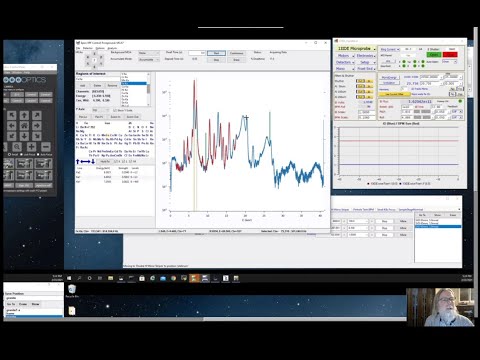
XRF spectra, which stands for X-ray fluorescence spectroscopy, is like having a superpower for scientists. Imagine being able to look at the building blocks of materials—like identifying what something is made of—without destroying it. That’s what XRF does! It uses X-rays to excite atoms in a sample, causing them to emit fluorescent radiation. Each element emits its own unique “fingerprint” of X-rays, which we can analyze to learn more about the material.
So, what are the applications of this technique? Let’s break it down a little:
- Archaeology: Think about ancient artifacts or pottery. Scientists can use XRF to figure out what materials were used in their creation without causing any damage. One time, researchers analyzed a bronze statue and discovered it contained high levels of lead, hinting at its origins.
- Environmental Science: Measuring pollution levels in soil or water is crucial. With XRF, researchers can detect heavy metals like mercury or lead in sediments quickly. There was a case where scientists assessed pollution near a factory using this method and found alarming concentrations that prompted further investigation.
- Materials Science: Ever wondered how alloys are created? Using XRF helps engineers analyze metal compositions during development processes. For example, when creating new steel types for construction, knowing exactly what elements are present can lead to better strength and durability.
- Cultural Heritage: Restoring artwork or historical items requires knowledge about their materials. XRF can reveal layers beneath the surface without harming the piece itself. Imagine finding that your favorite painting has an ancient underpainting—it’s like uncovering secrets from the past!
- Museum Studies: Museums often use XRF to authenticate artifacts or art pieces by analyzing their composition. This way, they ensure that they are displaying genuine items while keeping track of any restorations done over time.
And here’s another interesting tidbit: the speed of analysis is remarkable! Traditional methods might take ages and require sample destruction, but with XRF, you can get results in just minutes without altering your sample.
Isn’t it fascinating how this technology impacts so many fields? From understanding our history better through archaeology to ensuring safer environments by monitoring pollution levels—XRF is like a bridge connecting past knowledge with future advancements.
In practical terms, most scientists use handheld devices these days for fieldwork. They’re portable and allow for on-the-spot analyses without needing fancy labs all the time.
So there you have it! The applications of XRF spectra offers some serious insights into various scientific fields while paving the way for advancements in research methods and practices everywhere.
Exploring XRF Spectra Applications in Scientific Advancements: Insights from 2022
X-ray fluorescence (XRF) spectroscopy is like a super powerful magnifying glass for scientists. It lets us look closely at the composition of materials by analyzing the fluorescent X-rays they emit when hit by radiation. In other words, it tells us what stuff is made of, you know?
In 2022, XRF played a major role in various fields. Here are some cool applications that showed how useful this technique can be.
- Environmental Monitoring: Scientists used XRF to analyze soil samples for pollutants and heavy metals. It’s super important because contaminated soils can affect food safety and human health.
- Cultural Heritage Studies: Museums and archeologists got in on the action too! They employed XRF to study artifacts without damaging them. Imagine learning about ancient pottery or sculptures just by examining their surface!
- Material Science: In labs, researchers used XRF to develop new alloys and materials. By understanding the composition of different components, they could fine-tune properties for things like better conductivity or durability.
- Forensics: In crime labs, experts applied XRF to analyze residues from crime scenes. Whether it was gunshot residue or trace evidence on clothing, this method helped identify elements present, adding valuable insights into investigations.
Now remember when I mentioned artifacts? There’s this story of a museum who had an old painting they thought was just a regular piece of art. But after using XRF to analyze its layers, they uncovered hidden sketches beneath the surface! It turned out to be painted by a famous artist – talk about an unexpected treasure!
The versatility of XRF means it has applications in so many areas that it’s hard not to appreciate it. Despite its technical nature, virtually anyone can benefit from this tool! Whether it’s making the environment safer or preserving our history, XRF spectroscopy has definitely been advancing science. Pretty wild when you think about all that happens behind the scenes!
Comprehensive Guide to X-Ray Fluorescence Spectroscopy: Understanding Principles, Techniques, and Applications – PDF Resource
X-ray fluorescence spectroscopy, or XRF as the cool kids call it, is like a detective tool for scientists. It helps us figure out what elements are in a sample by measuring the X-rays that come off it when you hit it with some high-energy radiation. Pretty neat, huh?
How does it all work? Basically, when you bombard a sample with X-rays, some of the atoms inside get excited and start to emit their own X-rays. Each element has its own special *fingerprint* of X-ray wavelengths. By analyzing these wavelengths, you can tell exactly which elements are present and even how much of each one there is. It’s kind of like reading a story written in light.
Now, let’s break down these principles a bit more:
- X-Ray Source: This is where all the energy comes from. Usually, it’s a tube that generates X-rays.
- Sample Interaction: The sample absorbs some of this energy and then starts emitting its own characteristic X-rays.
- Detector: This part captures those emitted X-rays and measures the intensity at different wavelengths.
So there’s this whole process happening—X-rays getting shot at your sample, some elements getting excited while others chill out. And then BAM! You get data that tells you what’s up.
The technique is super versatile too! It’s used in all sorts of fields:
- Geology: Geologists use XRF to analyze rock samples to see what minerals they contain.
- Cultural Heritage: Ever heard about art restorers using it? They analyze paintings or artifacts without touching them!
- Aerospace: In the aerospace industry, they check materials for safety and compliance with standards.
If you’ve ever been on a hike and picked up a shiny rock because it looked cool but had no idea what’s inside—XRF could help solve that mystery!
Now let’s talk about some techniques involved. You’ve got two main types: **energy dispersive** and **wavelength dispersive**.
- Energy Dispersive Spectroscopy (EDS): It’s faster and simpler but might not be as detailed.
- Wavelength Dispersive Spectroscopy (WDS): A bit more complicated but provides higher resolution data—perfect for when you need precision.
You see, depending on what you’re looking for, one method might suit your needs better than the other.
A common use case? Think about recycling! When we break down electronic waste to recover metals like gold or silver, labs use XRF to make sure they’re getting good quality material out of those old gadgets.
But wait! It doesn’t stop there; there are challenges too. For instance:
- Detection Limits: Some elements are harder to detect than others due to their low emission signals.
- Sensitivity Issues: If you’re dealing with very small samples or inhomogeneous materials, results can vary quite a bit!
It’s not perfect by any means but man, does it open doors for various scientific explorations!
So next time you think about chemistry or geology or even history—you might want to remember how powerful tools like XRF are in piecing together stories from tiny bits of material around us. It’s science at work!
So, let’s chat about XRF spectra, which stands for X-ray fluorescence spectroscopy. You might be thinking, “What in the world is that?” Well, it’s one of those fancy techniques scientists use to analyze materials. Basically, it helps figure out what elements are in something—like rocks, metals, or even art pieces.
I remember this one time during a science fair back in high school. My friend had this project where he used XRF to analyze different types of soil. He was all geeked out about how he could tell the differences between urban and rural areas just from the minerals present. Watching him share his findings felt so inspiring! It was like seeing science come alive right there on our dusty gym floor.
So anyway, here’s the cool part: XRF involves blasting a sample with X-rays and then measuring the fluorescent light that comes off it. Sounds a bit like magic, huh? The light emitted tells you exactly what elements are present in the sample because each element has its own unique “fingerprint.”
Imagine being able to tell what a piece of ancient pottery is made of without damaging it! That’s where this method shines—literally! Scientists can analyze historical artifacts without leaving a scratch on them. Just think about how important that is for preserving our cultural heritage while still getting insights into our past.
But XRF isn’t just for archaeologists; it’s super handy in environmental science too. For example, if researchers want to see if pollution is affecting soil quality in a park, they can use XRF to check for harmful metals like lead or cadmium. It’s pretty amazing how a technique from physics can have such diverse applications!
And let’s not forget how XRF makes life easier for industries like mining and metallurgy. They can quickly test ores or alloys right on-site instead of sending samples off to a lab for weeks. Time is money, after all!
To wrap it up (not that I’m tying things up too neatly!), XRF spectra applications are advancing science by making analysis quicker and more efficient across various fields. It’s fascinating when you realize how interconnected everything is—how this one technique can probe soil layers below your feet or reveal the makeup of an ancient artifact hanging out in some museum somewhere.
Science isn’t just about facts and figures; it’s also about stories waiting to be told through data. And who knows? Maybe one day you’ll come across something through your own adventures that will need an XRF analysis too!