You know what’s wild? The color of your shirt could totally influence how much you sweat on a hot day. Seriously! That’s all thanks to something called reflectance spectra. Sounds fancy, huh?
But don’t worry, I’m not about to dive into some complicated science mumbo jumbo. Reflectance spectra is just a way of measuring how light bounces off stuff. It’s like when you shine a flashlight on your favorite T-shirt and see how it sparkles or fades in the light.
These little insights aren’t just for fashion choices, though. Nope! Scientists are using this nifty trick in some seriously innovative ways across different fields. From understanding planets far away to checking if fruits are ripe, reflectance spectra is popping up everywhere, making things possible that you wouldn’t even think about.
So, let’s chat about some of these cool applications and see just how rad this whole thing can be! You’ll be surprised at what you learn.
Exploring Real-Life Applications of Emission Spectra in Scientific Research and Industry
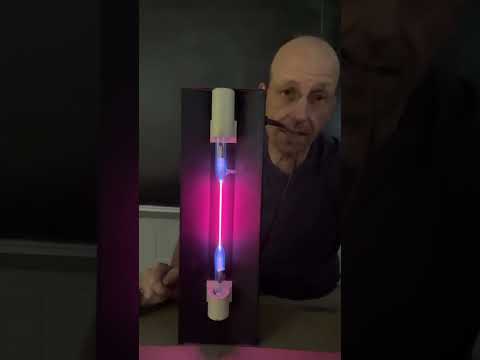
Emission spectra might sound like a term from a sci-fi movie, but it’s actually super useful in both science and industry. Basically, when elements get heated or excited, they release light at specific wavelengths. This light forms a unique pattern—like a fingerprint, you know? And scientists can use these patterns to figure out what those elements are.
One of the coolest real-life applications is in **astronomy**. When astronomers look at stars and galaxies, they analyze the light coming from them using emission spectra. By doing this, they can determine what elements are present in those distant suns and how they’re moving through space. Like when you hear that famous song on the radio — it’s instantly recognizable. That’s how astronomers recognize the fingerprints of different elements!
In **forensics**, emission spectra are pretty handy too. Imagine a crime scene where investigators take tiny samples of materials left behind, like paint or fiber. By using spectroscopy techniques, they can analyze those samples to identify materials and potentially link them back to suspects or locations. It’s like solving a mystery with light!
Then there’s **environmental science**. Emission spectra help scientists monitor pollution levels in air or water. For instance, if factories emit gases, researchers can measure these emissions by detecting their spectral signatures in the environment. This helps keep our planet safer by identifying harmful substances before they cause serious damage.
In **medical research**, emission spectra play a key role as well! For example, certain medical imaging techniques rely on these concepts to detect diseases at a cellular level. Fluorescent markers used in tests emit specific wavelengths of light when they bind to particular cells or proteins—helping doctors spot issues like cancer early on.
And let’s not forget about the **manufacturing industry**! Quality control is vital for making sure products are up to snuff. Companies often use emission spectroscopy to test materials during production processes—for instance, analyzing metal alloys to ensure they meet required specifications before being used in automotive parts.
So yeah, whether we’re peering into the cosmos or making sure your car is safe for the road, emission spectra offer a window into understanding matter in its various forms. This fascinating intersection between science and real-world applications continues to evolve as technology advances!
Exploring the Diagnostic Applications of Diffuse Reflectance Spectroscopy in Scientific Research
Sure! Let’s jump into the cool world of **Diffuse Reflectance Spectroscopy (DRS)**. This technique sounds fancy, but trust me, it’s really interesting and super useful in scientific research. So, what’s the deal with DRS?
Diffuse Reflectance Spectroscopy is a method used to analyze materials by looking at how they reflect light. When you shine light on a sample, some of that light bounces back in all directions. By measuring this reflected light, researchers can learn about the chemical composition of the sample. Pretty neat, huh?
One of the best things about DRS is that it can be used for solid samples without needing to prepare them too much. Imagine you have a rock or some soil—no need to grind it up or mix it with anything! This saves time and makes it way easier to study natural materials.
So, let’s break down some key areas where DRS shines:
- Environmental Science: It helps scientists analyze soil and water samples for pollutants. For instance, if someone wants to check if there are dangerous heavy metals in soil, DRS can reveal that without much hassle.
- Pharmaceuticals: Researchers can use DRS to identify different drug formulations and their ingredients. It’s like having a superpower for spotting what’s actually inside those little pills.
- Cultural Heritage: Ever seen an ancient painting? DRS can help conservators understand the pigments used by artists centuries ago by analyzing layers without damaging them.
- Food Safety: In food science, it’s used to spot contaminants or check those fancy wine labels claiming “premium quality.” You know how sometimes you taste something off in store-bought food? Well, scientists might find out why using DRS!
Now, here’s a quick anecdote: A friend of mine who works in an archeological lab told me about using DRS on pottery shards from an ancient civilization. They could tell what materials were used thousands of years ago just by shining light on them! It was like reading history through reflections.
Another cool aspect is how affordable and portable some newer DRS devices have become lately. Researchers can take these gadgets into the field rather than being stuck in a lab all day long. Picture scientists out there under the sun with their spectrometers—gathering data while enjoying nature!
In summary, Diffuse Reflectance Spectroscopy is transforming how we examine various samples across different fields. The ability to get detailed information easily makes it an invaluable tool for many researchers.
And there you have it! A peek into this fascinating technique and its applications. Seriously exciting stuff unfolding every day!
Exploring the Role of Spectral Reflectance in Remote Sensing Applications
Remote sensing is kind of like having superpowers. Instead of using your eyes, we use special tools to see things from far away. One of those tools is spectrum reflectance, which helps us understand what’s happening on the Earth’s surface without even touching it! But, like, what exactly does that mean?
When light hits an object, some of it bounces back. This bounced light is called reflected light. Different materials reflect different parts of the light spectrum uniquely. That’s where spectral reflectance comes into play. It tells us how much light reflects off a surface at various wavelengths—or colors—of light.
Think about this for a moment: have you ever looked at a rainbow? Each color corresponds to a different wavelength of light. Now, when scientists measure how much light reflects off different surfaces (like plants, rocks, or water), they can create a kind of “fingerprint” for those materials based on their spectral signature.
So why does this matter? Well, using spectral reflectance helps in many ways:
- Vegetation Monitoring: In agriculture and environmental science, these measurements help in assessing plant health. You know how healthy leaves are usually lush and green? Healthier plants reflect more near-infrared light than sick ones!
- Water Quality Assessment: Spectral data can tell us about the quality of water bodies by detecting pollutants or sediments. It’s like sending your eyes underwater to see what’s going on without diving in!
- Soil Composition Analysis: Different soil types have unique reflectance patterns that can indicate their composition and moisture levels.
- Cryosphere Studies: Scientists observe ice and snow reflectance to monitor changes in polar regions due to climate change.
Let’s imagine you’re looking at a satellite image capturing the Amazon rainforest. By analyzing the spectral reflectance from the images taken by satellites, researchers can determine where deforestation is happening and track biodiversity changes.
But it’s not just nature! This tech pops up in urban planning too! Urban heat islands—a fancy term for hot areas in cities—can be studied by observing how different materials (like asphalt or grass) absorb and reflect sunlight differently.
Anyway, you might be curious: how do they actually gather all this info? Typically, satellites equipped with sensors fly high above us and take measurements across different wavelengths. Then these readings are sent back to Earth for analysis.
In short, spectral reflectance serves as a window through which we peek at our world from afar—helping scientists make sense of what’s up with our climate, food systems, and natural resources! It may sound technical, but it really boils down to using smart science to keep an eye on our planet while keeping our feet firmly planted on the ground!
Alright, so let’s talk about reflectance spectra. It sounds pretty fancy, right? But in reality, it’s a cool way science measures how light bounces off objects. Picture this: when you shine a flashlight on a shiny surface, some light gets reflected back to you. Reflectance spectra is all about analyzing that reflected light to figure out what the object is made of or what’s happening on its surface.
Now, this isn’t just about shinning lights in your garage. Researchers use reflectance spectra for tons of innovative applications. For instance, it’s used in agriculture to monitor plant health. Farmers can assess whether crops are thriving or if they need water just by looking at the reflected light from the leaves! It’s like giving plants a check-up without even touching them.
And oh man, I remember when I went hiking last summer and found a patch of wildflowers that were just stunning. The colors were so vivid! You know how some flowers look extra bright under sunlight? Well, scientists can analyze those hues using reflectance spectra to see which pigments are present and understand how plants adapt to their environments. Amazing stuff!
But wait, there’s more! It also plays a critical role in environmental science, especially for monitoring pollution levels in bodies of water or understanding land use change over time. By capturing different wavelengths of reflected light from large areas using satellites or drones, scientists can track changes that might not be visible to the naked eye.
So yeah, reflectance spectra isn’t just some lab technique; it’s an essential tool that’s popping up everywhere! It’s literally helping us make sense of our world—from farming to environmental studies—by letting us see things we can’t normally see.
I think it’s pretty neat how something as simple as measuring light can have such far-reaching effects and applications in science and everyday life. It’s like discovering a new dimension hidden right before our eyes!