You know, the other day I was watching this nature doc, and they showed a bunch of monkeys swinging through trees like pros. And I couldn’t help but think, “What if my great-great-great-grandparent was one of them?” Crazy, huh?
Human evolution is kinda like a wild family tree that branches out in all sorts of unexpected ways. Seriously, if you trace it back far enough, you’d find some pretty peculiar relatives—not just hairy apes but also ancient creatures who lived millions of years ago.
It’s fascinating to think about how we went from being small, scurrying critters to the dominant species on Earth today. But what really blows my mind is how science pieces together this massive puzzle of our past!
So let’s take a stroll back through time. Buckle up and get ready for some surprising twists in our evolutionary journey!
Understanding Paleoanthropology: The Scientific Study of Human Evolution
So, paleoanthropology. Ever heard of it? It’s, like, the study of our ancient human relatives. You know, figuring out where we all came from and how we ended up as the people we are today.
Basically, paleoanthropologists dig into fossils—yes, those cool bones you see in museums. They want to understand how our species evolved over time. And let me tell you; it’s a wild ride! Imagine finding a tooth from a creature that lived millions of years ago and thinking, “Wow, this guy might be related to me!”
- The Big Picture: Paleoanthropology combines aspects of anthropology (the study of humans) with paleontology (the study of ancient life). It’s like mixing history with science.
- Fossils: These scientists look at bones, teeth, and even footprints to gather clues. For example, they’ve found fossils of hominins—that’s what we call ancient human-like creatures—in places like Africa and Europe.
- Dating Techniques: You know, figuring out how old things are isn’t easy. They use stuff like radiocarbon dating to determine the age of fossils. This is key because it helps line up our evolutionary timeline.
- The Family Tree: Imagine a big family reunion but for humans and their ancestors. Paleoanthropologists map out evolutionary branches, showing connections between species. Like how we’re all distant cousins!
- Cultural Evolution: It’s not just about bones; they also study tools and art. For instance, when early humans started making stone tools or cave paintings? Yeah, that tells us a lot about our cognitive abilities and social structures.
The thing is, paleoanthropology isn’t just digging in the ground; it’s piecing together stories from eons ago. Our understanding is constantly evolving—kinda ironic for a field focused on evolution! Just last year or so, there was a discovery in Africa that reshaped some ideas about where modern humans originated.
I remember when I first learned about this stuff—it was mind-blowing! The thought that there were creatures walking the earth before us who looked kinda like us but still different blew my mind. It’s one thing reading about it but another to actually picture those prehistoric folks trudging around on Earth.
Paleoanthropology has its challenges for sure—fossils can be incomplete or hard to interpret—but that’s part of what makes it exciting! Each new discovery can flip everything on its head or just add another piece to this massive puzzle we’re all trying to solve together.
If you’ve got even an inkling of curiosity about where you come from or how humanity evolved as a whole? Then researching more about paleoanthropology will definitely get you hooked! It’s exciting stuff—tracing back through time until we find ourselves standing at the very start!
Exploring Australopithecus Afarensis: Insights into Human Evolution and Paleoanthropology
Australopithecus afarensis is one of those pivotal pieces in the puzzle of human evolution. You might have heard of “Lucy,” right? That’s the nickname for a famous skeleton of this species, discovered in 1974 in Ethiopia. Lucy isn’t just some cool name; she’s a big deal because she helps scientists understand what our early ancestors were like.
The first thing to know is that Australopithecus afarensis lived about 3.9 to 2.9 million years ago. That’s ages ago! They roamed Africa during a time when our planet looked really different compared to how it does now.
So, what did these early hominins actually look like? Well, they were pretty small, standing around 3.5 to 5 feet tall. Imagine a really short person walking around on two legs—that’s basically how they were! They had both ape-like features and some traits we associate with modern humans. Their skulls were smaller, and they likely had large jaws and teeth suitable for a plant-based diet.
Now let’s dig into their walking habits. One interesting thing about Australopithecus afarensis is that they were bipedal, meaning they walked on two legs—just like us! But check this out: their leg bones show that while they could walk upright, they still spent some time climbing trees. It seems like they could do a bit of everything!
This type of locomotion gives scientists clues about how our ancestors adapted over time. Think about it: being able to walk on two legs while still having quick access to trees would’ve helped them escape predators and search for food more effectively.
Paleoanthropology, the study of ancient humans and their relatives, really benefits from discoveries like Lucy and other Australopithecus fossils. Researchers can piece together what life was like back then by examining these remains. For example:
Each piece plays a role in understanding not just where we come from but also how we evolved over millions of years.
One emotional story comes from the ongoing research surrounding these fossils—there’s often debate over what they reveal about our pasts. Some folks are super passionate about finding connections between us and earlier hominids, while others focus on the differences that make us uniquely human today.
And guess what? The ongoing exploration isn’t just confined to Africa anymore; scientists worldwide are digging deep into other potential finds that can shed light on who we are as humans!
So you see? Australopithecus afarensis isn’t just an ancient fossil; it’s a window into our own history—a bridge connecting us with our distant relatives who walked the Earth long before us!
Exploring Human Evolution: A Scientific Analysis and PDF Resource
Human evolution is one of those incredible topics that really makes you think about where we come from and how we’ve changed over millions of years. Basically, we’re a part of a long story that includes many different species and changes, which have shaped us into who we are today. Let’s explore this fascinating journey!
First off, what is human evolution? Well, it’s the process through which modern humans, Homo sapiens, have developed over time from earlier primate ancestors. Imagine a huge family tree with branches that represent different species evolving along the way. Some of our closest relatives include the Neanderthals and Denisovans. They all lived around the same time but eventually went extinct.
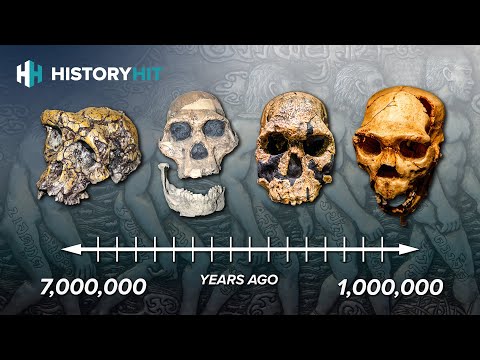
The journey really picks up speed around 6 to 7 million years ago when our ancestors began to diverge from the common ancestor we shared with chimpanzees. One significant milestone was when some early hominins started walking on two legs – this is called bipedalism. Just picture it: one day, an ancient relative decided walking upright was a good idea for spotting danger or reaching for fruits in trees.
Then there’s the period around 2 million years ago when Homo habilis, often called “handy man,” showed up. This species is considered one of the first to use tools! Imagine them chipping away at stones to make sharp edges for cutting meat or breaking open nuts—pretty nifty if you ask me!
Fast forward to about 1.9 million years ago, and we see the emergence of Homo erectus. This species was much more like us; they had larger brains and even left Africa to spread across Asia and Europe. It’s kind of amazing how they adapted to different environments—like ice ages or tropical forests!
Of course, we can’t skip over Neanderthals. These guys lived alongside early modern humans but eventually went extinct around 40,000 years ago. But here’s something cool: studies show that many people today carry a little bit of Neanderthal DNA! So when you think about it, they didn’t disappear entirely; their genes still linger in us.
And talking about genetics…you know what? Geneticists have become crucial in tracing human evolution. They analyze ancient DNA recovered from fossils, helping scientists construct our evolutionary timeline in stunning detail.
If you’re looking for more resources on human evolution, there are tons of academic papers and PDF resources out there filled with research findings and analysis if you’re curious! These documents usually feature rich data on fossils and genetic evidence.
To wrap things up, human evolution isn’t just some dry subject packed with dates and names; it’s an exciting narrative about survival, adaptation, and change spanning millions of years! Isn’t it wild to think about how every person today carries a piece of that ancient history? The next time someone tells you we’re only human, remind them there’s so much more beneath the surface!
You know, when you start thinking about where we all came from, it’s kind of mind-blowing. I mean, the idea that modern humans are part of a long line of ancestors stretching back millions of years just hits differently, doesn’t it?
Let’s rewind for a second. Picture a world where early hominins roamed the savannas—hairy and trying to figure out life without smartphones. How did we evolve from those creatures? Well, that’s where science really gets interesting! Paleontologists dig up bones and fossilized remains to piece together our family tree. It’s like being in a real-life detective story but with way more dirt and mud.
But it’s not just about digging up bones; DNA plays a huge role too. It’s wild how scientists can compare genetic material from ancient humans and their relatives to see how we’ve changed over time. For instance, finding out you’re more related to Neanderthals than you thought can feel like discovering you have a distant cousin who lives on another continent! Who knew?
I remember reading about Lucy—the famous Australopithecus fossil found in Ethiopia back in the ‘70s. When I learned about her, it struck me how she was walking upright 3.2 million years ago! Crazy right? Just think about it: She was around before any sort of written history existed. That realization made me feel oddly connected to her life; it’s as if I’m part of the same narrative.
And the debates among scientists can be pretty intense too! They argue over theories like whether tools helped us evolve faster or how fire changed our diets and social interactions. It’s raw human curiosity at its finest—the drive to understand not just who we are now but why we’re here today.
But sometimes, all this fancy science feels overwhelming. You read reports with loads of jargon and charts, and it’s easy to lose sight of the bigger picture: we’re all here because our ancestors adapted, survived challenges, learned new tricks—all while facing their own set of struggles.
When you trace humanity’s roots through science, you realize it’s not just an academic pursuit; it’s a deeply personal journey too. It reminds us that despite our differences today—different cultures, languages—we share something profound deep inside our DNA.
So next time you marvel at your reflection or wonder why your eyes are brown or blue, remember there’s more than meets the eye—a whole saga written into every single cell in your body! And that’s pretty beautiful if you ask me!