So, you know how when you breathe out, you’re basically exhaling carbon dioxide? Well, imagine if that little gas was like the party crasher at an environmental bash. Seriously, CO2’s got a knack for popping up everywhere! It’s like that friend who shows up uninvited but ends up being the center of attention.
Now, let me tell you something – this gas isn’t just floating around aimlessly. It actually has a huge role in our planet’s health and climate. Ever heard of IR spectra? It’s a fancy way of saying we can catch CO2 in action using infrared light. Super cool, huh?
And here’s the kicker: understanding how CO2 interacts with infrared light can open our eyes to what’s really going on with the environment. It’s like having a high-tech gadget that helps us peek into the future of our planet! So, hang tight as we explore this fascinating dance between CO2 and infrared light in the world of environmental science. You’re gonna love it!
Understanding the Role of CO2 in Environmental Dynamics: Impacts and Implications in Ecological Science
You know, carbon dioxide (CO2) tends to get a bad rap these days. It’s often labeled the villain of climate change. But let’s unpack its role in environmental dynamics a bit—it’s not all doom and gloom!
First off, CO2 is a natural part of our atmosphere. Plants breathe it in during photosynthesis, which is how they make their own food. It’s like their version of cooking! They take CO2, mix it with sunlight and water, and voilà—glucose and oxygen as the byproducts. So basically, without CO2, we wouldn’t have lush green forests or any of that fresh air we love.
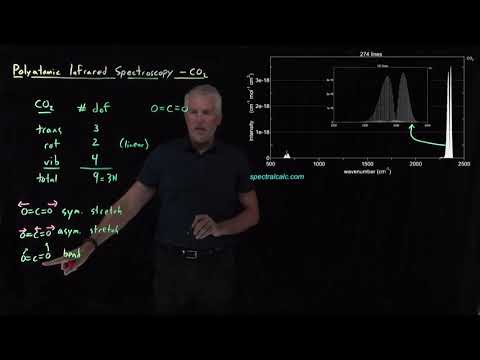
Now, onto the science stuff! The way we study CO2 in the environment often involves something called infrared (IR) spectroscopy. This method helps scientists see how molecules interact with light—in this case, CO2’s interaction with infrared radiation. When you shine IR light on CO2 molecules, they absorb certain wavelengths of light due to their molecular structure and vibrations.
- This absorption leads to heating of the atmosphere because those absorbed wavelengths don’t just disappear; they help trap heat.
- A little bit of this is good—it keeps our planet warm enough to support life.
- But too much? That’s where things get tricky—and where climate change really kicks in.
You might remember when your high school teacher talked about the greenhouse effect? Well, it’s happening because of gases like CO2 trapping heat—like a blanket around Earth. And as human activities like burning fossil fuels pump more CO2 into the atmosphere, the blanket gets thicker!
This has some serious implications for ecosystems around us. For instance, rising temperatures might shift habitats for various species. Imagine fish populations moving deeper into cooler waters or birds migrating earlier because spring comes faster now—it’s all connected!
Biodiversity can also take a hit if certain species can’t adapt quickly enough to these changes. Healthy ecosystems are sort of like an orchestra; each species plays its part. If one instrument goes off-key (or disappears), it can mess up the whole symphony.
Then there’s ocean acidification. More CO2 means more gets dissolved in seawater and that forms carbonic acid which lowers the pH level—this affects marine life like coral reefs (which are super sensitive!). If coral reefs start struggling to survive, so do all those fish and other animals that depend on them for shelter and food.
The point here isn’t just about numbers or graphs; it’s about our world changing because of this tiny molecule called CO2! It reinforces how everything’s linked—you know? The choices we make today have ripple effects throughout nature’s complex web.
So next time you hear “CO2,” remember it’s not just a pollutant; it’s also essential for life on Earth. We just need to find that balance! You follow me?
Exploring the Infrared Spectrum of CO2: Implications for Environmental Science
Okay, let’s talk about the infrared spectrum of carbon dioxide (CO2) and why it’s such a big deal for environmental science. So, basically, when we shine infrared light on CO2 molecules, they absorb specific wavelengths of that light. This ability to absorb infrared radiation is super important because it helps us understand how CO2 contributes to the greenhouse effect.
Now, you might be wondering why CO2 absorbs infrared light at all. Well, it has to do with its molecular structure. The way the atoms in a CO2 molecule are arranged allows them to vibrate in certain ways when they encounter different wavelengths of light. When they absorb IR radiation, it causes those vibrations and increases the energy in the molecule. This process is key for trapping heat in our atmosphere.
The implications of this are massive! When we talk about climate change and global warming, understanding how CO2 interacts with infrared radiation is essential. Here are a few things to consider:
- Greenhouse Effect: CO2 is one of the main greenhouse gases. It traps heat in our atmosphere which can lead to rising temperatures around the globe.
- Climate Models: Models that predict future climate scenarios rely heavily on accurate data about how much IR radiation CO2 absorbs. If these models get it wrong, our predictions about climate change could be off.
- Monitoring Changes: By studying these IR spectra, scientists can monitor changes in atmospheric CO2 levels over time. This helps track human contributions like emissions from cars and factories.
I remember reading about a student who created a simple experiment using a spectrometer to measure IR absorption by CO2 gas—pretty cool! They learned hands-on just how much impact just one gas could have on our whole planet’s temperature.
You see? The connection between IR spectra and environmental science isn’t just academic; it’s really integral to understanding climate change better and making informed decisions moving forward. You know what I mean? By knowing exactly how much heat these gases trap, we can work toward tackling some significant environmental challenges we’re facing today.
So next time someone brings up climate change or greenhouse gases at your next hangout or coffee break, you’ll be armed with some seriously fascinating facts about the role that good old carbon dioxide plays through its interaction with infrared light!
The Impact of CO2 on Infrared Radiation: An In-Depth Scientific Analysis
Alright, let’s talk about CO2 and its role in infrared radiation. You might’ve heard the term “greenhouse gases” thrown around a lot. Carbon dioxide (CO2) is one of the biggest players in this game, and understanding its impact is pretty vital for grasping climate science.
So, here’s the thing: CO2 molecules can absorb and emit infrared radiation. This happens because they have specific vibrations that match certain wavelengths of light. That means when infrared radiation from the Earth hits these molecules, they can capture that energy and get all excited. It’s like when you drink a hot cup of coffee and feel all warm inside.
When sunlight reaches the Earth’s atmosphere, some of it gets absorbed by land and oceans. But then it bounces back as infrared radiation, trying to escape into space. Here’s where CO2 steps in:
- Absorption Bands: CO2 has absorption bands in the infrared part of the spectrum. These bands are specific wavelengths where CO2 really loves to hang onto energy.
- Greenhouse Effect: By absorbing this infrared radiation, CO2 traps heat in our atmosphere. It’s kinda like wrapping yourself in a warm blanket during a cold night!
- Feedback Loops: Increased temperatures can lead to more water vapor (another greenhouse gas), which then causes even more warming.
You see how all this works together? Well, if you crank up the levels of CO2 in our atmosphere—like what we’ve been doing since the Industrial Revolution—you end up enhancing this greenhouse effect significantly.
A bit personal—once I stood on a hilltop overlooking my town during a hot summer day after years without much rain. The heat felt intense, almost suffocating! That moment really hit home just how much our changing climate is bringing heat waves right to our doorstep.
This brings me to something fascinating: saturation. The more CO2 we have, it gets less effective at trapping more heat over time because there are only so many wavelengths to grab hold of. However, what matters is that even small increases can still have huge impacts on temperature trends over time!
The science here isn’t just abstract; it’s directly tied to our daily lives! It affects weather patterns, sea levels rising due to melting ice caps, and even agriculture since crops are sensitive to temperature shifts.
In short (to sum up): CO2 impacts infrared radiation significantly, making it crucial for understanding climate change. Its ability to trap heat influences not just our planet’s temperature but also its overall health—all interconnected like a spider web!
If you’re curious about how we can combat this rise or improve things for future generations? That’s another conversation worth having!
So, let’s chat about CO2 IR spectra. I know, it sounds like something straight outta a science lab, but bear with me here.
First off, the whole idea that a gas can have a “spectrum” is pretty wild when you think about it. Like, I remember this one time during a school field trip to a science center. We got to see how different gases absorb light in unique ways. It was mesmerizing! You wouldn’t expect something so invisible to have its own fingerprint, you know? But that’s exactly what happens with carbon dioxide. When we shine infrared light through it, the gas vibrates in ways that are unique to its molecules.
Now, why does this matter for environmental science? Well, CO2 is one of those real heavy hitters when it comes to climate change. It traps heat in our atmosphere—like an old electric blanket you can’t turn off. Scientists use IR spectra to monitor CO2 levels over time and see how they change due to human activities like burning fossil fuels or deforestation.
So here’s the kicker: by studying these spectra, we can understand the impact we’ve had on our planet’s climate system better than ever before. It’s like having a backstage pass to Earth’s atmosphere! When scientists analyze these patterns, they get insights into trends that might influence weather patterns or even sea levels down the line.
And here’s something thought-provoking—imagine being part of the generation that has access to all this data and can actually do something about it! It gives me hope, honestly. As complex as it can be with numbers and graphs flying around—nature always finds a way to communicate with us through these signals.
So yeah, CO2 IR spectra may seem like just another scientific measurement at first glance; however, it’s really an essential puzzle piece in understanding how our actions affect the environment we live in. Isn’t that kind of empowering? You start realizing how intertwined everything is—earth’s systems responding in ways we might not initially see but are super important for future generations!