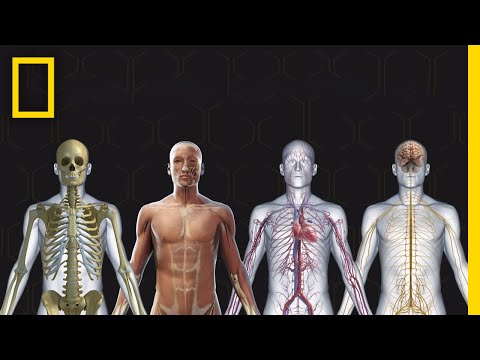
Okay, picture this: You’re in science class, and the teacher rolls out that giant poster of the human body. You know, the one with all the organs and muscles? And you’re thinking, “Wow, that looks like a puzzle I’m not ready to solve!”
But here’s the kicker. Despite how complicated it looks, our bodies are like, seriously impressive machines. Every little part plays a role in keeping us ticking.
Ever had that moment when you pull a muscle after an intense workout? Yeah, your body’s sending signals and trying to heal itself at lightning speed. It’s wild!
So let’s take a chill stroll through this amazing labyrinth called human anatomy. Trust me; once you see how everything connects, you’ll have a whole new appreciation for your own body!
Exploring the Complexity of the Human Body: Insights from Modern Science
The human body is like a super intricate machine, don’t you think? It’s mind-blowing how everything works together, and modern science is peeling back the layers to show us just how complex we really are. Let’s take a closer look!
First up, **anatomy**. This is basically the study of our body’s structure. If you’ve ever taken a biology class, you probably remember diagrams with labels pointing to bones and organs. A classic example? Your skeleton! It has around 206 bones that work like a support system. Each one has its role—for instance, your skull protects your brain while your ribs shield your heart and lungs.
But here’s where it gets exciting: our bodies aren’t just collections of bones and organs; they’re full of systems that communicate in remarkable ways. Take the **nervous system**—it sends signals all over your body faster than you can say “ouch!” Imagine touching something hot; your nerves send a signal from your fingers to your brain in milliseconds, telling you to pull away.
Then there’s the **circulatory system**, which is seriously cool too! Think of it as the delivery service for oxygen and nutrients. Your heart pumps blood through a wide network of vessels—arteries carry oxygen-rich blood away from the heart, while veins bring oxygen-poor blood back. It’s like this nonstop loop happening inside you!
You’ve also got the **digestive system**, which breaks down food into stuff we can actually use. From chewing down that pizza slice to absorbing nutrients in the intestines—it’s quite a ride! And oh, did I mention gut bacteria? They play a huge role in digestion too, helping us break down foods that we can’t handle alone.
Now let’s talk about how all these systems interconnect—like buddies working together on group projects at school! The **endocrine system** releases hormones that regulate processes such as growth and metabolism. For example, insulin helps manage blood sugar levels: when you eat, it pops up to keep everything balanced.
A few other highlights include our immune system—a badass defender against illness—and our integumentary system (that includes skin!), which acts as our body’s first line of defense against outside threats. Seriously—your skin is like an amazing suit of armor!
Lastly, there are so many hidden details within cells themselves. That’s where DNA lives—the blueprint for every tiny part of who we are! Each cell contains nearly three billion base pairs of DNA that hold instructions for how to build proteins essential for life.
So here’s the thing: modern science keeps revealing more about these complexities every day—from advanced imaging technologies that allow us to peek inside living bodies without any invasive procedures, to genetic research unlocking secrets about heredity and disease resistance.
To sum it up, exploring the complexity of our bodies isn’t just fascinating; it’s vital for advancing medicine and understanding health better. There’s always something new waiting out there to be uncovered—like new paths in a giant maze! And who knows what other surprises our bodies might have hiding up their sleeves?
Understanding the Hierarchy of Complexity in Human Anatomy: A Scientific Exploration
So let’s talk about the human body—it’s like this incredibly complex machine, right? But here’s the kicker: it’s not just a big jumble of parts. There’s actually a **hierarchy of complexity** that everything fits into, kinda like building blocks. You start with the simplest levels and then build up to something super intricate. Cool, huh?
At the bottom of this hierarchy, you’ve got cells. I mean, these little guys are the basic units of life. Think about cells as tiny building blocks; they come together to form everything in your body. You’ve got muscle cells, nerve cells… even blood cells! Each one has its own job and structure.
Next up on our list are tissues. When a group of similar cells gets together and starts working as a team, they form tissues. There are four main types:
- Epithelial tissue: This covers surfaces and lines cavities.
- Connective tissue: Holds things together—like tendons that connect muscles to bones.
- Muscle tissue: The stuff that helps you move—like when you wave at your friend!
- Nervous tissue: That awesome stuff that sends signals through your body.
Now, when different tissues come together to do specific functions, they create organs. Think about your heart—it’s made up of muscle tissue, connective tissue, and nervous tissue all working in harmony to pump blood throughout your body.
The next step is really neat: when you group organs together that work closely for a common purpose, you get an organ system. For example, the heart is part of the cardiovascular system along with blood vessels; these guys are pretty much best buddies in keeping blood circulating.
If we zoom out even more, there’s the whole human organism itself—the final level of this hierarchy. This is YOU! Your body as a whole is an incredible collaboration of all those systems working together to keep you alive and moving around each day.
You might think it’s wild how from tiny little cells we can get something as complex and beautiful as a person. It really shows how interconnected everything is in us!
The next time someone asks about human anatomy or how it all works together—remember this hierarchy! From cells, to tissues, then onto organs, and finally into complete living beings—it’s all part of one amazing story!
If you’re curious about something specific in anatomy or want to dive deeper into any part of this hierarchy, just say so! There’s always more layers to peel back!
Exploring the Complexity of the Human Brain: A Comprehensive Anatomy Diagram
Exploring the human brain is like peeling back the layers of an onion. Seriously, there’s so much going on up there! It’s not just a squishy mass – it’s a super complex network that controls everything you do. Let’s break it down a bit, shall we?
First off, the brain is divided into several key parts, each with its own special job. You can think of these areas like a team working together to make you… well, *you*!
- Cerebrum: This is the biggest part and is responsible for things like thinking, memory, and movement. It’s split into two halves called hemispheres. Ever notice how your left side controls your right hand? That’s called contralateral control, and it’s pretty cool!
- Cerebellum: Located at the back of your brain, it helps with coordination and balance. Imagine trying to ride a bike; this little guy ensures you don’t wobble all over the place!
- Brainstem: This connects your brain to your spinal cord and handles basic functions like breathing and heart rate. If it weren’t for this part, you wouldn’t even be able to survive a minute!
- Limbic System: Often called the emotional center of the brain, it plays a big role in feelings like joy or fear. You know that rush when you’re excited about something? Thank this system for those vibes.
Now that we’ve touched on some main areas, let’s look at how they interact with each other. Each part talks to others through billions of neurons—yes, billions! These are like tiny messengers sending signals across synapses faster than you can say “brain power.” It’s kind of mind-blowing how quickly information travels.
And here’s another thing: The brain isn’t static; it changes over time! This ability is known as **neuroplasticity**. For instance, when you learn something new or practice an instrument, your brain literally rewires itself! I remember when I was learning guitar as a kid — my fingers were clumsy at first but after hours of practice, my brain adjusted to make those movements easier.
That said, let’s not forget about some smaller but equally important components:
- Hippocampus: crucial for learning and memory.
- Amygdala: processes emotions like fear and pleasure.
- Thalamus: acts as the data hub for sensory information.
- Hypothalamus: regulates homeostasis (think hunger and thirst).
When looking at anatomy diagrams of these structures, they often show how interconnected everything is. Each region doesn’t function alone; they’re always chatting away with each other.
So next time you’re thinking or feeling something deep down inside you—remember that complex machinery up there doing all the heavy lifting! Exploring these connections between various regions reveals just how marvelous our brains truly are.
In short: The human brain isn’t just complex; it’s an amazing organ that keeps evolving through our experiences! Isn’t that kind of inspiring?
You know, when you look at a diagram of the human body, it’s like staring at the blueprint of an incredibly intricate machine. I remember back in school, we had this huge poster hanging up in the biology lab. It was colorful and detailed, showing every organ and system like some sort of superhero team, each playing a vital role in keeping us alive. It made me think about how marvelous, yet complex we really are.
So, let’s break it down a bit. The human body is kind of like a city, bustling with activity. You’ve got the heart pumping blood, which is like the transportation system delivering oxygen and nutrients to every nook and cranny. Then there’s the brain—oh man—the brain’s like the mayor deciding what needs to happen next; controlling everything from movement to emotions and even how you react when you see your favorite dessert.
And speaking of connections, check this out: did you know that your nervous system is basically a vast network of highways? They carry signals back and forth between your brain and body faster than you can say “ouch” when you stub your toe! It’s pretty wild how all these parts work together seamlessly most of the time. But if one little thing goes off-kilter? Yikes! It’s like traffic jams everywhere.
But here’s where it gets emotional for me: thinking about how all of this is not just theoretical but real flesh and blood—your flesh and blood! I mean, consider someone who has faced health challenges or gone through surgeries; those diagrams suddenly become more than just pictures—they tell stories of struggle, resilience, and triumph. Each scar could represent a battle fought or a change made.
So yeah, anatomy diagrams do more than just look cool on paper; they remind us that our bodies are marvels of nature’s engineering—a living testament to complexity infused with life itself. And every time I think about it all coming together? Well, it leaves me in awe every single time. What do you think? Isn’t it kinda humbling to realize just how much goes on beneath our skin?