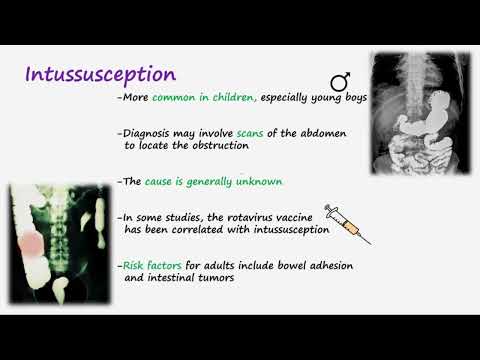
So, picture this: You’re at a family BBQ, and your cousin starts telling you about an intestine folding in on itself. Sounds like something outta a horror movie, right? But it’s actually a medical condition called intussusception.
Yeah, it’s as wild as it sounds! The intestines can sometimes act like a telescope, collapsing into themselves. Crazy, huh? And for anyone who’s had to deal with stomach problems, you know that things can get pretty weird in there.
Understanding how this happens is super crucial. It might sound complicated, but don’t worry—I’ll break it down. We’ll peel back the layers and dig into the science behind intussusception together. Ready to unravel this mystery? Let’s go!
Exploring the Pathophysiology of Intussusception: Insights into Mechanisms and Implications in Medicine
Intussusception is one of those words that sounds super complicated, but it’s actually pretty straightforward once you break it down. Basically, it’s when one part of the intestine folds into another part. Imagine a telescope—when you push it in, smaller parts slip inside one another. That’s exactly what happens in our guts!
So how does this whole thing happen? Well, the pathophysiology—which is just a fancy way of saying “how the disease works”—is quite interesting. The leading theory revolves around something called “peristalsis.” This is the wave-like motion your intestines do to push food along. If something disrupts this motion, like a polyp or infection, it can lead to intussusception.
But here’s where it gets tricky. When that part of the intestine folds over itself, blood supply gets cut off. This can cause serious problems, like tissue damage or even necrosis (that means the tissue starts to die). Not cool at all!
You might be wondering about symptoms. Well, those can include:
- Severe abdominal pain
- A “currant jelly” stool (sounds weird, right?)
- Vomiting
- Lethargy in kids or infants who are affected
By the way, I once met a dad whose kid had this—a total nightmare for him! Running into the ER with a screaming child really shows you how urgent and scary situations like this can be.
In terms of age groups, intussusception is most common in young children under two years old. Adults can get it too, but for different reasons—often due to tumors or some other underlying issues.
Now let’s talk about diagnosis because time matters here! Doctors usually use imaging techniques like ultrasound or CT scans to confirm intussusception. Ultrasound is often preferred for kids because it avoids radiation exposure.
Once diagnosed, treatment usually involves trying to gently pull the intestines back into place using air or liquid contrast during an enema—kind of like fixing a crumpled hose! If that doesn’t work or if there’s significant damage already done, surgery might be necessary.
Finally, it’s worth mentioning that while intussusception could seem random at first glance, often there are identifiable causes behind why it happens in someone. Understanding these mechanisms not only helps doctors treat patients but also aids researchers who are curious about gut health overall.
The bottom line? Intussusception sounds scary and complicated—but with proper knowledge and care in medicine today, patients can get through this puzzle with much better outcomes than before!
Pathological Lead Points for Intussusception: Insights and Implications in Medical Science
Intussusception is this pretty serious condition where a part of the intestine telescopes into itself. This can cause all sorts of problems, like blockages or even damaging your gut. So let’s talk about what are called pathological lead points. These are basically the underlying causes that trigger this whole mess.
Now, you might be wondering how this happens. Picture a house of cards; if you knock out a card from the bottom, everything can come tumbling down. In the case of intussusception, certain conditions act like that missing card.
- Benign Tumors: Non-cancerous growths like polyps or lipomas can create a point that leads to intussusception. Imagine a little lump in your gut making everything shift around.
- Malignant Tumors: Cancerous growths also play a role. They’re more concerning because they can lead to more significant health issues and require urgent attention.
- Congenital Anomalies: Sometimes, babies are born with structures that aren’t quite right in their intestines. These irregularities can act as lead points when they grow older.
- Inflammatory Diseases: Conditions such as Crohn’s disease or infections can cause parts of the intestine to swell up or become irritated, leading to intussusception.
Let me tell you, I once read about a kid who had recurrent abdominal pain and nobody could figure it out for ages. Turns out, it was an issue with his intestines that was missed at first! They finally found he had some inflammation acting as a lead point causing his intussusception.
The implications of understanding these pathological lead points are huge for medicine. If doctors know what to look for, they can catch problems much earlier—and that’s crucial! Early diagnosis means less risk of damage and better treatment options.
Treatment typically involves surgery to correct the issue and remove any problematic areas in the gut. But if someone gets treated late due to not recognizing these lead points early on? Well, complications skyrocket.
So yeah, being aware of these factors really shapes how we approach gut health and diseases related to it. It’s like having the map before taking a road trip; knowing where trouble spots might be helps in avoiding setbacks down the line!
Understanding Intussusception in Embryology: Insights into Developmental Biology
Intussusception can sound like a mouthful, but break it down and it gets a lot clearer. In simple terms, it’s essentially when one part of the intestine folds into another part. This happens not just after we’re born but also during our development in the womb. So, let’s chat about intussusception in embryology and what it means for our understanding of how bodies grow.
When you think about embryonic development, it’s like an intricate dance where each cell knows exactly what to do. This process involves **cell division**, migration, and differentiation. But sometimes things can go a bit haywire! Imagine trying to fold a piece of paper perfectly; if your hands slip, you could end up creasing it in unusual ways.
During the early stages of development, the gut is one long tube that eventually needs to fold and twist into its proper shape. Intussusception, in this case, happens when parts of this developing gut fold into themselves instead of just bending as they should. It might sound alarming but in some cases, this folding is actually normal.
In embryos, there can be moments where these folds are crucial for organ placement and functionality. If everything goes as planned, the folding helps create space for organs like the stomach or intestines to form correctly. But if things don’t go so smoothly? Well that’s when issues crop up.
Now let’s consider some key points:
- Normal Development: In normal embryonic development, intussusception can assist with organizing internal structures.
- Potential Issues: Sometimes abnormal intussusception can lead to congenital anomalies.
- Research Insights: Scientists are continually studying how these processes unfold, looking for patterns that could inform medical science.
There was this fascinating study I came across once—researchers looked at embryos under different conditions, trying to pinpoint causes of complications during gut development. What they found was that specific genetic signals play key roles in ensuring cells know when and where to fold without causing problems! It’s like giving them a roadmap; without directions, they might end up going off course.
Another exciting aspect? Intussusception isn’t just observed in humans; vertebrates exhibit similar mechanisms during their embryological journey too! It’s a neat reminder that despite all our differences as species, there’s something fundamentally shared beneath it all.
To wrap things up (sort of), while intussusception may not be at the forefront of everyone’s mind when thinking about how we develop from tiny clusters of cells into complex beings, it plays an important role in developmental biology—sometimes helping us thrive and other times presenting challenges that science works tirelessly to understand better.
So yeah—it’s pretty wild how something like folding can make such a big impact on life right from the get-go!
So, intussusception—what a mouthful, right? It sounds like something from a sci-fi movie, but it’s actually a real medical condition. It occurs when part of the intestine folds into itself, kind of like how you might stuff a sock into another sock. It can cause all sorts of problems down there in your belly.
Let me tell you a little story. A friend of mine had this happen to him when he was just a kid. One day, out of nowhere, he started feeling intense abdominal pain and some other not-so-fun symptoms. His parents rushed him to the hospital where the doctors quickly diagnosed him with intussusception. They treated him and thankfully he made a full recovery. But still, it left us all thinking about how our bodies work—or sometimes don’t work—and how science helps make sense of these baffling conditions.
Now, let’s break down what’s really happening when this folding occurs. Imagine your intestines are like those long, twisty slides at the playground. They’re supposed to keep everything moving smoothly along in one direction. When part of that slide folds over itself, well, things can get pretty tangled up! Blood flow to that segment gets cut off too, leading to serious consequences if not treated quickly.
So basically—when we talk about the pathophysiology of intussusception—we’re trying to understand why this happens and what goes wrong in our bodies that leads up to it. Researchers have looked at different factors that can trigger it: infections might play a role or even some abnormalities in the intestinal structure.
And let’s not forget about kids; they’re more prone to it than adults since their intestines are still developing and might be more susceptible to getting tangled up like that. The good news is that thanks to modern medicine and continuous research efforts in understanding these processes better, treatment options have improved dramatically over the years.
It’s wild how something so small within us can create such chaos! This whole saga reflects how important knowledge and research are—it all ties back to helping save lives and ensuring better health outcomes for everyone affected by conditions like intussusception.
So yeah, whenever I think about science unraveling mysteries like these within our own bodies, I feel thankful! Each discovery is just another reminder that even when things get messy down there in our guts (literally), we’ve got people working tirelessly to make sense of it all and help us heal.