You know that feeling when you pick up a tiny rock and wonder how much it weighs? Well, in the science world, that tiny rock could be connected to something called ion mass. Crazy, right?
Think about it: ions are like little superheroes of chemistry. They carry charges and play big roles in everything from the food we eat to the batteries that power our gadgets. I mean, without them, we’d be pretty lost!
But here’s where it gets interesting. The mass of these ions can tell scientists a whole lot about what they’re made of and how they behave. It’s kind of like having a secret decoder ring for the universe or something.
So let’s dig deeper into this whole ion mass thing and see why it matters in scientific research. I promise you’ll find some surprises along the way!
Exploring the Diverse Applications of Mass Spectrometry in Scientific Research
Mass spectrometry is a pretty cool technique used in scientific research. It’s like a super high-tech scale for molecules, measuring their mass and helping scientists figure out what they’re made of. You can think of it as a molecular detective tool that tracks down and analyzes different compounds in whatever sample you’re looking at.
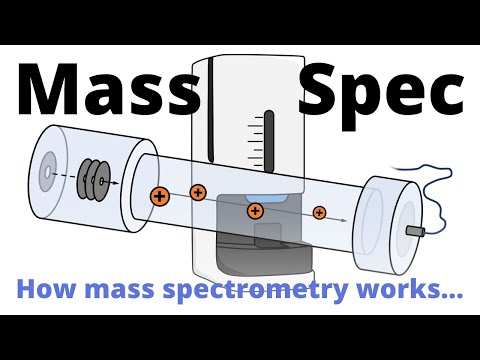
So, what exactly happens in mass spectrometry? Well, first, the sample gets ionized. This means the molecules are given an electric charge so they can be manipulated by magnetic fields. Once they’ve been zapped into ions, these charged particles are sent through a spectrometer. As they zoom through, they’re separated based on their mass-to-charge ratio. The result? A spectrum that tells you all sorts of things about the original sample.
Applications are everywhere. For instance:
Now, I remember this one time during my lab days when we had a mystery substance that just wouldn’t reveal its identity. Everyone was puzzled until we ran it through the mass spectrometer. As we watched the data come up on the screen, excitement buzzed around the room! We realized we had stumbled upon an unexpected compound that could potentially help with a research project we were working on.
Another fascinating aspect is its role in forensic science. Mass spectrometry helps identify substances found at crime scenes—like drugs or toxins—in no time flat. The precision and speed help law enforcement crack cases much faster than traditional methods.
But let’s not forget about astronomy. Yep! Researchers even use mass spectrometry to analyze samples from space missions. When you think about Mars rovers and lunar landers collecting soil samples, guess who’s there helping figure out what’s hiding beneath? That’s right—mass spectrometry!
Overall, its diverse applications make mass spectrometry an invaluable tool across many fields of research. So next time you hear about it, just know it’s not just fancy lab tech; it’s an amazing way scientists unlock secrets hidden in different materials!
Exploring the Applications of Ion Mobility Mass Spectrometry in Modern Scientific Research
Ion mobility mass spectrometry (IMMS) really shines in the world of scientific research—like, it’s a game changer in many ways. So, image a tool that lets scientists not only measure the mass of molecules but also sort of “dance” around them, figuring out their shapes and how they move. It’s pretty neat!
The whole idea here revolves around ions, which are basically charged particles. When you send these ions through an electric or magnetic field, they can get separated based on their shape and size. This separation happens because different ions experience forces differently. Smaller or more compact ions zip through faster, while larger or more complex ones take their time. It’s kind of like a race!
In research labs, IMMS is used for several important applications:
- Proteomics: It helps analyze proteins in our body, which are crucial for understanding diseases and biological functions.
- Metabolomics: By analyzing small molecules called metabolites, researchers can track changes in metabolism related to health or disease.
- Environmental Science: This technique can identify pollutants in air and water samples, helping us keep tabs on environmental health.
- Pharmaceutical Development: In drug discovery, IMMS helps characterize new compounds quickly and accurately.
Now, let me share an anecdote that really highlights its power. A friend of mine works on cancer research. She was struggling with understanding how certain drugs interacted with proteins involved in tumor growth. Traditional methods just weren’t cutting it—too slow and not accurate enough! But then she started using IMMS. With this tech, she could see not only the mass of the proteins but also how they changed shape when interacting with different drugs. The insights that came from this were incredible!
And you know what? This method doesn’t just stop at large biomolecules; it’s also great for studying smaller compounds like metabolites that act as signals within cells.
But it’s not entirely smooth sailing; there are challenges too. One of the biggest hurdles is data interpretation since a ton of info comes out at once! Also, making sure the instrument runs well requires some serious skill.
Overall though, ion mobility mass spectrometry is paving the way for breakthroughs across science fields from biology to chemistry to environmental science. Each day brings new discoveries fueled by this innovative technology! And who knows what tomorrow holds?
Exploring the Role of Mass Spectrometry in Forensic Science: Techniques and Applications
Mass spectrometry is like the cool detective of science. You know? It helps forensic scientists unravel mysteries hidden in samples. Let’s break it down a bit.
So, at its core, mass spectrometry identifies substances by measuring their mass. Picture a scale that weighs tiny bits of stuff—molecules, atoms, you name it. This technique is super handy in forensic science because it can analyze everything from drugs to toxins found at crime scenes.
When a sample goes through mass spectrometry, it gets ionized. Basically, this means the atoms or molecules are charged up—kind of like static electricity but way more controlled. These charged particles then get pushed through an electric or magnetic field that sorts them based on their mass-to-charge ratio. It’s like a high-tech sorting hat for molecules!
You might be wondering what this looks like in practice. In forensic labs, mass spectrometry is key for several reasons:
- Drug identification: It helps detect illegal substances in blood or urine samples. Imagine finding evidence to link someone to a crime just from analyzing a drop of sweat!
- Toxicology: If someone overdosed or was poisoned, mass spectrometry can identify those substances quickly and accurately.
- Trace evidence analysis: Tiny particles like hair, gunshot residue, or paint can tell investigators crucial details about a crime scene.
I remember reading about a case where detectives used mass spectrometry to analyze fibers found on a victim’s clothing. They were able to match these fibers to a suspect’s car upholstery! Talk about connecting the dots—this technology can literally make or break investigations.
Now let’s talk about some specific techniques within mass spectrometry that are often used in forensics:
- Gas Chromatography-Mass Spectrometry (GC-MS): This combo separates compounds and then identifies them by their masses. It’s perfect for analyzing drugs and poisons.
- Liquid Chromatography-Mass Spectrometry (LC-MS): Similar idea but with liquids! It’s often used for examining biological samples.
- Tandem Mass Spectrometry (MS/MS): This method uses multiple stages of mass analysis which increases sensitivity and specificity—great for complex mixtures.
What’s wild is that each technique has its quirks and special uses depending on what you’re looking for. And the results aren’t just numbers; they come together as spectra that look like musical notes on an ocean wave—a visual representation of what was detected.
But here’s the catch: it requires intense training and knowledge to interpret this data correctly! If misread, important clues could be overlooked. Forensic scientists spend years honing their skills to ensure they get everything right—it’s serious business!
In summary, mass spectrometry is vital in forensic science. It uncovers hidden details from minuscule traces left behind at scenes; you could almost say it’s an unsung hero of criminal investigation! Whether it’s linking suspects to crimes or providing answers in toxicology reports, this technique truly makes a difference when seeking justice.
You know, when you hear the term “ion mass,” it might not sound like the most thrilling topic out there. But hang on a sec—this little concept is actually super important in scientific research!
Let’s break it down a bit. Ions are basically atoms that have lost or gained an electron, which gives them a charge. Now, their mass? That’s crucial because it helps scientists understand a bunch of things, from chemical reactions to environmental changes and even medical diagnostics. Imagine you’re trying to fix a car; knowing the right parts and how they fit together is key. In science, knowing ion masses helps researchers figure out how things interact at the molecular level.
I remember one time I was helping out at this science fair. A kid had set up an experiment showing how different salts dissolved in water and conducted electricity. It was fascinating watching him explain that the ions coming off the salt were responsible for that conductivity. He was just so pumped about it! You could see his excitement; he realized he was touching on something larger than just his project—it was about understanding electric currents and how we use them every day.
So, ion mass plays a huge role in fields like chemistry and physics but also spills over into biology too. For instance, studying ions in our cells can shed light on everything from nerve signals to muscle contractions. This understanding can lead to better treatments for illnesses but also helps engineers design more efficient batteries or sensors.
But here’s a thing—you don’t always need fancy equipment to appreciate ion mass! Take your smartphone: it’s basically full of materials that rely on ion movement for its battery life and performance. So when you’re scrolling through your feed? Yeah, those little ions are doing their thing behind the scenes!
In scientific research, being precise about something like ion mass has real-world implications—it’s not just numbers and formulas scribbled down in some dusty lab book. It’s about making breakthroughs that affect daily life in ways we often take for granted.
So next time you hear someone mention ion mass, remember: it’s way more than just another technical term! It’s woven into our very existence—just like those excited kids at that science fair who make you see science as this amazing adventure waiting to unfold!