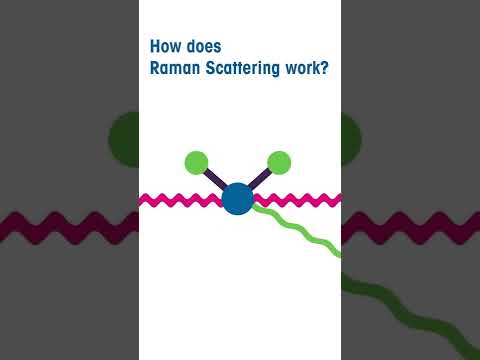
So, picture this: you’re at a party, and someone tries to sell you a magic crystal that can tell you what’s in your food just by shining a light on it. Sounds absurd, right? But here’s the thing—there’s actually a science behind that!
Meet Raman spectroscopy. It’s not a wizardry trick; it’s legit science used to analyze all sorts of stuff. You might be thinking, “What even is that?” Well, stick with me!
From figuring out the ingredients in your favorite snacks to investigating ancient artifacts, this technique has some pretty wild applications. And trust me, once you see how it works and what it can do, you might just be as fascinated as I am! Let’s jump into how this nifty tool is shaking things up in modern science.
Exploring the Diverse Applications of Raman Spectroscopy in Modern Scientific Research: A Comprehensive PDF Guide
Raman Spectroscopy is like your cool science buddy that helps you explore the molecular world without actually digging into the material. It uses a laser to bounce light off molecules, and when that happens, the light changes slightly based on the vibrations of those molecules. This change gives us a lot of information about what those molecules are made of, which is super useful in many fields.
1. Material Science: Think about it: in material science, researchers often want to know how materials change when heated or stressed. With Raman Spectroscopy, you can identify phases in materials and see how they react under different conditions. For instance, scientists use this technique to study graphene and its properties. Graphene’s unique structure makes it a hot topic, and Raman helps pinpoint defects that could affect its performance.
2. Medicine: Now let’s jump into medicine for a sec! Raman Spectroscopy is being used to detect diseases like cancer. By analyzing tissue samples, experts can tell healthy cells from cancerous ones based on their molecular makeup. Imagine a doctor using this technology to analyze cells in real-time during surgery—pretty mind-blowing, right? It’s faster and less invasive than traditional biopsy methods.
3. Chemical Analysis: In chemistry labs, this technique shines bright! It allows chemists to identify compounds without needing to break them down first. You can analyze complex mixtures—like paints or pharmaceuticals—just by shining a laser at them! It’s like having an instant chemical fingerprint at your fingertips.
4. Environmental Monitoring: Oh! And don’t forget the environment! Researchers are using Raman Spectroscopy to monitor pollutants in our water and air. This non-destructive method lets scientists detect harmful substances without messing up the samples they’re examining.
5. Forensics: In forensics, this technique helps analyze evidence collected from crime scenes—think fibers or paint chips. It provides instant results and helps law enforcement connect clues that might otherwise slip through the cracks during investigations.
So there you go! Raman Spectroscopy isn’t just a neat lab trick; it has diverse applications across multiple fields in modern research! Its ability to provide detailed information quickly makes it an invaluable tool for scientists everywhere—helping them understand the world around us better than ever before!
Exploring the Innovative Applications of Raman Spectroscopy in Modern Scientific Research
Raman spectroscopy is like having a super-powerful magnifying glass for scientists. With it, you can look deep into the molecular world without messing up the samples. Basically, it helps identify materials by shining a laser light on them and seeing how they scatter. The cool part? You get to learn about their chemical structure just by looking at that scattered light!
One of the many awesome applications of Raman spectroscopy is in **medical diagnostics**. Imagine you’re at the doctor’s office, and instead of waiting for hours or even days for test results, a quick analysis is done to check for diseases like cancer. It’s not just fast; it’s also non-destructive, so you don’t have to worry about sample damage. That’s pretty neat, right?
Then there’s its role in **material science**. Scientists use it to find out what makes up various materials—everything from polymers to advanced ceramics. Picture this: you have a new material for your smartphone screen, and researchers need to figure out its durability and properties. Raman helps them analyze stress responses at the microscopic level.
And let’s not forget about **forensics**! When investigating crime scenes, every bit of evidence counts. Raman spectroscopy can help identify substances like drugs or explosives without needing harsh chemicals or long procedures. It’s less invasive and can yield results on-site quite quickly.
In agriculture too, it plays a significant role in **crop health monitoring**. Think about farmers wanting the best yields possible while using fewer chemicals. By analyzing plant tissue with Raman spectroscopy, they can detect diseases early on or see how plants are responding to different nutrients.
Now, if you’re following me here, you’ll notice that one of the biggest advantages of Raman is its ability to work with small amounts of material—there’s no need for giant samples! It’s kind of mind-blowing how sensitive it is.
Also worth mentioning are advancements in **environmental science**. Researchers use Raman to analyze pollutants in water or air quality issues without collecting extensive samples—a true game changer for monitoring our planet’s well-being.
In research labs worldwide, this tech isn’t just sitting around; it’s being actively used across disciplines—from chemistry and biology to engineering and beyond! The versatility means no matter what field you’re in; chances are someone is finding new ways to use this powerful tool.
To sum things up:
- Medical diagnostics: Quick tests that save time.
- Material science: Analyzing new materials.
- Forensics: Identifying substances at crime scenes.
- Agriculture: Monitoring crop health effectively.
- Environmental science: Checking pollutants easily.
So there you have it—the innovative applications of Raman spectroscopy are both wide-ranging and exciting! While this technology continues evolving, who knows what else we’ll discover together? Isn’t science amazing?
Exploring the Diverse Applications of Raman Spectroscopy in Modern Scientific Research
Raman spectroscopy is like a magic lens that lets scientists see the world in a slightly different light. You might be wondering how that works, right? Well, here’s the lowdown: this technique examines how light interacts with molecules. When you shine a laser on something, most of the light bounces off, but a tiny bit gets absorbed and then re-emitted at different wavelengths. This change gives researchers valuable information about the molecular structure of the material. Exciting stuff!
One key application is in **materials science**. For example, scientists use Raman spectroscopy to study new materials like graphene or nanomaterials. By analyzing their unique spectral fingerprints, researchers can determine their properties and behaviors without being invasive or destructive. It’s like getting a peek into their secret lives!
Moving on to **biomedical research**, this method is making waves too! Imagine having a non-invasive way to diagnose diseases, such as cancer. With Raman spectroscopy, doctors can analyze tissue samples in real-time during surgeries or biopsies. This helps them make quicker decisions by identifying cancerous cells on the spot without having to take larger samples.
In the realm of **pharmaceutical research**, it’s super handy too! Researchers utilize Raman spectroscopy to ensure drug quality and authenticity. They can check for impurities or confirm that a drug has been manufactured correctly by comparing its spectral signatures against known standards. It’s all about safety and effectiveness for patients—you know?
Another interesting application lies in **forensic science**. Imagine investigators trying to solve mysteries at crime scenes! Raman spectroscopy can help them analyze substances like drugs or explosives without contaminating evidence. It provides rapid identification while keeping things safe for everyone involved—like having a secret tool!
Finally, there’s also an interesting connection with **art conservation**! Art historians and conservators use Raman spectroscopy to uncover layers of history hidden beneath paintings or other artworks. With just a little laser light, they can identify pigments and materials used by artists throughout time, allowing them to preserve artworks effectively while respecting their originality.
So yeah, those are just some of the diverse applications of Raman spectroscopy across various scientific fields! From understanding materials better to improving medical diagnostics and even helping detectives solve cases—it’s really changing the game in modern science! Isn’t it cool how one tool can have such different impacts?
Raman spectroscopy, huh? It’s one of those cool science tools that, when you get into it, can really blow your mind. Imagine being able to analyze materials without even touching them. That’s the magic of this technique!
So here’s the deal: Raman spectroscopy helps scientists figure out what things are made of by bouncing lasers off of them. When the light hits a material, it gets scattered in all sorts of ways, and that scattered light carries a unique fingerprint of the substance. Pretty neat, right? This is super useful in a bunch of fields like chemistry, biology, and even art conservation. You know how those old paintings need some TLC? Well, Raman can help identify what pigments were used without damaging the artwork at all.
Let me tell you a little story. A few years ago, I went to an exhibition about ancient artifacts. One piece was a tiny fragment from a Roman vase; beautiful but so delicate! The curator shared how they analyzed its materials using Raman spectroscopy to learn more about where it came from and how it was made. It was like peering into history without disturbing anything—a real testament to human ingenuity.
And it’s not just archaeology; in medicine, Raman is making waves too! Researchers are looking into using it for cancer diagnosis by detecting subtle changes in cells before they become problematic. Imagine catching something bad before it gets serious just by shining a laser on it! Life-changing stuff.
But here’s the kicker: while it’s powerful, there are challenges too. The technique sometimes struggles with complex mixtures or fluorescent materials—like trying to hear someone talk at a loud party. It takes skill and experience to interpret all that data accurately.
So yeah, it’s fascinating how something like Raman spectroscopy connects so many different fields together through this shared pursuit of knowledge. Sometimes I think about how we’re always looking for better tools to understand our world—and this one stands out as an incredible leap forward in scientific discovery!