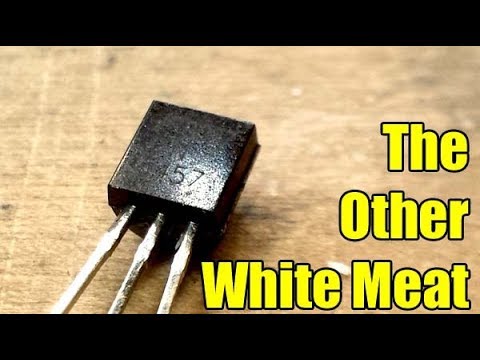
You know, back in the day, when I first tinkered with electronics, I was convinced that transistors were like little magic boxes. You flip a switch, and boom! Lights, sounds, whatever you wanted! But hey, it’s 2023 now, and we’ve come a long way since those old-school tech days.
Have you heard about JFETs? They’re like the rock stars of the transistor family. Seriously! They bring this smooth efficiency to electronics that’s just mind-blowing.
So picture this: you’re trying to make your gadget work better. Then someone mentions JFETs are the golden ticket! It’s like finding out that your favorite candy has a secret ingredient that makes it even yummier!
In this chat, we’re diving into all the cool stuff happening in JFET technology and why it might just change the game for our devices. Ready? Let’s get into it!
Exploring Recent Advancements in FET Technology: Innovations and Impacts in the Field of Science
FET technology, which stands for Field-Effect Transistor, has been evolving rapidly in recent years. It’s like watching your favorite series get a high-budget reboot! Seriously, these advancements can change the game in electronics and beyond.
So, what’s happening with FETs? Well, transistors are essential for amplifying or switching electronic signals. This makes them fundamental to pretty much everything we interact with—think smartphones, computers, even those fancy smart fridges. One of the standout types is the JFET, or Junction Field-Effect Transistor. It’s known for its low noise and high input impedance. Just imagine how clear your favorite podcast would sound if it wasn’t filled with background noise—that’s kind of what JFETs do for electronic circuits!
Now, let’s break down some of the recent advancements:
- Improved Materials: Scientists are experimenting with new materials like graphene and silicon carbide (SiC). These materials can handle higher voltages and temperatures than traditional silicon. It’s like upgrading from a cozy sweater to a warm winter coat!
- High-Frequency Applications: New designs have emerged that allow JFETs to operate at much higher frequencies. This is super useful in telecommunications where clear signals matter—not unlike playing your favorite song on repeat but listening to it on a record player versus a modern speaker!
- Miniaturization: Transistors are getting smaller as we push for more compact electronics. You remember that time you squeezed all your summer clothes into one tiny suitcase? That’s what researchers are doing with FETs—packing more power into less space.
- Sustainability: There’s also a push for eco-friendlier manufacturing processes. This means less waste and energy consumption during production. Kind of like finally figuring out how to recycle those jars instead of tossing them out!
With these improvements, we’re looking at devices that are not only faster but also better at conserving energy. You know how we’ve all been trying to save on our electricity bills? Well, these advancements could help reduce energy use in big ways.
And let me share a quick story here: A friend of mine had an old radio that just wouldn’t pick up any stations clearly anymore. After digging into it, I learned that they could replace some old transistors with new JFET ones designed for improved clarity—and boom! Her radio worked better than ever! It was like bringing back memories clearer than they had ever sounded before.
Basically, the future looks bright for FET technology! With ongoing research and new innovations sprouting up everywhere (kind of like flowers in spring), we’re set to see even more impressive applications in science and technology soon enough. So, keep an eye out—who knows what cool gadget will come next due to these advancements?
Understanding the Applications of JFETs in Electronics: A Comprehensive Overview
JFETs, or Junction Field Effect Transistors, are pretty interesting components in the world of electronics. You might not think about them daily, but these little guys play a significant role in various applications. So let’s break down what they are and where they fit into our tech-filled lives.
First off, JFETs are a type of transistor that’s controlled by voltage. Unlike other transistors that rely on current to operate, JFETs use an electric field. Imagine it like a faucet for electric current—when you turn the knob (or apply voltage), you control how much current flows through. This makes them super useful because they can handle high levels of voltage without much hassle.
Now, you may be curious why people still bother with JFETs when there are other options like MOSFETs (Metal-Oxide-Semiconductor Field-Effect Transistors). Well, that’s where things get interesting! JFETs have low noise levels and higher input impedance compared to their counterparts. This means they’re great for applications where you need to preserve weak signals without interference—like in audio equipment or sensitive measurement devices.
Let’s talk about some specific applications:
- Audio Equipment: JFETs can be found in high-quality amplifiers and mixers. Their low noise makes sure your favorite tunes sound crisp and clear.
- Sensors: They’re also used in various sensors because of their ability to detect small changes in voltage, making measurements more accurate.
- Switching Applications: You’ll see these babies being used to switch signals on and off quickly in many digital circuits.
- Radio Frequency Applications: Their stability at high frequencies makes them ideal for RF amplifiers used in communication systems.
What’s cool is that JFET technology is not standing still; it evolves too! Engineers are constantly working on innovations to make them even better. For instance, researchers are exploring new materials that can enhance performance and efficiency.
And here’s a little emotional nugget: I remember when I first built my own simple radio using a JFET circuit as the amplifier. The thrill of hearing those distant stations crackling through my homemade device was unforgettable. It’s moments like those that show just how powerful and integral these tiny components can be to our understanding of electronics.
So next time you’re using something electronic—be it your phone or a fancy sound system—remember that behind the scenes, there could be a JFET quietly doing its thing, helping deliver that perfect performance you enjoy so much!
The Impact of Transistor Invention on Electronics and Scientific Advancements
The invention of the transistor was like turning on a light in a dark room. Seriously, it changed everything in electronics and science. Before transistors, we relied heavily on vacuum tubes, which were bulky and pretty unreliable. When the transistor popped onto the scene in the 1940s, it was a game-changer.
So, what’s the big deal with transistors? Well, they are tiny switches that control electric signals. The thing is, they can amplify those signals too! This means you can take a weak sound or radio signal and make it strong enough to hear or transmit over long distances. It’s kind of like being able to shout across a crowded room.
Now, let’s talk about some key impacts:
- Size Reduction: Transistors are way smaller than vacuum tubes. You could fit thousands of them on a tiny chip! This compact size led to smaller devices—think about how your phone fits in your pocket.
- Energy Efficiency: Transistors use less power compared to their vacuum tube cousins. That means electronics can run longer on batteries and save energy!
- Cost-Effectiveness: With mass production capabilities, transistors became cheaper to make which opened up new markets and products.
- Reliability: Unlike vacuum tubes that could burn out easily, transistors last longer and need less maintenance. Imagine not having to replace your old radio every few months!
On top of all this, transistors paved the way for modern electronic devices we can’t imagine living without—like smartphones and computers! Think about it: your laptop has millions of these tiny switches working together to process information at lightning speed.
Then came advancements like the JFET (Junction Field Effect Transistor). If you’ve ever been curious about how audio amplifiers work or how certain sensors detect light or temperature changes, there’s a good chance they’re using JFET technology. This type of transistor is particularly good at controlling current flow with minimal power loss.
Every time you turn up the volume on your speaker or snap a photo with your phone’s camera, there’s a little bit of JFET magic happening behind the scenes! It’s remarkable how this whole journey started with one small invention that turned into an entire revolution in electronics.
To sum it all up: The transistor didn’t just change electronics; it reshaped our world. It enabled scientific discoveries and innovations that continue evolving today. So next time you reach for your device or listen to music through your speakers, give a little nod to those clever engineers who made all this possible back when they decided that tiny switches were cooler than giant tubes!
So, let’s chat a bit about JFET transistors. You know, those little heroes of the electronics world that we often overlook? They’ve been around for decades, but they’re still riding the wave of innovation like a pro surfer.
I remember back in college, I had this project that involved building a simple radio. I was super excited until reality hit—making it work wasn’t as easy as it sounded! I had to dive deep into understanding transistors, and honestly, JFETs just clicked for me. It’s like they had this gentle way of handling electrical signals—so cool!
Anyway, the thing is, JFET stands for Junction Field Effect Transistor. Doesn’t sound too exciting at first glance, right? But here’s where it gets interesting: these guys are all about controlling current with an electric field, which means they can be super efficient. And with tech constantly advancing—like miniaturization and new materials—we’re seeing some pretty neat improvements in JFET technology.
For example, researchers are now playing around with different materials beyond silicon. Gallium nitride and graphene are making waves because they can handle higher frequencies and temperatures. Imagine your gadget working faster and lasting longer without overheating! That’s music to an engineer’s ears.
But what’s really awesome is how these innovations impact everyday life. Think about it: your smartphones, computers, even electric vehicles rely on transistors—all thanks to this ongoing evolution in technology. It’s like a never-ending cycle of discovery that feeds into itself.
And here’s another thought: as we push towards sustainable tech solutions, the efficiency of JFETs could play a massive role in green electronics. Lower power consumption means reduced environmental impact—something that’s becoming more crucial every day.
So yeah, while they might not get as much hype as their more famous cousins like MOSFETs (Metal-Oxide-Semiconductor Field-Effect Transistor), JFETs are quietly proving their worth in the background. And honestly? There’s something kinda beautiful about that underdog story in science and tech—the little guy making a big difference!