So, picture this: you’re at a party, right? And there’s that one awkward moment when you’re trying to figure out which group to join. Should you hang with the nerdy scientists debating quantum physics or vibe with the artists discussing the latest trends in abstract art? It’s all about finding your crowd.
Now, imagine trying to do the same thing, but with data. Sounds wild? That’s where K Means Clustering struts in like a cool DJ at that party, mixing up all those numerical beats into distinct groups.
This nifty algorithm helps scientists make sense of their data by sorting it into chunks that actually mean something. You know, like finding patterns and making connections that can be super useful for research.
It’s not just numbers on a screen; it’s about uncovering stories hidden in layers of information. Want to find out how? Buckle up; we’re gonna break it down!
Understanding K-Means Clustering: A Comprehensive Example in Scientific Data Analysis
K-Means clustering is a super cool tool in the world of data science! It helps us sort out and analyze complex data by grouping similar things together. Imagine you have a giant box of mixed-up LEGO pieces. Wouldn’t it be easier to build something if all the blue blocks were together, and all the red ones too? That’s kind of what K-Means does with data.
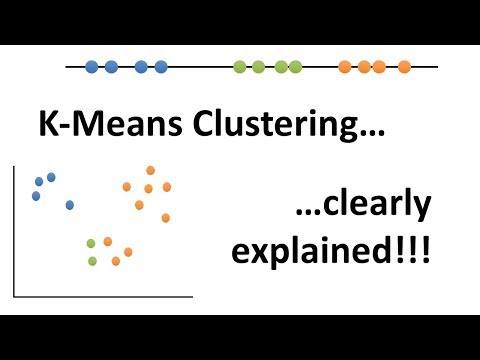
So here’s how it works in simple terms. First, you pick a number for K, which stands for the number of clusters you think are in your data. Let’s say you choose K=3; that means you believe that your dataset can be grouped into three different categories.
Next, you start by randomly placing K points (called centroids) on the chart as guesses for where the center of each cluster might be. After that, every single piece of data is assigned to the nearest centroid based on distance—just like picking which LEGO block is closest to each colored group.
Now here comes the fun part! Once every piece has been assigned, you recalculate the position of each centroid by finding the average location of all points in that group. Think about it: if your blue blocks were spread out, dragging their centroid towards them will make it a more accurate representation!
After updating centroids, you repeat this assignment and recalculation process until nothing changes anymore or changes very little. This means you’ve got your clusters nicely formed!
You might be thinking, “Okay, but what’s an example of this in action?” Let’s say you’re dealing with scientific research data about different species’ heights or weights. You might have tons of measurements from plants or animals and want to group them by species based on those traits.
Using K-Means:
- You’d set K=3 for three species.
- You randomly place three centroids based on height or weight data.
- Each measurement is then grouped to its closest centroid.
- You adjust centroids after all points are assigned until they stabilize.
By the end, you’d see distinct groups representing those species based on height or weight similarities! Talk about making sense out of chaos!
One thing to remember though: picking K can sometimes feel like guesswork! There are methods like the elbow method where you plot how much variance is explained versus different values of K and look for an “elbow” point where adding more clusters doesn’t matter as much.
It’s important not to forget that K-Means has its quirks too! For example:
- It struggles with non-spherical clusters (like elongated shapes).
- It can get stuck in local minima—meaning it won’t always find the best possible solution.
But despite these little hiccups, K-Means remains a powerful ally when diving into scientific data analysis. It offers clarity when we’re surrounded by complexity! So next time you’re sifting through some messy datasets, consider giving K-Means a shot—you might just see your findings shine bright!
Applying K-Means Clustering in Scientific Data Analysis: A Comprehensive Example
K-Means clustering is like that friend who’s great at organizing parties. You know, the one who separates guests into groups based on their vibes? In scientific data analysis, it does something similar with data points. Let’s break it down.
First off, K-Means aims to categorize a big pile of data into K distinct groups or clusters. The cool part? It finds natural groupings in your data without needing any sort of pre-labeled categories. So, it’s unsupervised learning—no teachers here!
Here’s how it works in a nutshell:
- Pick the number of clusters (K): Before you dive in, you have to decide how many clusters you want to create. This is kind of tricky because picking too few or too many can mess with your results.
- Initialize centroids: These are like the center points for each cluster. You randomly place K centroids somewhere in your data space.
- Assign points to clusters: Each piece of data gets assigned to the nearest centroid. Think about it as people moving toward their favorite snacks at that party!
- Update centroids: Once everyone has found their snacks (or cluster), you move the centroid to the new average position based on all assigned points.
- Repeat until stable: You keep assigning and updating until nothing changes much anymore. It’s like trying different placements for those snacks until everyone is happy!
One time, I remember trying to analyze a dataset from an environmental study on air quality across different cities. I had so many readings—temperature, humidity, pollution levels—you name it! After applying K-Means clustering, I could see which cities were similar regarding air quality issues. It was eye-opening!
Now let’s talk about some applications. Researchers use K-Means all over the place! Here are some examples:
- Biodiversity studies: Scientists can categorize different species based on traits or habitats.
- Medical research: Clustering patients with similar symptoms can help identify disease patterns.
- Market segmentation: Businesses often use clustering to understand distinct customer preferences and behaviors.
However, keep in mind that K-Means has its quirks. For example:
- Sensitive to outliers: A single weird data point can throw off your results!
- K must be specified beforehand: If you guess wrong on K, your interpretation might be way off.
- Circular clusters: K-Means assumes spherical shapes for clusters—it doesn’t handle odd shapes well!
In summary, using K-Means clustering can be really beneficial for uncovering hidden patterns in scientific data. It’s kind of like looking for treasure; if you’re careful about where you dig (selecting K correctly) and pay attention to what you’re finding (outliers), you’ll uncover insights others might miss! Isn’t science just so cool?
Comprehensive Guide to K-Means Clustering in Scientific Data Analysis: Techniques and Applications (PDF)
K-means clustering is one of those cool techniques used in scientific data analysis. It’s all about grouping similar data points together, making it easier to understand patterns and trends in complex datasets. So let’s break it down, shall we?
What is K-means Clustering?
At its core, K-means is a way to partition a dataset into K distinct groups or clusters. Each cluster has data points that are more similar to each other than to those in other clusters. Think of it like gathering your friends based on what they like—like grouping them into fans of different music genres.
How does it work?
Well, it all starts with choosing the number of clusters you want, which is K. After that, K-means follow three basic steps:
- Select initial centroids: These are the starting points for each cluster.
- Assign data points: Each data point gets assigned to the nearest centroid based on a distance measure, usually Euclidean distance.
- Update centroids: Once all points have been assigned, the algorithm recalculates the centroids by taking the average of all points in each cluster.
These steps are repeated until the clusters stabilize—meaning they don’t change much anymore.
The Math Behind It
Okay, so here’s where things get a bit technical but hang in there! The aim is to minimize the variance within each cluster. Mathematically speaking, that means minimizing the sum of squared distances between each point and its corresponding centroid. This objective function can look daunting, but remember: it’s all about finding those tight-knit groups.
Choosing K
One tricky part is picking how many clusters you want. You could use tools like the Elbow Method or Silhouette Score to help decide on K. The Elbow Method involves plotting the explained variance against K and looking for that “elbow” point where adding more clusters doesn’t make a big difference anymore.
Applications in Science
K-means clustering can be super useful across various scientific fields:
- Biodiversity studies: Grouping species based on traits helps ecologists understand ecosystems better.
- <bmedical research: Identifying patient subgroups based on symptoms or genetic information aids personalized medicine.
- <bastronomy: Classifying celestial objects by their characteristics lets astronomers uncover new insights about galaxies.</bastronomy:
It’s really interesting how versatile this technique is!
Anecdote Time!
Let me tell you a quick story. A while back, I was helping out with a project analyzing plant species in a nature reserve. We had tons of data—like leaf shapes and sizes—and it felt overwhelming at first! But once we applied K-means clustering, suddenly we could see patterns emerge. It was like discovering hidden treasures among heaps of information!
So yeah, K-means clustering offers amazing insights by simplifying our complex world of data into manageable chunks. Just remember that results depend heavily on choosing K, as well as understanding your data’s nature before diving deep into analysis.
In summary, while there are some technical aspects (hello math!), K-means remains an approachable tool for researchers trying to untangle scientific mysteries through effective grouping.
K Means Clustering is one of those concepts that sounds super technical but, honestly, it’s really just a cool way to make sense of messy data. So, picture this: you’ve got a mountain of scientific data—from measurements in your latest experiment to all those complex readings from sensors. It can be overwhelming, right? You’re looking at numbers and figures that feel like they belong in a sci-fi movie or something.
Here’s where K Means comes in. Imagine you’re trying to sort a big bag of marbles. You know there are different colors and sizes in there, but it’s all mixed up. K Means helps you take those marbles and group them into clusters based on their similarities. Pretty neat, huh? The algorithm divides your data into ‘k’ clusters—like having five different bowls for your marbles based on color.
But let’s go deeper, shall we? One time, I was helping a friend with her research project on air pollution levels across the city. She had this massive dataset filled with measurements from various locations over months. It looked like chaos at first! We thought about how to visualize it better and considered K Means Clustering as an option. After some experimentation, we settled on three clusters: high pollution areas, moderate ones, and clean spots. It was like turning a jumbled puzzle into a clear picture!
What happens is that the K Means algorithm calculates the average for each cluster (that’s your ‘centroid,’ by the way) and reassigns data points based on how close they are to these centroids—then it does this iteratively until there are no more changes happening. It’s kinda like organizing friends by how much they love pizza; you keep moving people around until everyone is perfectly grouped with their pizza-loving pals.
This technique shines especially in fields like biology or astrophysics where researchers sift through tons of data looking for patterns or anomalies. And while it’s pretty handy, you should know it has its quirks too—like deciding how many clusters (the ‘k’) to use isn’t always straightforward.
In essence, K Means Clustering gives you this structured approach to tackle big heaps of scientific data without losing sight of the bigger picture—quite literally! You get the chance to spot trends and make sense of things that might seem totally scattered at first glance. So next time you’re buried under numbers, remember that even chaos can have some order if you’re willing to dig deeper!