Alright, picture this: you’re at a party, and someone spills a drink on your favorite shirt. Bummer, right? But then you realize it’s just soda. You look around and see everyone laughing, enjoying the chaos. Suddenly, the mishap becomes a funny memory!
Now, sampling distributions in research kinda work like that wild party. You take a little bit from the whole crowd to understand what’s going on without needing every single detail.
So, what’s the deal with sampling distributions? Well, they help us make sense of data without getting lost in it all. The thing is—scientists and researchers use them all the time to draw conclusions about larger groups based on small samples.
You see? It’s like having your cake and eating it too but with numbers! Let’s chat about how these nifty little concepts keep our research grounded in reality while still letting us dance with the data.
Understanding Sampling Distribution in Data Analytics: A Key Concept in Scientific Research
Alright, so let’s talk about sampling distribution. It sounds pretty fancy, but it’s actually a super cool concept in data analytics and scientific research. Imagine you’ve got a big jar of marbles—like, a really big jar—and you want to know the average weight of all those marbles. But, like, who wants to weigh every single one? Not me!
That’s where **sampling** comes in. It’s like taking a small scoop of marbles from the jar instead of measuring them all. You weigh that scoop and then use that information to estimate the average weight of all the marbles in the jar. But wait! What if your scoop is just a weird mix? Maybe you get more blue marbles than green ones or something crazy like that.
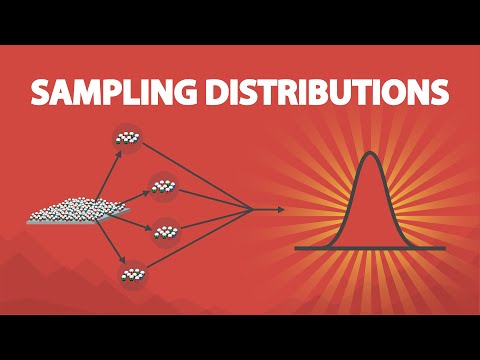
So here’s where **sampling distribution** plays its role. It’s essentially about what happens when you take multiple scoops of those marbles and measure their weights over and over again. Each scoop gives you an average weight, right? When you plot these averages on a graph, what do you think happens?
You end up with a bell-shaped curve (at least that’s often the case) known as a **normal distribution**! How cool is that? The center of this curve represents the true average weight of all the marbles in your jar.
Here are some key points to keep in mind:
- Sample Size Matters: The bigger your scoop (sample size), the closer your sample average will be to the actual average.
- Variation: When you take lots of samples, some will be lighter and some heavier due to random chance.
- Law of Large Numbers: As you keep sampling more and more, those averages start to settle down around the true mean.
Now picture this: You’re not just weighing marbles; you’re studying something way deeper—like people’s opinions on pineapple pizza! If you’re only asking five people if they love it or hate it, your results could be totally off base. But if you survey hundreds or thousands? That gets much closer to reality.
And here’s another fun fact: Sampling distributions also help with calculating something called **confidence intervals**. This gives you a way to express how uncertain or certain you are about your estimates based on your samples.
When researchers develop theories or test hypotheses using data analysis, understanding sampling distributions is key because they give context to data variability. You don’t want to make wild guesses based on tiny scoops—gotta have solid evidence!
So basically, whether you’re weighing marbles or gathering opinions about pizza toppings, mastering sampling distributions helps scientists and analysts alike make better decisions based on their data without losing their minds over excessive marble weighing—or survey-taking for that matter!
Exploring the Three Types of Sampling Distributions in Scientific Research
So, let’s talk about sampling distributions. The thing is, in scientific research, we often can’t study every single member of a population. It’s just not practical, right? Instead, we take **samples**—little bits from the whole pie—and that’s where sampling distributions come into play.
Now, there are three main types of sampling distributions: the normal distribution, the t-distribution, and the chi-squared distribution. Each one has its own vibes and uses. Let me break them down for you.
1. Normal Distribution
This one is like the classic bell-shaped curve everyone knows about. It pops up when your data is symmetrically distributed around a mean. You know how most people are around average height? Same idea!
A key thing about normal distributions is that as your sample size grows, your sampling distribution tends to get closer to that perfect bell shape—thanks to what they call the Central Limit Theorem. If you’re measuring heights in a large population and you take different samples of 30 or more people, those sample averages will start looking pretty normal—even if height itself isn’t evenly spread in smaller samples.
2. T-Distribution
Now this one’s interesting because it’s more appropriate when you’re working with smaller sample sizes (less than 30 usually). Imagine you’re trying to figure out how much time students spend on homework each week at your school with only a few friends as your subjects. This might give you skewed results due to lack of data points.
The t-distribution looks kind of similar to the normal distribution but it has fatter tails—like it’s full of potential surprises! This means there’s more room for variation and uncertainty when your sample size isn’t very big. So using this instead helps avoid overestimating accuracy.
3. Chi-Squared Distribution
Okay, let’s switch gears a bit! The chi-squared distribution is used mainly when you’re dealing with categorical data—think yes/no answers or classifications like “dog” or “cat.” It’s super handy when you’re testing hypotheses about relationships between variables.
So if you collected data on pet ownership across different neighborhoods and wanted to see if there was an association between income levels and pet types owned, you’d use this type of distribution for analyzing it!
So yeah, each type of sampling distribution serves its purpose depending on your sample size and what kind of data you’re working with—whether it’s numerical or categorical.
Just remember: choosing the right one can make all the difference in how reliable your conclusions are! Because at the end of the day, good science depends on making sense out of data—and sampling distributions help clear that path.
Exploring the Four Types of Sampling Methods in Statistical Science
When diving into the world of statistics, one of the most crucial concepts you’ll come across is **sampling methods**. It’s all about how researchers collect data without needing to check every single element in a population. Basically, it makes life easier and helps to get reliable insights quickly. There are four main types of sampling methods: random sampling, stratified sampling, systematic sampling, and convenience sampling. Let’s break them down.
Random Sampling is like picking names out of a hat. You want each person or item in your population to have an equal chance of being chosen. Imagine you’re at a party with ten friends and you want to pick one to decide what movie to watch—everyone has the same shot at being selected! This method minimizes bias and usually produces a sample that accurately reflects the overall group.
Stratified Sampling, on the other hand, involves dividing your population into subgroups or “strata.” Think about it like this: if you’re studying college students from different majors—like biology, art, and engineering—you might create strata based on these groups. Then, you randomly sample from each group proportionally. Why? To make sure all segments of your population are represented fairly, which leads to more nuanced insights!
Then there’s Systematic Sampling. Here’s where it gets fun! You start by selecting a random starting point in your list of subjects and then pick every nth person after that. Like if you’re pulling names off a list every 5th entry. Just keep in mind that if there’s an underlying pattern in your population list that matches with n, it could mess things up a bit.
Lastly, we have Convenience Sampling. This method is all about ease—basically grabbing whoever is easiest to get your hands on! For example, if you’re conducting surveys outside a coffee shop and just ask people who walk by, that’s convenience sampling at work. It can be quick but may come with its own set of biases since the people you sample might not represent everyone else in the broader population.
Every method has its strengths and weaknesses. Random sampling offers fairness but may require more resources, while convenience sampling saves time but can lead to skewed results. It’s all about choosing the right method for your research question.
Sampling may seem like just another number game, but when done right, it can illuminate trends and relationships hidden within larger data sets. Each type serves its purpose depending on how precise or broad you need your findings to be! So pick wisely; the future insights depend on it!
Sampling distributions might not sound like the most exciting topic at first glance. But let me tell you, they’re like the secret sauce in science and data analysis. And honestly, once you get into it, you can see how crucial they are for making sense of the world around us.
Imagine you’re standing on a beach with a hundred tiny pebbles scattered in front of you. You want to guess the average weight of those pebbles based on just a few of them. Now, if you pick up only three pebbles, your guess might be way off because those three could be unusually light or heavy. But if you keep sampling different small groups of pebbles and calculate their average weights each time, something cool starts happening. You’ll notice that those averages will form a pattern—that’s your sampling distribution!
So why does this matter? Well, think about those moments when scientific studies pull crazy conclusions out of nowhere. That can happen when researchers don’t account for the way data can vary when it comes from different samples. It’s all about making sure our conclusions are reliable and accurate.
A few years ago, I was helping a buddy with his thesis on plant growth in urban environments. He had this wild idea that plants near traffic developed differently than those further away. So he took some measurements from various spots around town, but at first he wasn’t using sampling distributions properly. The results were all over the place—one week he had plants thriving on sidewalks, then next week they were wilting! When we finally dug into it and looked at sampling distributions, we got a clearer picture of what was happening over time and across different spots.
This whole concept isn’t just for academics or researchers; it’s something we all encounter daily—think politics or social media polls! Every poll uses samples to make predictions based on larger groups; if they don’t use sampling distributions correctly, who knows what kind of mess could happen? You could end up believing something just because it seemed to look good on paper.
In summary, sampling distributions aren’t just nerdy math stuff—they’re foundational to understanding how we interpret data scientifically and how we navigate through incomplete information in our lives. So next time you’re analyzing something or just curious about averages in general, remember there’s a whole world behind those numbers that helps keep things grounded and meaningful!