So, let me tell you about this time I was at a party. Picture it: everyone’s mingling, laughing, and then someone starts talking about statistics. Yup, I know, total buzzkill, right? But here’s the kicker—this dude started discussing kurtosis like it was the latest trending topic. And honestly? It got me thinking.
Kurtosis sounds like a fancy dessert or maybe some cool dance move, but it’s actually all about understanding data distributions better. You know how some parties have way more excitement than others? Well, that’s kind of what kurtosis does; it helps us measure how “peaked” or “flat” a distribution is compared to a normal curve.
Stick with me on this! It might sound a bit nerdy, but once you see how it plays into data analysis, you might find yourself throwing around terms like skewness and kurtosis at your next gathering. Who knows? You could become the life of the statistical party!
Understanding the Importance of Kurtosis in Data Analysis: Implications for Scientific Research
Kurtosis is one of those terms that might sound a bit fancy, but it’s actually pretty straightforward once you break it down. You know how when you’re looking at a set of data, you kind of want to understand how much it varies? Well, kurtosis helps you get a handle on that by measuring the “tailedness” of the distribution of your data. Basically, it tells you how much of your data falls into the extreme ends or the center.
So, what do we mean by “tailedness”? Picture this: if you have a lot of outlier values (those extreme highs and lows) in your dataset, that means a higher kurtosis. In contrast, if the values are more spread out and not so clustered around the mean, you might see lower kurtosis.
There are three main types of kurtosis:
Understanding these types can seriously impact scientific research. For example, let’s say you’re doing some experiments on plant growth under different light conditions. If your growth measurements show leptokurtic behavior—meaning lots of plants grew really well while others just flopped—you might need to reconsider those conditions or look deeper into what caused such variability.
But why does this matter? Well, when you’re analyzing data for trends or making predictions based on them, understanding where those extremes land is crucial. If you’re relying on statistical models but miss outliers or extremes due to low kurtosis in your datasets, you could end up with flawed results!
In many fields like psychology or economics where human behaviors and decisions come into play, understanding kurtosis can lead to better interpretations of data patterns. Imagine trying to create policies based on average income levels without accounting for significant income inequalities—that’d be missing the full picture completely!
So yeah, in research contexts where accurate predictions and analyses are vital for effective decision-making or further experimentation, keeping an eye on kurtosis can make all the difference. It’s all about being aware not just of what’s typical but also what lies at those edges because that can shape conclusions profoundly.
In summary: Kurtosis provides insights beyond averages; it’s about understanding extremes! Whether you’re analyzing test scores from students or measuring outcomes in clinical trials, recognizing these patterns will help researchers navigate their data landscape more effectively and responsibly.
Understanding Kurtosis: What a Value of 3 Reveals in Statistical Analysis
Kurtosis is one of those fancy terms in statistics that can sound a bit intimidating, but once you break it down, it’s really not that complicated. You know how sometimes you hear about bell-shaped curves? Well, kurtosis helps us understand the shape of those distributions. Basically, it tells us about the “tailedness” of a distribution—how much of the data is in the tails versus the middle.
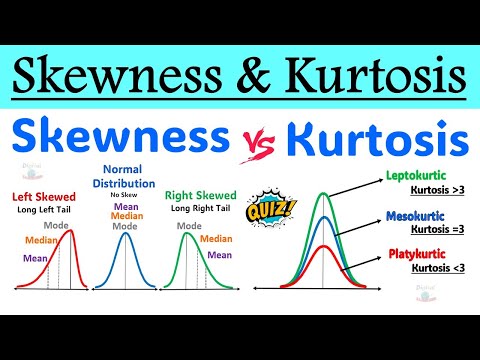
When we talk about kurtosis, we’re usually referring to a value that indicates how much data is spread out. A kurtosis value of **3** is often considered “normal.” You might hear this referred to as mesokurtic. So what does that mean for you? Well, it implies that the distribution has a shape similar to a normal distribution, which most people are familiar with.
Imagine you’re throwing darts at a board. If most darts land near the bullseye and only a few stray to the sides, you’re looking at a normal distribution—a kurtosis of 3! Essentially, when there’s too much data in the tails (higher than 3), we call it leptokurtic. Picture this like throwing darts and having many darts land nowhere near the board at all; they’re too spread out!
On the flip side, if your data has less in the tails (lower than 3), that’s called platykurtic. Think about throwing those darts and seeing mostly concentration around certain points rather than scattered widely. You get more clusters closer together on your board.
So why should you care about kurtosis? Well, knowing whether your data has normal characteristics can help with making predictions and understanding risks in different fields—like finance or healthcare! For instance:
- If you’re analyzing stock returns and find your kurtosis is way above 3, this suggests there’s potential for extreme outcomes.
- Conversely, if you’re dealing with test scores from students and find lower than 3, it may indicate most students performed similarly.
Just remember: kurtosis doesn’t tell you anything about whether values are high or low; it simply reveals how unpredictable outcomes might be based on their distribution. So next time someone mentions kurtosis—don’t shy away! It’s just another tool to help understand data better.
One more thing—the beauty of statistics is its ability to support real-life decisions or actions based on numbers we analyze! Like figuring out if your friend’s claims about their epic dart skills hold any weight by checking their score history… You follow me? The world of data analysis definitely helps unpack some surprising truths!
Understanding Standard Deviation: A Key Statistical Tool in Scientific Research
So, let’s get into this idea of standard deviation. You might have heard it tossed around in discussions about statistics or data analysis. It’s a pretty vital concept, especially in scientific research. So, what is it? Well, standard deviation is basically a measure of how spread out the numbers in a dataset are.
Imagine you’ve got a bunch of test scores from your class. If everyone scored pretty similarly—let’s say all between 70 and 90—your standard deviation would be low. But if the scores range from 40 to 100? That means there’s more diversity in the scores, so the standard deviation would be higher. Easy enough, right?
Now, why should you care about standard deviation? Here’s the thing: it helps scientists and researchers understand variability in their data. You see, when you collect data from experiments or surveys, not everything is going to be identical. Some measurements will be close to each other, while others might stray far away. Standard deviation helps put that into perspective.
But wait! There’s more to this than just numbers and averages! Enter kurtosis. This fancy word refers to how the tails of your data distribution behave compared to a normal distribution (like that classic bell curve). While standard deviation tells you about spread, kurtosis gives insight on whether your data has outliers or extreme values.
Here’s an easy way to think about it: if you picture two different sets of exam scores:
- In one set, most students scored around 75 with few scoring below 50 or above 95.
- In another set, most students still scored around 75 but had some really low scores—think a couple of students scoring below 30!
Both sets can have the same standard deviation but different kurtosis values because that second set has those extreme values dragging down its average.
You follow me? Basically, while standard deviation gives you a sense of normal spread in your data, kurtosis adds flavor by allowing you to understand how concentrated or dispersed those extremes actually are.
In scientific research, being aware of both these measures can change how results are interpreted. If you’re working with experimental data where precision matters—like when measuring drug efficacy or environmental impacts—knowing both your distribution’s spread (standard deviation) and its tail behavior (kurtosis) is key.
So next time you’re knee-deep in stats or poring over spreadsheets filled with numbers from your latest study, don’t overlook these tools! Embracing both standard deviation and kurtosis not only enhances your understanding but also sharpens your analysis skills tremendously!
And hey—even if numbers aren’t exactly your thing—it’s cool! Just remember that they help us make sense of our world and fuel discoveries that could really change lives.
So, you’ve probably heard about kurtosis before if you’ve ever dabbled in statistics or, like, just had a casual chat about data analysis at a party. It’s one of those terms that sounds all fancy, but it’s really just a way to describe the shape of a distribution.
Let me share a little story first. A while back, I was working on this project where we had to analyze test scores from a group of students. Some did really well, while others… well, let’s say they didn’t shine quite as bright. The distribution of scores was super lopsided, and figuring out how that spread actually looked was crucial for making sense of the data. That’s when kurtosis popped into my head.
Kurtosis tells us about the “tailedness” of our data distribution. If you think about it like this: normal distributions are kind of like gentle hills—nice and smooth. But when you have high kurtosis? That hill gets steeper and pointier at the top while also having fatter tails on either side. This means you’re likely to see more extreme values than you’d expect from a normal distribution.
But here’s the kicker: understanding kurtosis isn’t just geeky fun; it really impacts how we interpret our data. Imagine if your test scores had high kurtosis—maybe there are lots of students who barely scraped by and a few who absolutely aced it. This means your average score might look okay, but that doesn’t tell the whole story about who is really thriving or struggling.
On the flip side, low kurtosis means your data is more evenly spread out without those extreme values showing up as much. It’s less dramatic! And that could influence decisions in ways you’d never imagine at first glance.
When you’re analyzing data—like I was with those student scores—you want to get under the hood and see what’s really going on there. Is there something unusual happening? Are there patterns lurking in those tails that could mean something important? Like maybe some students need extra help while others might be bored because everything is too easy?
So yeah, as you dig deeper into your own datasets or whatever you’re working on, think about kurtosis—not just as some dry stat term but as a window into uncovering those hidden nuances in your analysis! It can totally reshape your understanding and help you make better decisions based on real insights instead of just numbers on a page.