You know that feeling when you have a jigsaw puzzle with a few missing pieces? It can drive you nuts! That’s kind of how researchers feel when they try to make sense of complex data without the right tools.
So, let’s talk about linear mixed models. Sounds fancy, right? Well, it’s not as intimidating as it seems! These bad boys can help fill in those gaps and give us clearer pictures in research.
Imagine you’re studying how plants grow in different conditions—like sunlight or soil type. With linear mixed models, you can account for all those little details that might throw other analyses off track.
Seriously, they’re like that smart friend who always knows just the right thing to say to untangle a confusing conversation. Stick around, and I’ll walk you through why these models matter and how they’re shaking things up in the research world!
Understanding Linear Mixed Models in Scientific Research: Applications and Benefits
Linear mixed models (LMMs) are like the superheroes of statistical analysis in scientific research. They help scientists dig deeper into their data, especially when dealing with complexities that simpler models just can’t handle. It’s pretty cool how they work, but let’s break it down.
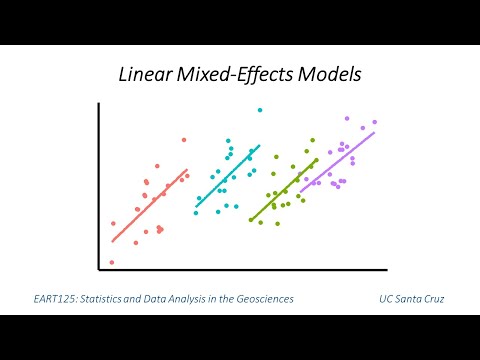
So, first things first: what’s a linear mixed model? Well, basically, it’s a statistical method used to analyze data that involve both fixed effects and random effects. Fixed effects are factors that you expect to have consistent impacts across all observations, while random effects account for variations that arise from different groups or subjects within the dataset. Think of it this way: if you’re studying plant growth across different cities, the city-specific conditions (like soil type) could be random effects, while the amount of sunlight would be a fixed effect.
What’s exciting about LMMs is their flexibility! Researchers can include multiple levels of variability in their data. For example:
- Longitudinal data: When measuring the same subjects multiple times, LMMs gracefully handle repeated measures without losing data integrity.
- Hierarchical structures: If your experiment has students nested within classrooms within schools, you can model this complexity without running into trouble.
- Unequal sample sizes: LMMs don’t bat an eye if your groups have different numbers of observations! That makes them super handy for real-world research.
Imagine you’re studying how diet affects weight loss over time with participants from several gyms. Some people might weigh in every week while others come every month; some gyms could have more members than others. A regular linear model would struggle here and might give misleading results. But with an LMM? No problem! You can keep all those valuable insights without throwing away any messy bits.
But hey—what are the benefits? Let’s look at a few:
- Increased power: By correctly modeling both fixed and random effects, you’re more likely to find significant relationships in your data.
- Better generalization: Since LMMs account for variability from different sources, your findings can apply more broadly to populations rather than just specific samples.
- Simplified interpretation: You can directly estimate the impacts of interest while controlling for random differences between subjects or clusters.
There’s something really satisfying about understanding how these models work—in a way, it feels like piecing together a puzzle where every piece has its own unique shape but fits perfectly in harmony. And here’s where that emotional bit comes in: I remember working on my first project involving LMMs and feeling overwhelmed by all the numbers and codes at first. But once everything started clicking into place? It was like fireworks going off in my brain! Suddenly I could see how much clearer my interpretations became.
So whether you’re diving into psychology studies or looking at agriculture practices across farms, LMMs offer powerful tools to unlock insights hidden in your data. Embracing them might just be one of the best decisions you make for your research journey!
Choosing Between LMM and ANOVA: Guidelines for Statistical Analysis in Scientific Research
When you’re in the world of scientific research, you often have to make choices about how to analyze your data. One big decision is whether to use a Linear Mixed Model (LMM) or ANOVA (Analysis of Variance). Both methods help you understand the relationships in your data, but they have different strengths and weaknesses. So let’s break this down.
Understanding ANOVA
ANOVA is like the classic tool in your statistical toolbox. It’s great for comparing means among groups. For example, if you’re studying how different fertilizers affect plant growth, ANOVA can tell you if one fertilizer produces significantly taller plants compared to others.
However, ANOVA has its limits. It assumes that all groups are independent and that you have equal variances across them. If you violate these assumptions—like if your data isn’t normally distributed or if there’s some correlation among observations—you could end up with misleading results.
When to Use LMM
Now, Linear Mixed Models are a bit more flexible than ANOVA. They allow for both fixed effects (like specific treatments) and random effects (like individual differences among subjects). Imagine you’re conducting an experiment on students from multiple schools and want to account for variations between schools as well as individual performance—LMM is perfect for this!
With LMMs, you can analyze data that are structured hierarchically or where observations are not independent. They’re super useful when you have repeated measures or clustered data.
Key Considerations
Here are some things to think about when choosing between these two methods:
- Data Structure: If your data is nested or has multiple levels (like students within classes), go for LMM.
- Assumptions: If normality and equal variances are questionable, LMM might be better suited.
- Sample Size: In smaller samples, ANOVA might struggle; LMM can handle it better.
- Simplicity versus Complexity: If you just want a simple mean comparison with no complications—ANOVA works fine.
So really, your choice depends on the specifics of what you’re working with.
A Practical Example
Let’s say we’re looking at the effect of diet on weight loss with subjects from various backgrounds who may also have different starting weights—just using ANOVA could muddle things up because it doesn’t consider those differences effectively. Instead, with LMM, we can include both diet as a fixed effect and variations based on background as random effects.
Think of it this way: if you’ve ever played basketball on a court where everyone shoots from different distances because of their height or skill levels—it’d be unfair to judge everyone by simply looking at averages without considering where they shoot from!
In summary, the choice between LMM and ANOVA really hinges on what kind of data you’ve got and what questions you’re trying to answer. Keep those points in mind while making your decision—you’ll get more meaningful results!
Enhancing Learning and Memory Insights: The Role of Mixed Effects Modeling in Clinical and Educational Practices
When we talk about learning and memory, it’s like opening a door to our brains and seeing how everything works together. You know, there’s this cool tool researchers use called mixed effects modeling. It helps them understand how different factors—like teaching methods or individual differences—affect learning outcomes. But honestly, what does that even mean? Let’s break it down.
First off, mixed effects modeling is a statistical approach. Imagine trying to predict your favorite ice cream flavor based on the weather and the day of the week. Some people love chocolate when it’s sunny, while others might prefer vanilla on a rainy day. This model takes into account both fixed effects (like weather type) that apply to everyone and random effects (like personal taste) that vary from person to person.
In educational settings, mixed effects modeling can analyze data from diverse groups of students under varying conditions. Well, think about a classroom where some kids learn better with visuals while others do well with lectures. By using this model, researchers can pinpoint which teaching strategies work best for specific groups of students.
Now, let’s consider practical applications in clinical practices. Suppose we want to study memory recall after different types of cognitive therapy for dementia patients. Mixed effects models can help unravel the complex interplay between therapy types and individual patient responses. It helps identify patterns that might otherwise get lost in traditional analyses.
For example, researchers may find that some therapies significantly improve recall in older adults but have less effect on younger patients with similar symptoms. This is crucial because it guides practitioners towards more personalized treatment plans instead of a one-size-fits-all approach.
So, here are some key points about why mixed effects modeling matters:
- Individual Differences: It accounts for how different people respond differently to various interventions.
- Improved Predictions: By incorporating multiple factors, predictions about learning outcomes become more accurate.
- Better Resource Allocation: Schools and clinics can focus their resources on strategies proven effective for specific groups.
The best part? This method isn’t just limited to academics or clinical settings; it can be applied anywhere there’s variability in responses—sports training programs or workplace training initiatives could also benefit from these insights.
I once read about a teacher who used mixed effects models to enhance her lesson plans. She found out that her students performed better after she adjusted her methods based on their feedback and learning styles. Honestly, it was like unlocking a secret level in education!
In summary, mixed effects modeling offers valuable insights into enhancing learning and memory by recognizing individual differences and improving educational practices effectively. Researchers will keep fine-tuning this model as they explore new frontiers in both clinical and educational realms. And you can bet the knowledge gained will continue shaping how we teach and learn!
So, linear mixed models, huh? These might sound like a mouthful, but they’re really just a fancy way of dealing with complex data in research. You know how sometimes you’re looking at something and it’s not just one thing affecting the outcome? Like, if you’re studying how students perform in school, there are tons of factors—maybe their home environment, teachers’ styles, or even their previous experiences. Linear mixed models help you untangle that web.
I remember back in college when I worked on a project analyzing test scores. I was so stressed trying to figure out what affected the scores the most, and my professor suggested we use mixed models. At first, it felt overwhelming with all those mathy details. But once I got into it, it was like discovering a secret toolbox—suddenly all these variables made sense together instead of being so isolated.
Basically, linear mixed models allow researchers to account for both fixed effects (like teaching methods) and random effects (like differences between individual students). This means you can get really nuanced results that reflect reality a bit better than traditional methods. It makes your findings more robust because you’re acknowledging that life isn’t just black and white; it’s full of shades of gray.
And honestly? That’s what science is all about—understanding complexity and making sense of it for everyone else. When you hear about findings from studies using these models, they often give us deeper insights into human behavior or ecological changes or whatever the topic may be. It’s powerful because it reflects our messy reality.
So yeah, while linear mixed models might sound intimidating at first glance, they actually embody this amazing flexibility and depth that helps research evolve. And as we dive deeper into this data-driven age we live in? Well, having tools like this will help researchers tell richer stories about what’s really going on in our world!