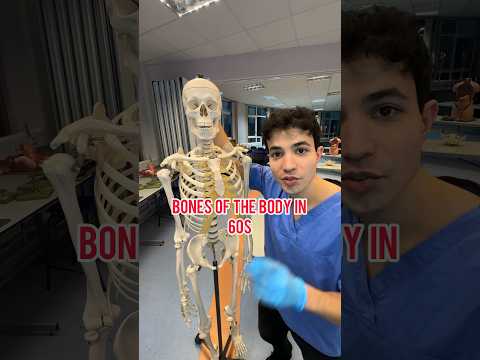
You know that moment when you walk into a classroom or a lab and there it is—the skeleton model staring at you? It’s like a spooky friend who never leaves. You can’t help but chuckle, thinking, “Okay, Mr. Bones, what do ya got for me today?”
But seriously, skeleton models are way more than just creepy decorations. They’re like the cool nerds of the science world! These handy tools help us unravel the mysteries of human anatomy and show how our bodies work.
Think about it: When did you last look at your own bones? Probably never! But with a model, you can actually see every little detail. From the tiniest phalanges to that big ol’ femur—it’s all there! It’s pretty wild how something that looks so simple is packed with information.
In this chat about skeleton models, we’ll dig into their importance in both education and research. So grab your favorite snack because we’re about to get our hands (figuratively) into some bones!
Exploring the Use of Real Skeletons in Medical School Education: A Scientific Perspective
So, let’s talk about real skeletons in medical school education. Sounds a bit creepy, right? But hang on! There’s a lot more to it than just the initial “yikes” factor. Using real human bones is actually a pretty fascinating part of teaching medicine.
First off, real skeletons offer an unmatched level of detail. This is super important for medical students who need to learn about human anatomy in all its complexity. Yeah, models can be helpful, but they can’t quite capture the nuances like actual bones do. You follow me?
Now, here are some perks of using those real skeletons in the classroom:
- Realism: Students get to see and handle something that’s more authentic than plastic or rubber models.
- Contextual learning: Observing different variations among real skeletons teaches students about human diversity—because not everyone has the same bone structure.
- Tactile experience: Feeling how fragile some bones are compared to others helps reinforce what they learn in lectures.
I remember this one time a friend of mine was studying for her anatomy exam. She had this old textbook and a fancy synthetic skeleton model at home but still struggled with understanding certain structures. When she finally got to work with real bones during lab sessions, it was like everything clicked! The way she described it was magical—the textures, the shapes, and how everything fit together just made sense.
But let’s not forget about ethics here. Using real remains raises questions about consent and respect for those who donated their bodies to science. Many institutions follow strict ethical guidelines—those bones often come from people who wanted to help future doctors learn. So it’s important the students understand this background as part of their education.
Another interesting angle is how these actual skeletons play into advanced research too. They’re not just sitting around for show; researchers use them to study things like bone diseases or develop better surgical techniques.
Many schools combine both methods—using models along with real specimens since each has its own strengths and weaknesses. This blended approach gives students a well-rounded view and prepares them better for their future careers.
In essence, exploring what it’s like to learn with real skeletons brings anatomy textbooks to life (well, kind of) and adds depth that might go missing otherwise! The connection between theory and practice becomes more tangible which is awesome when you’re on your way to becoming a healthcare professional.
So yeah, while it might seem strange at first glance, using real skeletons in medical education definitely makes sense in many ways—it’s educationally rich and ethically sound when done right!
The Importance of Using Models in Science Education: Enhancing Understanding and Engagement
You know, using models in science education is like having a secret weapon. They make complex stuff easier to grasp and way more fun to learn about. Let’s take skeleton models, for instance—those creepy but cool representations of human bones we see in classrooms. They play a huge role in teaching anatomy and biology.
First off, models help with visualization. Imagine trying to understand the human skeletal system just by reading a textbook. It can get pretty dry and confusing, right? But when you see a skeleton model, everything starts to click! You can point out the femur, ribs, and even the skull without getting lost in all the medical jargon.
Also, they provide a hands-on learning experience. When students get to touch and move parts of a skeleton model, it makes the learning process so much more engaging. Like one time in my biology class, we built our own mini-skeletons out of arts and crafts materials. Everyone got super into it! You could see them actually bonding over who could make the best ribcage.
- Models support different learning styles. Not everyone learns the same way; some are visual learners while others prefer kinesthetic or auditory methods. Skeleton models cater to various styles by allowing students to see, touch, and even hear (if they use accompanying software) anatomical structures.
- They simplify complex ideas. For example, instead of memorizing each bone’s name or function in isolation, students can learn them in context. With a skeleton model laid out before you, it’s easier to understand how bones work together as part of systems like movement or protection.
- Models encourage curiosity and questions. Students who might not speak up when just looking at diagrams may find themselves asking tons of questions when interacting with real-life models. This interaction sparks discussions that deepen understanding.
Now let’s think about research for a sec. Skeleton models are not just for classrooms; they’re also used in serious scientific studies. Researchers often use them to simulate different conditions or injuries before testing on cadavers or live subjects. It’s kind of like practicing before going on stage; you want things to be smooth!
The importance here is undeniable: from making abstract concepts tangible to sparking interest and collaboration among students—models are a game changer. Honestly? Without these tools, science would feel even more distant than it already does for many people.
You follow me? Models transform education into something interactive rather than passive learning. They bring science alive! And that’s what we need more of—to inspire future generations of scientists who can’t wait to dive into the wonders of biology… or any field they fancy!
Understanding the Skeletal System: Its Role in Physical Education and Science
The skeletal system is like the framework of your body, you know? Imagine a house without walls or a roof; it wouldn’t stand very long. The skeleton gives our bodies shape, supports our muscles, and protects vital organs.
First off, the skeletal system is made up of bones, cartilage, and ligaments. There are about 206 bones in an adult human body! And these bones are super important for several reasons:
- Structure and Shape: Bones give your body its shape. Without them, we’d be a puddle of muscle and skin—pretty weird to think about!
- Protection: Bones protect crucial parts of your body like your brain (thanks to the skull) and your heart (all snug in the rib cage).
- Movement: Muscles are attached to bones. When they contract, they pull on the skeleton to help us move around like dancing or running.
- Blood Cell Production: Inside some bones is bone marrow, which produces red blood cells that carry oxygen through your bloodstream.
Now let’s talk about how this relates to physical education and science. In schools, kids learn a lot about their bodies through physical education classes. Here’s where understanding the skeleton becomes super important.
For instance, when you learn about proper form during exercise, you’re actually learning how to protect your joints and prevent injuries by maintaining healthy bone structure. Plus, you get to see how different exercises target different muscle groups that are linked directly to our bones.
But wait! This isn’t just relevant for gym class or sports practices; science classes have their own way of showcasing our awesome skeletal system too! Enter the skeleton models. These models are like 3D maps of our anatomy. They help students visualize how all that stuff works together—bones connect with joints, muscles wrap around all that goodness.
Using these models makes it easier to grasp complex ideas like how **fractures** heal or why it’s crucial to maintain strong bones as we age. I remember once in high school during biology class when we worked with a model—it felt so cool seeing exactly where muscles connected on the skeleton! It made those concepts way less abstract.
In research settings too, having accurate both functional and structural models helps scientists study diseases related to bones such as osteoporosis or arthritis. By understanding changes in bone density or structure over time through various experiments or observations using these models we gain insight into improving health.
So yeah! Understanding the skeletal system isn’t just some random fact; it’s fundamental for both exercising properly and learning science effectively and creatively. Whether it’s jamming out at PE class or hitting the books in science lab—our skeleton plays a starring role in keeping everything on track!
Alright, so let’s talk about skeleton models. You know, those detailed plastic or even life-sized structures that look like they just strolled out of a horror movie? They might seem a bit creepy at first glance, but they’re actually super important in education and research. Seriously!
When I was in school, my science teacher wheeled out this giant skeleton named “Mr. Bones” for our biology class. He was the best! We got to see how muscles connected to bones, where the organs went, and like how everything fit together in this amazing puzzle called the human body. I remember being totally mesmerized when we took off his skull to look at the brain. It’s wild to think about how you can learn so much just by looking at a bunch of plastic pieces.
Skeleton models are way more than just props though. In education, they make complex concepts a bit easier to grasp. Like, instead of reading about bones and joints in textbooks—which can be kinda dry—you get to interact with something tangible. You can touch it, move it around, visualize how things work together in three dimensions. It makes learning feel more real and engaging.
And for researchers? Well, these models are vital too! They help scientists study anatomy without needing a living subject all the time (which is a big deal ethically!). For instance, if researchers are working on new surgical techniques or trying to understand certain diseases, having an accurate skeleton model allows them to practice or visualize their work without the risks involved with real people.
The detail on these models is pretty impressive as well. Some even show muscles and tendons! It’s like having your very own anatomy book come to life right in front of you. When you realize there’s so much precision involved—like reproducing every little curve of a bone—it somehow deepens your appreciation for how our bodies are constructed.
But hey, don’t underestimate the fun aspect either! I mean who hasn’t had a laugh trying to figure out which bone makes your elbow bend or pretending that Mr. Bones is dancing? That light-hearted interaction makes science more approachable and less intimidating for everyone involved.
So yeah, skeleton models are more than just an educational tool; they’re like gateways into understanding ourselves better—at once fascinating and practical! Makes you see science in everyday life with fresh eyes, right?