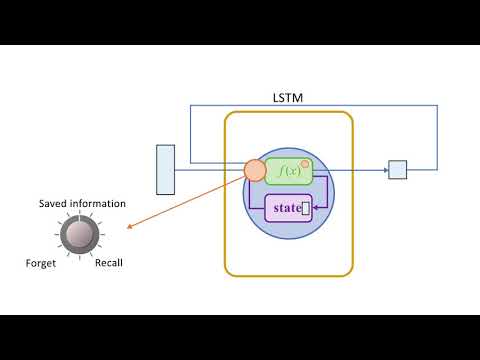
Okay, so imagine this: You’re trying to remember where you left your keys. They’re always disappearing, right? It’s like they have a secret hideout! But what if computers could remember stuff like us?
That’s where Long Short Term Memory Networks come in. Sounds fancy, I know! But don’t sweat it. It’s just a way for AI to remember things over time—kind of like how we do when we try to find our keys… or forget that one friend’s birthday.
In the world of artificial intelligence, these networks are making waves. They’re helping machines learn from past experiences way better than before. Seriously, it’s like upgrading from a flip phone to the latest smartphone!
So let’s unpack this cool tech together, and see how it’s changing the game in AI!
Exploring Long-Term Memory in AI: Implications for Scientific Advancement
So, let’s talk about long-term memory in AI. It’s a super interesting topic that’s picking up steam lately, especially with advancements in something called Long Short-Term Memory (LSTM) networks. These are basically a type of neural network designed to remember information over long periods. You follow me?
Imagine your brain trying to remember your best friend’s birthday, but you also need to keep track of how to ride a bike. Your brain is juggling both tasks. LSTM networks do something similar! They help AI systems keep relevant information while also dealing with new data.
What are LSTMs? Well, they’re special types of recurrent neural networks (RNNs). RNNs have this knack for processing sequences of data—like sentences or time-series data. But regular RNNs often forget things easily, kind of like how you might forget where you left your keys when distracted.
LSTMs address this by using a system of gates. Think about it like having a bouncer at a club! The bouncer decides what info gets in and what stays out. This helps the AI maintain relevant memories while discarding irrelevant ones.
Why is this important for scientific advancement? Imagine scientists needing AI to sift through tons of research papers quickly while remembering crucial details from earlier studies. With improved long-term memory, AIs can connect the dots more effectively.
Here are some cool implications:
- Data Analysis: AIs could make better predictions and find trends over time by recalling previous patterns.
- Cure for Diseases: In healthcare, remembering patient histories or studies could speed up discovering treatments.
- Personalized Learning: For education tech, tailored lessons would be possible as the AI remembers each student’s unique journey.
But there are challenges too! For one, AIs need lots and lots of data to really learn effectively—seriously, it can be massive amounts! Plus, there’s always the question about biases creeping in if the data isn’t well-rounded.
The thing is, as we continue digging deeper into LSTM advancements and their applications, we might find ourselves unlocking new pathways in science that we never thought possible before. It’s like peeling back layers of an onion—you never really know what you’ll discover next!
In short? Long-term memory in AI holds great potential for pushing boundaries across various fields—be it medicine, education or even environmental science. It opens doors we didn’t know existed!
Exploring Recent Advancements in Neural Networks: Transformations in Scientific Research and Applications
Neural networks, especially Long Short Term Memory (LSTM) networks, have been making waves lately in the AI scene. They’re like the cool kids in the class who just keep getting better and better. So, what’s the fuss all about? Let me break it down for you.
First off, LSTMs are a type of recurrent neural network (RNN). They’re designed to handle sequences of data—like sentences or time series. Imagine trying to predict the next word in your favorite song lyrics or forecasting the weather based on previous data. That’s basically what LSTMs excel at.
Now, what’s changed recently? Well, advancements in LSTMs have made them even more powerful. Researchers have been playing around with tweaks that allow these networks to learn longer sequences without forgetting earlier information. You know how sometimes you can barely remember what you just read a few sentences ago? LSTMs are engineered to avoid that problem!
Here are some cool benefits of these advancements:
One interesting application of enhanced LSTMs is in natural language processing (NLP). Chatbots and virtual assistants use them for understanding context and generating more coherent responses. You know those times when you ask a bot a question and it actually gives you a sensible answer? That’s thanks to the magic of LSTMs.
Also, they’ve been making strides in medical research! Imagine using LSTMs to analyze patient data over time to predict health outcomes. Just think about how lives could be saved with early interventions based on accurate predictions.
But it doesn’t stop there! In finance, LSTMs help analyze trends and forecast stock prices by looking at historical data patterns. If you’ve heard stories about algorithms predicting market shifts—yup, they often rely on these advanced neural networks.
In short, advancements in LSTM networks are reshaping multiple fields by boosting performance and opening new avenues for research. The transformations we’re seeing now could lead us into a future where AI understands us even better—and maybe even predicts our needs before we do!
So next time someone brings up AI innovations, you can casually throw in your knowledge about LSTM networks and impress them! Isn’t it cool how science keeps evolving?
Unlocking Insights: The Advantages of Long-Short-Term Memory Networks in Scientific Research
Long-Short Term Memory (LSTM) networks are like the cool kids on the AI block. They’re especially good at handling data that changes over time, like videos or speech. So what’s the big deal? Well, these networks can remember information for a long time while also keeping track of new stuff. That’s a game changer when it comes to scientific research.
First off, let’s break down what LSTMs do. Traditional neural networks often struggle with sequences of data because they can’t keep context from earlier inputs. Imagine trying to understand a story but not remembering anything that happened in the first part. Ugh, right? LSTMs have this nifty structure that helps them remember previous inputs over long sequences, making them super effective for tasks where context is key.
So, you might ask, why does that matter in research? Here are a few advantages:
- Handling Time-Series Data: In fields like climate science or finance, data is collected over time. LSTMs can track trends and patterns across these long stretches.
- Natural Language Processing: Think of chatbots or translation services. LSTMs help understand sentences by remembering what was said before—kind of like how you answer a friend based on previous parts of your conversation.
- Anomaly Detection: When monitoring systems for unusual behavior—like spotting fraud in banking—LSTMs can be trained to recognize normal patterns and flag anything weird.
A while ago, I read about an experiment using LSTM networks to predict protein folding. This is crucial in biology because how proteins fold determines their function in living organisms. The researchers found that LSTMs could learn not just from immediate interactions but also from previous structures—and that led to more accurate predictions! Pretty cool stuff.
Now, one might think that with great power comes great complexity—but here’s where it gets interesting. While LSTMs are intricate under the hood, their application can sometimes be surprisingly straightforward. Researchers don’t always need to tinker with every single parameter; they can often build on existing models and get results quickly.
However, it’s not all roses and rainbows; there are challenges too. Training LSTMs can take some time and require lots of data—sometimes real-world constraints make this tricky. Plus, interpreting their outcomes isn’t always easy since they operate almost like a black box.
But despite these challenges, the potential impact of using Long-Short Term Memory networks in scientific research is significant. By allowing machines to better understand complex sequences over time, we open up new avenues for insight across multiple disciplines—from analyzing genetic data to enhancing predictive modeling in various fields.
In short, if you’re interested in where AI meets science head-on, keep an eye on LSTM networks! They’re shaping how we analyze information and make decisions based not just on immediate input but also on the rich tapestry of context behind it all—just like you would when chatting with your best buddy about life’s ups and downs!
Alright, so let’s chat about Long Short Term Memory Networks, or LSTMs. You might’ve heard the buzz about them in AI circles. It’s one of those cool technologies that feels like it’s straight out of a sci-fi movie, you know?
The thing is, LSTMs are a type of neural network architecture designed to better capture patterns in sequences over time. This is super handy for tasks like speech recognition, language modeling, and even predicting stock prices. Yeah, it’s not just about robots or something—real-world applications are everywhere.
I remember reading a story about a team of researchers who trained an LSTM model to predict the next word in sentences. They fed it thousands of books and articles, and the model started mimicking human-like writing styles! Crazy stuff! Imagine if you could ask your phone to write poetry or brainstorm ideas for your next project. And that’s just one way these networks are being used.
But here’s the kicker: traditional neural networks often struggle with long-term dependencies—they forget important info as they go along. That’s where LSTMs shine because they have this unique memory cell structure that helps them remember old information while still learning new things. You can picture it as if they keep a mental note while juggling new tasks—pretty incredible!
And it’s not all perfect; there are challenges too. For instance, training these models can be time-consuming and sometimes tricky to optimize. Not every company or research group has the resources for it. But advancements in this field mean we’re getting better at tackling those issues.
In summary, what stands out to me is how LSTMs symbolize progress in AI—it’s like we’re unraveling the secrets of human cognition piece by piece! It makes me hopeful for what’s next because if we can teach machines to remember and learn like us, who knows what kind of breakthroughs lie ahead? Pretty mind-blowing stuff!