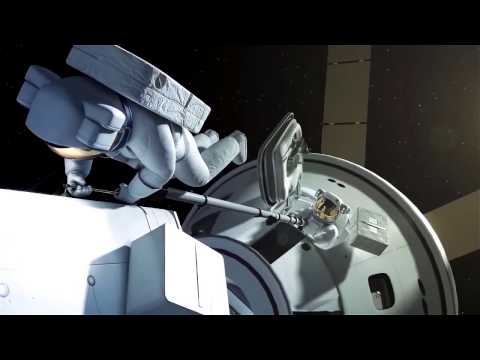
So, the other day, I was watching this old movie where a bunch of astronauts tried to get back from space with a faulty spaceship. Total chaos, right? Well, it got me thinking about how wild and tricky manned space travel really is.
Imagine zooming through the universe, floating in zero gravity. Sounds epic! But behind all that sci-fi glamor lies some serious science and ingenuity. We’ve come a long way since those early days when folks were basically strapping themselves onto rockets like they were going for a joyride down the street.
Okay, so maybe it wasn’t quite that casual, but you get my drift. Manned space travel is a mix of adventure and brain power. It’s not just about blasting off; it’s about human grit and figuring stuff out as we go along.
Stick around as we take a peek into those brave pioneers who dared to reach for the stars—and the amazing science that made it happen!
Unveiling the Pioneer of Space Travel: A Historical Perspective on the Scientific Revolution in Aerospace Exploration
Unveiling the Pioneer of Space Travel
Space travel is one of those things that catches your imagination, right? Just think about it: the first humans who set foot on the moon. But before we dive into that, let’s take a step back and look at how we actually got here.
In the early 20th century, the idea of going to space was mostly stuck in sci-fi novels or daydreams. But a few brilliant minds were out there thinking seriously about it. One such pioneer was Konstantin Tsiolkovsky, a Russian scientist who’s often called the father of astronautics. Way back in 1903, he proposed using rockets to explore space and even calculated how much fuel would be needed to reach outer space! Can you imagine? This was decades before anyone had even launched anything beyond Earth’s atmosphere.
Then there was Robert Goddard, an American inventor who built and launched the world’s first liquid-fueled rocket in 1926. That moment must have been electric! He faced tons of skepticism from people who thought he was just chasing pipe dreams. But Goddard kept going, paving the way for future rocket technology with his experiments and discoveries.
Fast forward a couple of decades, and World War II sparked another wave of innovation with jet propulsion technology. It’s wild how conflict can sometimes accelerate progress in science, isn’t it? The V-2 rocket developed by German engineers like Wernher von Braun played a crucial role during this time; it would later lead to advances that made space travel possible.
Once WWII ended, those same engineers—including von Braun—were brought to America through Operation Paperclip. They helped kickstart NASA’s projects in the years following its establishment in 1958.
And here’s where things get super exciting! In 1961, Yuri Gagarin became the first human to orbit Earth aboard Vostok 1. The world watched as he circled our planet for an hour, sending waves of excitement through folks everywhere! This event wasn’t just historic; it symbolized a new era in human exploration.
Let’s take a look at some key events:
- 1961: Yuri Gagarin orbits Earth.
- 1969: Neil Armstrong takes “one small step” on the moon.
- 1981: The launch of Space Shuttle Columbia begins regular manned missions.
- 2000: The International Space Station becomes inhabited by humans.
With each achievement came new dreams—like colonizing Mars or mining asteroids! Every new mission inspired next generations to think beyond what’s currently possible.
There are so many stories tucked away into each chapter of aerospace history; some full of triumph, others filled with challenges and setbacks that almost made us give up hope. Yet scientists kept pushing boundaries because they believed humanity could reach for the stars—or at least try!
If you ask me, these pioneers show us something important: curiosity can lead us anywhere if we’re willing to chase our dreams bravely. So next time you look up at the night sky, remember all those trailblazers—and maybe consider what paths you still want to explore yourself.
Exploring the Legacy of Space Pioneers: Trailblazers in Science and Exploration
Space travel, wow! It’s a big deal, right? Think about the people who looked up at the stars and said, “Let’s go there!” These are the pioneers of space exploration. Let’s have a chat about their amazing journeys and how they’ve shaped science and exploration.
The First Steps into Space
In 1961, Yuri Gagarin became the first human to orbit Earth. Just imagine that feeling! He was like, up there in a tiny capsule, looking down at our planet for the very first time. This wasn’t just a personal victory; it was a giant leap for humanity. His flight opened doors for others to follow.
The Pioneers of NASA
Then there’s NASA, which kicked off its own adventures with the Mercury and Gemini programs. These missions weren’t just about flying around; they were testing what it meant to live and work in space. Like when John Glenn, after his historic flight, came back years later to become the oldest person in space at age 77. It shows how exploration doesn’t have an age limit!
- Moon Landing: We can’t forget Apollo 11. Neil Armstrong and Buzz Aldrin took those epic steps on the Moon in 1969. It was like something out of a sci-fi movie!
- The Space Shuttle Era: The Space Shuttle program started in 1981 and lasted until 2011. It allowed astronauts to build and maintain the International Space Station (ISS). That place is like a science lab floating above us!
- The International Collaboration: Speaking of cooperation, countries came together for projects like the ISS. It’s pretty cool seeing nations work side by side for science.
The New Wave of Explorers
Lately, we’ve had new players entering this cosmic game! You’ve got companies like SpaceX pushing boundaries again with reusable rockets—imagine how that changes everything! And let’s not forget women who break barriers too; Sally Ride, the first American woman in space, inspired many to chase their dreams.
You see, each pioneer added their piece to this incredible puzzle called space exploration. They faced fears, challenges, and even failures but kept going no matter what. Their legacies aren’t just stories from history books; they inspire kids—and adults—to look up at night sky with wonder.
This whole journey tells us something important: exploring isn’t just about reaching new places; it’s about pushing ourselves to understand more about our world—and beyond! So next time you gaze at those twinkling stars, remember all those brave souls who made it possible for us to dream big!
The Purpose of Manned Space Exploration: Advancing Scientific Knowledge and Human Potential
Space, huh? It’s this enormous, mysterious place that we humans have been pretty curious about for ages. Manned space exploration, in particular, is like sending an invitation to the universe and saying, “Hey, we’re here! What can you tell us?” But why bother with all that? Let’s break it down.
Advancing Scientific Knowledge
First off, there’s a ton of science to gain from manned missions. When astronauts go to space, they conduct experiments that are impossible on Earth. Ever heard of microgravity? It messes with how we understand things like fluid dynamics and combustion. For instance, researchers found out that flames burn differently in space! Just picture it: the flames are spherical rather than flickering like they do down here. That’s some wild stuff.
And you know how we often complain about conditions on Earth? Well, studying other planets can give us clues about our own climate and geology. Take Mars, for example. By investigating the Martian soil or atmosphere, scientists can learn about past water activity and whether life ever existed there. It’s like piecing together a cosmic puzzle.
Testing Human Limits
Then there’s the whole testing human limits thing. Being in space isn’t just a walk in the park. Astronauts face all sorts of challenges—radiation exposure, isolation, and even muscle atrophy due to lack of gravity. This helps scientists figure out how our bodies react under extreme conditions and could lead to improvements in health care for people on Earth too! For instance, understanding muscle loss in space might help treat patients who are bedridden or elderly.
Inspiring Future Generations
Let’s not forget inspiration! Watching humans launch into space is downright thrilling. Remember those moments when you were a kid dreaming about becoming an astronaut? Manned missions spark curiosity and ambition among young people everywhere; they inspire future scientists and engineers to shoot for the stars—literally!
There’s something magical about seeing astronauts work together in orbit or take steps on alien worlds; it shows what humanity can achieve when we come together for exploration.
Potential for Colonization
And hey, speaking of magical places… imagine one day living on another planet! While this might sound like something out of a sci-fi movie, establishing a human presence beyond Earth could actually be possible if we keep pushing boundaries with manned exploration. Colonizing another planet would provide insights into sustainability—how do we grow food or recycle resources far from home?
This kind of planning also sparks conversations around ethics and what it means to explore responsibly without harming potential ecosystems elsewhere.
Cultural Impact
Finally, manned space exploration brings us together as a species… well sort of! Countries collaborate on projects like the International Space Station (ISS), where astronauts from various nations work hand-in-hand up there in orbit—a glimpse into what unity could look like down here on Earth too!
You see how essential manned exploration is? From scientific breakthroughs to inspiring future generations—it all connects beautifully back to our quest for knowledge as humans. Keep looking up!
You know, when I think about human space travel, I can’t help but get a little misty-eyed. Just imagine the first astronauts gazing down at Earth from the vastness of space. It’s a moment that’s both thrilling and a bit surreal, like something out of a science fiction movie but oh-so-real.
So, it all started back in the 1960s with some seriously bold moves. The Cold War was heating up, and everyone was racing to see who could conquer space first. Can you picture it? People glued to their TVs, hearts racing as rockets blasted off into the unknown. Yuri Gagarin became the first human in space in 1961, which is just mind-blowing! He orbited Earth for 108 minutes—like going on a quick trip around your neighborhood but way cooler.
Then there was Apollo 11 in ’69. Neil Armstrong taking that giant leap for mankind—who doesn’t get goosebumps thinking about it? It wasn’t just about planting a flag; it was about proving that humanity could reach beyond our blue planet. It felt like we were touching something sacred and ancient out there.
What amazes me is how far we’ve come since then. Remember when we thought Mars was just this rust-colored rock? Now, we’re sending rovers to roam around its surface looking for signs of life! It’s like we’re playing cosmic detectives, piecing together clues from millions of miles away.
But here’s where my heart gets all fuzzy again—it’s not just about scientific progress or technological feats. Those missions help us dream bigger and push our limits as humans. Every launch reminds us of our curiosity and courage—the very essence of what makes us human, you know?
And while challenges still loom overhead (hello, cosmic radiation), the spirit of exploration continues to burn bright. We’ve got private companies now jumping into the fray too! It’s kind of exciting to think that one day we might have regular trips to space or even colonize other planets! Imagine living on Mars—how surreal would that be?
So yeah, when I reflect on manned space travel science, it feels less like cold hard facts and more like a shared dream we’re all a part of. And who knows what lies ahead? With each endeavor into the cosmos, we’re etching stories into the fabric of time—stories full of hope, ambition, and unbounded exploration.