So, picture this: you’re at a party, and there’s that one weirdly clingy friend who can’t let go of your arm. At first, it’s cute, but soon you’re wondering if you need to call for backup! You might laugh at this situation, but it actually relates to some serious stuff in psychology.
Ever heard of attachment theory? It’s like the secret sauce behind why some folks are super independent while others just can’t handle being alone. Enter Mary Ainsworth—she’s the rock star who dug deep into this whole idea of how we connect with each other right from when we’re babies.
Her research shows that those early bonds shape our relationships later on. Seriously! It’s like laying down the groundwork for how you’ll do love and friendship as an adult. So, let’s chat about how Mary made waves in understanding our emotional connections.
Exploring Ainsworth’s Contributions to Scientific Literature: Key Insights and Findings
Mary Ainsworth was a big deal in psychology, especially when it comes to understanding how we attach to one another. You know, those early relationships we have with our caregivers? They can shape the way we interact with others throughout our lives. Ainsworth’s work really shed some light on this.
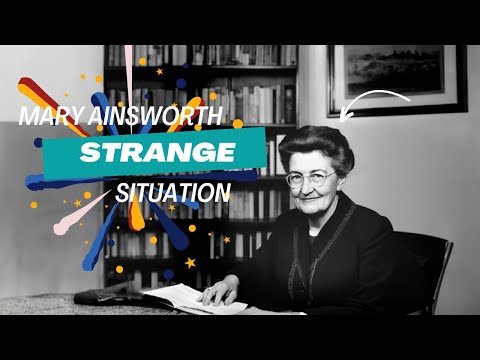
She expanded on John Bowlby’s theories about attachment, diving deeper into how different patterns of attachment could affect emotional and social development. Basically, Ainsworth created something known as the “Strange Situation,” which is like a little experiment to observe how babies react when they’re separated from and then reunited with their primary caregiver.
The Strange Situation is super interesting. It involves a series of episodes where a baby is placed in a room with their caregiver and then left alone briefly while a stranger enters. How the baby reacts during these moments tells researchers a lot about their attachment style.
Here are some key insights from Ainsworth’s findings:
- Secure Attachment: Babies who felt safe and secure showed distress when their caregiver left but were easily comforted upon return. This indicates that they trust their caregiver to be there for them.
- Insecure-Avoidant Attachment: These babies didn’t seem to care much when their caregiver left or returned. It suggests they learned not to rely on others since their needs weren’t consistently met.
- Insecure-Resistant Attachment: This style was characterized by clinginess. Babies showed intense distress when separated but had mixed reactions upon reunification, indicating anxiety about whether their needs would be met.
Ainsworth’s research laid the groundwork for understanding how attachment styles can affect adult relationships too! If you think back on your own life or maybe someone close to you, you might see behaviors that mirror those early experiences.
For example, if someone had a secure attachment with their parents, they’re likely able to form healthy relationships in adulthood—like being trusting and open. In contrast, those who experienced insecure attachments might struggle with trust or intimacy later on.
What’s cool is that her work has influenced so many areas beyond psychology—like education, social work, and even parenting strategies. It’s like her findings opened the door for people to better understand not just themselves but also their kids.
So yeah, Mary Ainsworth wasn’t just doing research for fun; she helped shape our understanding of human connections! It reminds us how powerful early relationships can be—not just for kids but for everyone throughout life.
Exploring Ainsworth’s Method: Insights into Attachment Theory in Developmental Psychology
Alright, so let’s talk about Ainsworth’s Method, which is super interesting when diving into attachment theory. Mary Ainsworth was a developmental psychologist who really shook things up in the 1970s. She built on John Bowlby’s earlier work about how kids form bonds with their caregivers. Basically, she created a way to see how these bonds work in real life.
Her famous experiment is called the Strange Situation Procedure. You might think it sounds odd, but it’s pretty clever! Basically, it involves observing how a child reacts when faced with separations and reunions with their caregiver. Yeah, it sounds simple, but the insights you get are like mind-blowing!
The procedure has several key phases:
- The child and caregiver enter a room together.
- A stranger comes in and interacts with the child.
- The caregiver leaves the room.
- The caregiver returns and comforts the child.
This setup allows researchers to see how secure or insecure a child’s attachment is. There are three main attachment styles Ainsworth identified:
- Secure Attachment: These kids feel safe when their caregiver is around. They might cry when they leave but are happy when they return! It’s like they know their caregiver will be there for them.
- Avoidant Attachment: These kiddos tend to avoid contact with their caregiver after separation. They might seem indifferent or even ignore them. It suggests they weren’t always comforted by their caregivers when they needed it.
- Anxious-Ambivalent Attachment: Here we have kids who get super upset when separated but aren’t easily comforted upon reunion. It’s like they’re unsure if their needs will be met, which can be really stressful for them.
This method and what Ainsworth discovered are huge for understanding how early relationships shape our emotional worlds later on! I remember reading about this stuff back in college; was so thrilling to me! Just imagine seeing a little kid navigating all this emotion—it totally makes you think about your own childhood experiences and attachments!
Ainsworth’s insights not only helped us understand children better but also had a ripple effect across various fields like education, therapy, and even parenting practices. Think of it as opening a door to understanding human connections at different stages of life!
Overall, Ainsworth’s work gives us tools to figure out how healthy attachments can lead to happier relationships down the road—something we can all benefit from knowing more about!
Exploring Ainsworth’s Three Attachment Styles: Insights from Developmental Psychology
Mary Ainsworth was a pioneering psychologist, and her work on attachment theory reshaped how we understand relationships, especially those between children and their caregivers. So, what’s the big deal about attachment styles? Well, Ainsworth identified three key styles that help us grasp how people bond and interact throughout their lives.
First up is the secure attachment style. Kids with this style feel safe when their caregiver is around. They explore their environment but seek comfort from their caregiver when they need it. Imagine a child playing confidently at the playground, glancing back occasionally to see if mom or dad is watching. That’s secure attachment in action! These kids typically grow into adults who are trusting and can form healthy relationships.
Then there’s the anxious (or ambivalent) attachment style. Children with this style are often clingy and overly dependent on their caregivers. They might get upset when the parent leaves, even if it’s just for a minute. Picture a kid who won’t let go of their parent’s leg at drop-off time, always worried if they’ll come back. This can happen because the caregiver’s responses are inconsistent—sometimes loving and caring, other times neglectful or distracted. As adults, these individuals may struggle with anxiety in relationships and often worry about being abandoned.
Lastly, we have the avoidant attachment style. Kids exhibiting this style usually appear indifferent to their caregivers. They don’t seek comfort when distressed and often seem aloof or withdrawn. Think of a child who plays alone in a corner during group activities, showing little emotion when a parent leaves or returns. This behavior can stem from caregivers who are emotionally unavailable or dismissive. In adulthood, these individuals may find it tough to connect and might avoid intimacy altogether.
To wrap it up, Ainsworth’s work offers us profound insight into how our early experiences shape our adult relationships. The way we attach as kids can influence everything from friendships to romantic partners later on in life. Understanding these styles isn’t just academic; it can really help us improve our connections with others.
So next time you notice someone’s relationship patterns—whether they’re super clingy or totally standoffish—you might just be witnessing the echoes of those childhood attachments!
Mary Ainsworth was such an important figure in psychology, especially when it comes to understanding how we bond with others. I mean, think about it—attachment is something we all experience, right? It’s that deep connection we have with our parents, friends, and partners. So when Ainsworth came along and started digging into this idea, it opened up a whole new world of understanding.
Her research back in the day was pretty groundbreaking. She created something called the “Strange Situation,” which was basically a way to observe how babies reacted when their caregiver left them alone, and then when they returned. Can you imagine being one of those babies? One moment you’re chillin’ with your mom or dad, and then suddenly they disappear! It’s that split-second where all these emotions kick in—fear, confusion, maybe even some anger.
What Ainsworth found was super interesting. She identified different attachment styles: secure, anxious-ambivalent, and avoidant. Securely attached kids were like little champions—when their caregiver left and returned, they would get upset but then calm down quickly once reunited. On the flip side, those who were anxiously attached might cling even harder or not want to engage at all when a parent returns. And the avoidant ones? They tended to shrug off their caregiver’s absence like it didn’t bother them at all.
Honestly, learning about these styles made me reflect on my own relationships. You ever notice how people respond differently when faced with stress or emotional situations? It’s wild! If someone has a secure attachment style, they might handle conflicts more openly compared to someone who’s avoidant or anxious.
Ainsworth’s work also really emphasizes how crucial early experiences are. Those first few years shape so much of who we become later on. It makes me appreciate how important it is to foster healthy relationships from an early age—it’s not just about hugs and kisses; it’s about creating a safe space for kids to feel secure.
So yeah, Mary Ainsworth changed the game in psychology through her work on attachment theory. Her insights help us understand ourselves better and navigate our relationships as adults too! It’s like peeling back layers of an onion—you start seeing those connections everywhere around you once you know what to look for!